
Autor
Timm Beichelt
5Publikationen
3Buchbewertungen
Dr. Timm Beichelt is Professor of European Studies at the Faculty of Cultural Studies of the European University Viadrina in Frankfurt/Oder, Germany.
Dr. Timm Beichelt is Professor of European Studies at the Faculty of Cultural Studies of the European University Viadrina in Frankfurt/Oder, Germany.
Football, Power, and Politics in Europe deals with the politics and policy-making in the field of football in a comparative perspective. Translated into English for the first time, this book systematizes political actors and their footprints not only in the field of sports, but in the political system as a whole—an approach unique in the broader literature on the societal dimension of sports.
Football, Power, and Politics in Europe deals with the politics and policy-making in the field of football in a comparative perspective. Translated into English for the first time, this book systematizes political actors and their footprints not only in the field of sports, but in the political system as a whole—an approach unique in the broader literature on the societal dimension of sports.
In this book, important works and approaches of policy-oriented emotion research are brought into a systematic context. For this purpose, three different types of emotions are elaborated, which in their totality constitute Homo Emotionalis: binary emotions, basic emotions, reflexive emotions.
In this book, important works and approaches of policy-oriented emotion research are brought into a systematic context. For this purpose, three different types of emotions are elaborated, which in their totality constitute Homo Emotionalis: binary emotions, basic emotions, reflexive emotions.
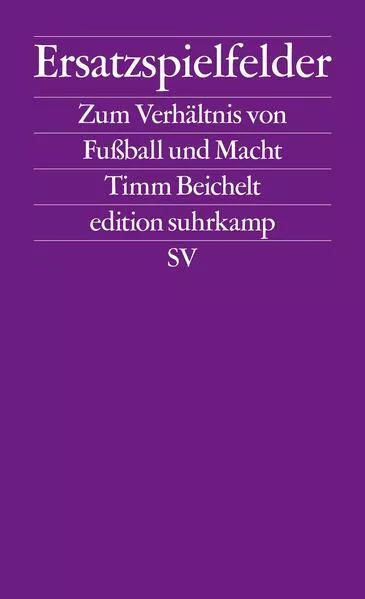
Die Vergaben der Weltmeisterschaften 2018 und 2022 nach Russland und Katar haben erneut gezeigt, dass ein Fußballplatz nie nur ein grünes Rechteck ist, auf dem 22 Spieler einem Ball hinterherjagen. (Profi-)Fußball ist stets zugleich ein Ersatzspielfeld der Politik: Machthaber unterschiedlicher Couleur inszenieren sich, Normen wie Wettbewerbsdenken werden eingeübt, Nationalteams sind ein Indikator dafür, welche Gruppen als zur Nation gehörig betrachtet werden und welche nicht.