
- Publikationen ca: 5
- Fragen & Antworten
James L. Newell
James L. Newell is former Professor of Politics at the University of Salford, UK, and currently Adjunct Professor of Politics at the University of Urbino Carlo Bo, Italy. He is founding co-editor of the quarterly journal, Contemporary Italian Politics. His recent books include, Corruption in Contemporary Politics (2018), Silvio Berlusconi: A Study in Failure (2019), and Italy’s Contemporary Politics (2020).

The UK's Road Back to Europe
Despite the efforts of leading party spokespersons in the UK to marginalise Brexit as an issue of public discussion, it shows no sign of disappearing from the political agenda any time soon. Meanwhile, a significant case can be made for the view that almost regardless of future developments, it will remain a significant issue simply because of the importance of Europe, economically and strategically, to the UK.

The UK's Road Back to Europe
Despite the efforts of leading party spokespersons in the UK to marginalise Brexit as an issue of public discussion, it shows no sign of disappearing from the political agenda any time soon. Meanwhile, a significant case can be made for the view that almost regardless of future developments, it will remain a significant issue simply because of the importance of Europe, economically and strategically, to the UK.
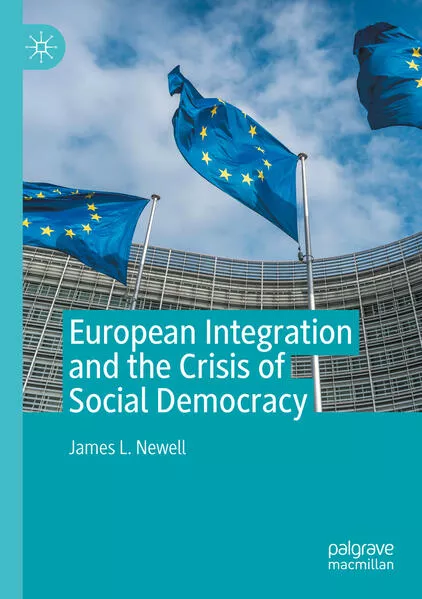
European Integration and the Crisis of Social Democracy
This is a book about European integration and mainstream parties of the left, the main underlying question driving it being: Given that the communist left was fatally wounded by the collapse of the Berlin Wall; given that, since then, the terms ‘left’ and ‘right’ have not infrequently been attacked (especially by populists) as being no longer useful for making sense of politics; given that social democracy, understood as ‘national Keynesianism’ no longer appears to be viable (as reflected in its long-term electoral decline), what does it mean to be on the left in the early 21st century and what can be done to revive its fortunes? Its answer is that being on the left means embracing principles of equality and international solidarity, and that since the nation state is too small to respond effectively to climate change and the other most pressing issues of the present, no viable strategy for left-wing revival in Europe can dispense with European integration as a centralelement, of which European democratisation is a core component.
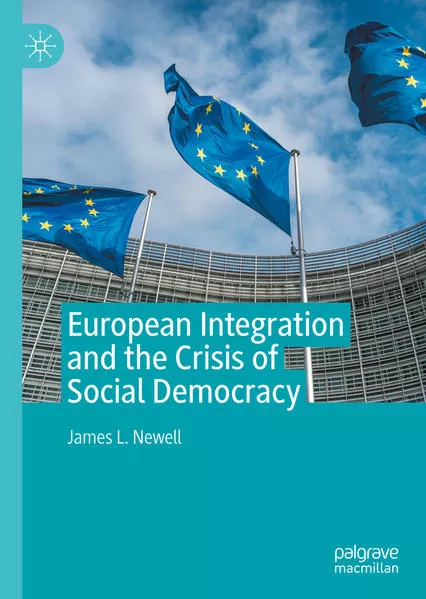
European Integration and the Crisis of Social Democracy
This is a book about European integration and mainstream parties of the left, the main underlying question driving it being: Given that the communist left was fatally wounded by the collapse of the Berlin Wall; given that, since then, the terms ‘left’ and ‘right’ have not infrequently been attacked (especially by populists) as being no longer useful for making sense of politics; given that social democracy, understood as ‘national Keynesianism’ no longer appears to be viable (as reflected in its long-term electoral decline), what does it mean to be on the left in the early 21st century and what can be done to revive its fortunes? Its answer is that being on the left means embracing principles of equality and international solidarity, and that since the nation state is too small to respond effectively to climate change and the other most pressing issues of the present, no viable strategy for left-wing revival in Europe can dispense with European integration as a centralelement, of which European democratisation is a core component.
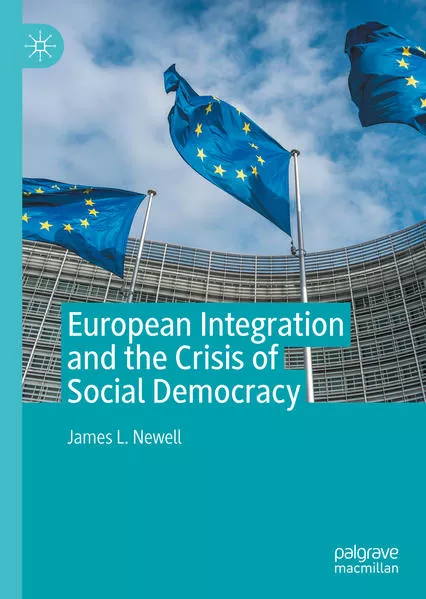
European Integration and the Crisis of Social Democracy
This is a book about European integration and mainstream parties of the left, the main underlying question driving it being: Given that the communist left was fatally wounded by the collapse of the Berlin Wall; given that, since then, the terms ‘left’ and ‘right’ have not infrequently been attacked (especially by populists) as being no longer useful for making sense of politics; given that social democracy, understood as ‘national Keynesianism’ no longer appears to be viable (as reflected in its long-term electoral decline), what does it mean to be on the left in the early 21st century and what can be done to revive its fortunes? Its answer is that being on the left means embracing principles of equality and international solidarity, and that since the nation state is too small to respond effectively to climate change and the other most pressing issues of the present, no viable strategy for left-wing revival in Europe can dispense with European integration as a centralelement, of which European democratisation is a core component.