
- Publikationen ca: 6
- Fragen & Antworten
Ernst Schriefl
Since 1999 collaboration in or management of various research and information processing projects. Main focus: Energy efficiency in buildings, strategic energy research, climate policy instruments, bioeconomy.
Since the mid-1980s, working on ecological (eco-political) issues. Since the early 1990s also active in environmental NGOs.
Raus aus Kohle, Öl und Gas – aber wie?
Energiewende – was sonst? Um die Wucht der drohenden Klimakatastrophe zumindest abzubremsen, müssen wir aus der Nutzung der fossilen Rohstoffe Kohle, Erdöl und Erdgas aussteigen, und das möglichst rasch und weltweit. Bis hierhin mögen noch viele dieser Argumentation folgen.
Raus aus Kohle, Öl und Gas – aber wie?
Energiewende – was sonst? Um die Wucht der drohenden Klimakatastrophe zumindest abzubremsen, müssen wir aus der Nutzung der fossilen Rohstoffe Kohle, Erdöl und Erdgas aussteigen, und das möglichst rasch und weltweit. Bis hierhin mögen noch viele dieser Argumentation folgen.
Raus aus Kohle, Öl und Gas – aber wie?
Energiewende – was sonst? Um die Wucht der drohenden Klimakatastrophe zumindest abzubremsen, müssen wir aus der Nutzung der fossilen Rohstoffe Kohle, Erdöl und Erdgas aussteigen, und das möglichst rasch und weltweit. Bis hierhin mögen noch viele dieser Argumentation folgen.
Eco-Socialism or "Green" Capitalism?
After the ignominious fall of the classical Soviet model of "socialism" in the early 1990s, socialists, communists, and all other kinds of Leftists had felt to have been left in the lurch. With his book Eco-Socialism or Eco-Capitalism? A Critical Analysis of Humanity's Fundamental Choices (1999), Saral Sarkar presented and laid the theoretical foundation of a new conception of socialism, which convinced because it organically synthesized the newly arisen imperative of ecological sustainability and the old ideal of equality among members of humanity.
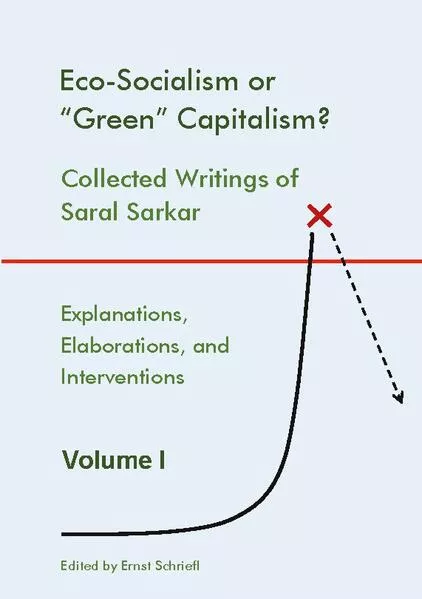
Eco-Socialism or "Green" Capitalism?
After the ignominious fall of the classical Soviet model of "socialism" in the early 1990s, socialists, communists, and all other kinds of Leftists had felt to have been left in the lurch. With his book Eco-Socialism or Eco-Capitalism? A Critical Analysis of Humanity's Fundamental Choices (1999), Saral Sarkar presented and laid the theoretical foundation of a new conception of socialism, which convinced because it organically synthesized the newly arisen imperative of ecological sustainability and the old ideal of equality among members of humanity.
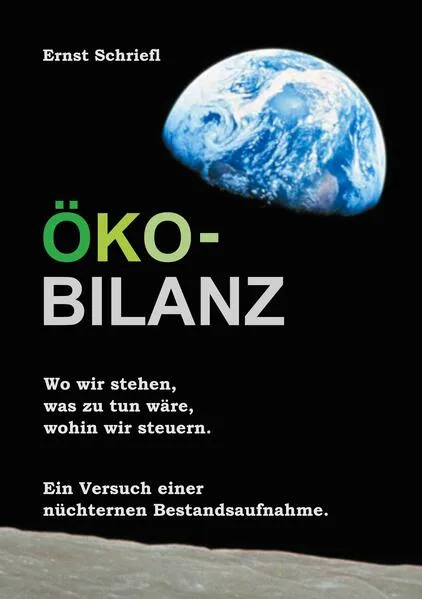
Öko-Bilanz
Wenn wir es wagen, einen nüchternen, von Wunschdenken möglichst befreiten Blick auf den Zustand unseres Heimatplaneten zu werfen - wo stehen wir? Können wir den drängenden ökologischen Bedrohungen wie dem Klimawandel und dem Artensterben überhaupt noch wirksam etwas entgegensetzen und wenn ja, wie? Was haben die bisherigen Versuche, eine ökologische Politik umzusetzen, gebracht? Warum fällt es uns so schwer, "das Richtige" (was immer das genau sein mag) zu tun? Und wie beeinflusst die stürmische technologische Entwicklung - Stichworte Künstliche Intelligenz, Biotechnologie - das alles?Mit all diesen Fragen und mit noch einigen mehr beschäftigt sich dieses Buch.