- Publikationen ca: 3
- Fragen & Antworten
Dina Sharipova
Dina Sharipova is an Associate professor at the Graduate School of Public Policy at Nazarbayev University in Astana. Her research interests include nation and state-building, security issues, formal and informal institutions, civil society, and well-being in Central Asia. Dr. Sharipova is the author of the book “State-building in Kazakhstan: Continuity and Transformation of Informal Institutions”, Lexington Books, 2018. She has published in Europe-Asia Studies Journal, Nationalism and Ethnic Politics, Central Asian Survey, Nationalities Papers, and in other scholarly journals.
Alima Bissenova is an Associate Professor of Anthropology at Nazarbayev University. She specializes in urban anthropology, anthropology of Islam, postcolonial studies, and intellectual history. She has published her work in English and Russian in the journals Religion, State, and Society, Europe-Asia Studies, AB Imperio, Novoe Literaturnoe Obozrenie, Sotsiologiya Vlasti.
Post-Colonial Approaches in Kazakhstan and Beyond
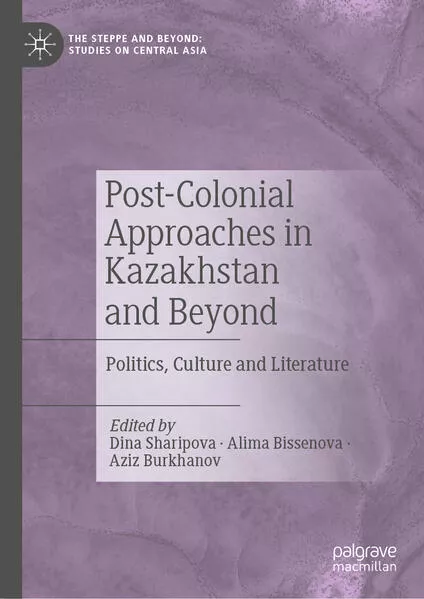
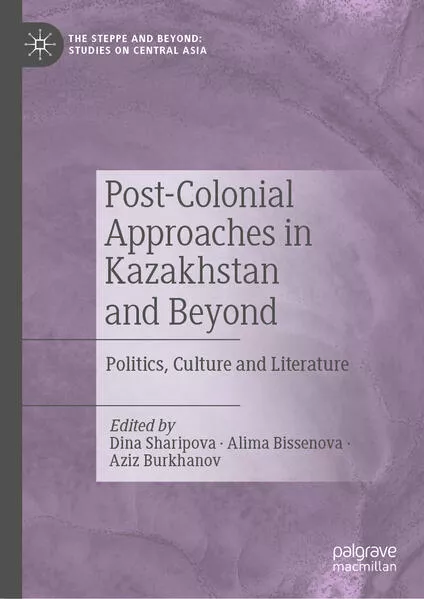
This book explores the postcolonial discourse and decolonization processes in modern Kazakhstan and beyond. It pays particular attention to such areas as national and religious identity, language, literature, and historical narratives. Despite the fact that the post-colonial theory initially emerged in other regions of the world, it has increasingly been applied in the scholarship on Central Asia.
Post-Colonial Approaches in Kazakhstan and Beyond
This book explores the postcolonial discourse and decolonization processes in modern Kazakhstan and beyond. It pays particular attention to such areas as national and religious identity, language, literature, and historical narratives. Despite the fact that the post-colonial theory initially emerged in other regions of the world, it has increasingly been applied in the scholarship on Central Asia.
Post-Colonial Approaches in Kazakhstan and Beyond
This book explores the postcolonial discourse and decolonization processes in modern Kazakhstan and beyond. It pays particular attention to such areas as national and religious identity, language, literature, and historical narratives. Despite the fact that the post-colonial theory initially emerged in other regions of the world, it has increasingly been applied in the scholarship on Central Asia.