International Relations in Asia, Africa and the Americas
Swiss Banking Secrecy and the US-Swiss Conflict Over Holocaust Claims
Chronologie aller Bände (1 - 8)

Die Reihenfolge beginnt mit dem Buch "Great and Small Games in Central Asia and the South Caucasus". Wer alle Bücher der Reihe nach lesen möchte, sollte mit diesem Band von Tomasz Pugacewicz beginnen. Mit insgesamt 8 Bänden wurde die Reihe über einen Zeitraum von ungefähr 3 Jahren fortgesetzt. Der neueste Band trägt den Titel "The U.S. Supreme Court and the Legitimization of Surveillance".
- Anzahl der Bewertungen für die gesamte Reihe: 0
- Ø Bewertung der Reihe: 0
- Start der Reihe: 29.04.2022
- Neueste Folge: 30.12.2024
Diese Reihenfolge enthält 8 unterschiedliche Autoren.
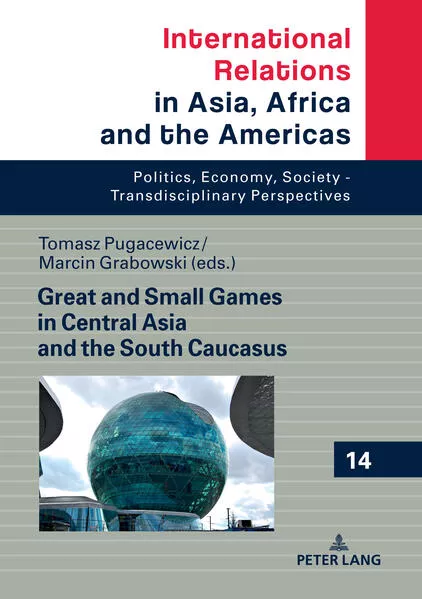
- Band: 14
- Autor: Pugacewicz, Tomasz
- Anzahl Bewertungen: 0
- Ø Bewertung:
- Medium: Buch
- Veröffentlicht: 29.04.2022
- Genre: Politik
Great and Small Games in Central Asia and the South Caucasus
With 30 years having passed since Central Asia and the South Caucasus emerged on the international stage, a new approach to understanding its contemporary dynamics is required. This volume argues for a multidimensional analysis of international, regional, and domestic cooperation and conflicts in the region. The authors analyze foreign policies of great powers such as Russia, China, U.S., EU, Japan, and Iran toward this part of the world. The work looks at regional issues and regionalism, including the Eurasian Union and the Belt and Road Initiative. A series of chapters study domestic processes ranging from clan politics, identity construction, the media, to non-state actors. The publication applies theoretical pluralism and utilizes realism, liberalism, constructivism, and FPA.

- Band: 15
- Autor: Pruska, Anna Berenika
- Anzahl Bewertungen: 0
- Ø Bewertung:
- Medium: Buch
- Veröffentlicht: 17.10.2022
- Genre: Politik
Swiss Banking Secrecy and the US-Swiss Conflict Over Holocaust Claims
This book examines US-Swiss relations in the context of Swiss banking secrecy and Holocaust related claims from World War II until the end of the 1990s. During World War II, Switzerland had been purchasing Reichsbank’s gold and safeguarded the assets of the victims of Nazi Germany. This deeply impacted US-Swiss relations in the 1990s, and fueled a major conflict over dormant accounts and heirless assets of Holocaust victims. The US pressured Switzerland for Holocaust restitution using economic sanctions and a negative PR campaign. This culminated in a billion-dollar settlement, a reevaluation of wartime history by the Swiss, and a blow to Switzerland’s international image. This book analyzes US policy towards Switzerland as a case of projection of US economic, as opposed to military power.
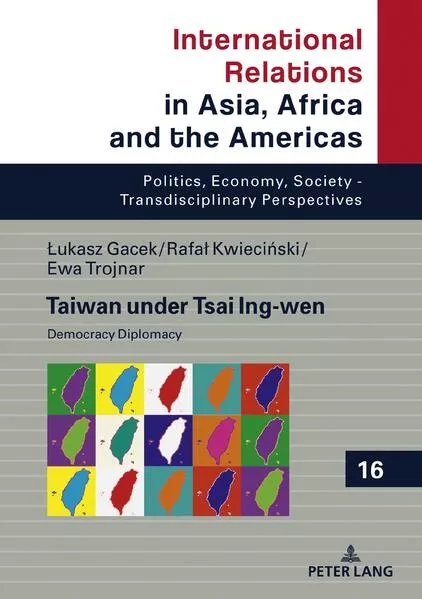
- Band: 16
- Autor: Gacek, Łukasz
- Anzahl Bewertungen: 0
- Ø Bewertung:
- Medium: Buch
- Veröffentlicht: 31.01.2023
- Genre: Politik
Taiwan under Tsai Ing-wen
The presidency of Tsai Ing-wen coincided with momentous shifts in Taiwan's domestic and international affairs. On the back of a growing popular mandate, President Tsai sought to assert the autonomy and independence of Taiwan. These moves were mirrored by an increasing nationalization under the grip of Xi Jinping who asserted China’s right to “unify” the island by force if necessary. These dynamics have propelled Taiwan to the limelight of international attention. This book offers a timely, detailed, and much needed analysis of the multitude of internal and external factors that have impacted the domestic and international affairs of Taiwan. The thoughtful and convincing analyses would be appreciated by policy-makers, think-tankers, and scholars alike.
Professor Emilian Kavalski
Professor Emilian Kavalski
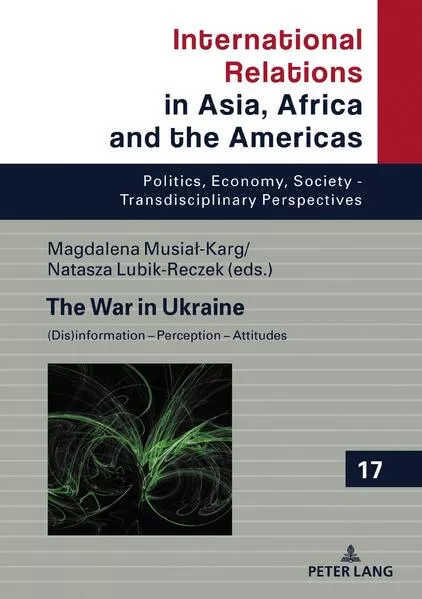
- Band: 17
- Autor: Musiał-Karg, Magdalena
- Anzahl Bewertungen: 0
- Ø Bewertung:
- Medium: Buch
- Veröffentlicht: 30.03.2023
- Genre: Politik
The War in Ukraine
The book is a collection of studies on the war in Ukraine. The considerations focus on different contexts of the first phase of the armed conflict. The authors try to answer questions about the motives and results of Russian disinformation and blaming Ukraine, the US and NATO for the invasion, as well as of the position of third countries towards the Russian aggression. One of the issues addressed is sexual violence in wartime and the image of women in armed conflict. The authors also analyze the aid provided by certain nations and Ukrainian national minorities in selected countries. Some chapters also examined public opinions on various war-related issues. Such a broad approach provides multidimensional view of the war while complementing earlier images of the conflict in Ukraine.
- Band: 18
- Autor: Góralczyk, Bogdan
- Anzahl Bewertungen: 0
- Ø Bewertung:
- Medium: Buch
- Veröffentlicht: 30.12.2024
- Genre: Politik
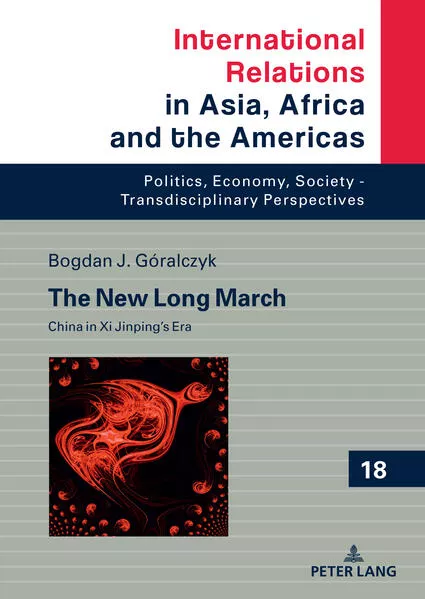
The New Long March
China’s new domestic reality marks a departure from the previous four decades of reform and transformation. Deng Xiaoping’s formula of “hiding your strength and biding your time” has been replaced with assertiveness and displays of power. In line with Chinese tradition, all major aims, visions, proposals, and decisions are once again statedefined
and state-focused. The personal rule of Xi Jinping, often referred to as the “Chairman of Everything,” dominates, creating a “Party of One.” At the same time, personal connections—China’s famous guanxi—have regained importance in institutions. This study, written by a former diplomat in Asia and a seasoned Polish sinologist and political scientist, focuses on three major issues: the current political system and governance in the PRC, so-called Xi-nomics, and China’s new global role following the pandemic and
the Russian aggression in Ukraine.
and state-focused. The personal rule of Xi Jinping, often referred to as the “Chairman of Everything,” dominates, creating a “Party of One.” At the same time, personal connections—China’s famous guanxi—have regained importance in institutions. This study, written by a former diplomat in Asia and a seasoned Polish sinologist and political scientist, focuses on three major issues: the current political system and governance in the PRC, so-called Xi-nomics, and China’s new global role following the pandemic and
the Russian aggression in Ukraine.
- Band: 19
- Autor: Grabowski, Marcin
- Anzahl Bewertungen: 0
- Ø Bewertung:
- Medium: Buch
- Veröffentlicht: 21.02.2024
- Genre: Politik
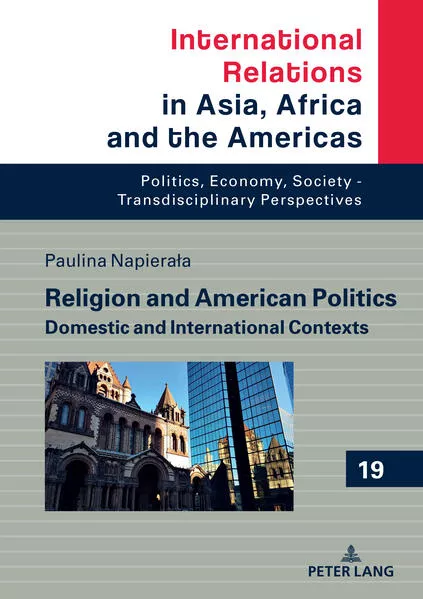
Religion and American Politics
This book presents a broad international and interdisciplinary perspective on the role of religion in American politics (both domestic and international). It is a result of cooperation between Jagiellonian University scholars and an international group of academics, including renowned American specialists, who study the interactions between religion and American politics. Coming not only from the USA, but also from Israel, Spain, Hungary, Poland, and the Palestinian territories, they provide a unique international perspective on how the USA deals with issues on the intersection of religion and politics. The book covers a variety of topics, including civil religion, legal issues, religious liberty, the public role of Black churches, religious influences on U.S. politics and on public attitudes toward a number of domestic and international policy issues.
- Band: 20
- Autor: Robert, Kłosowicz
- Anzahl Bewertungen: 0
- Ø Bewertung:
- Medium: Buch
- Veröffentlicht: 27.06.2024
- Genre: Politik
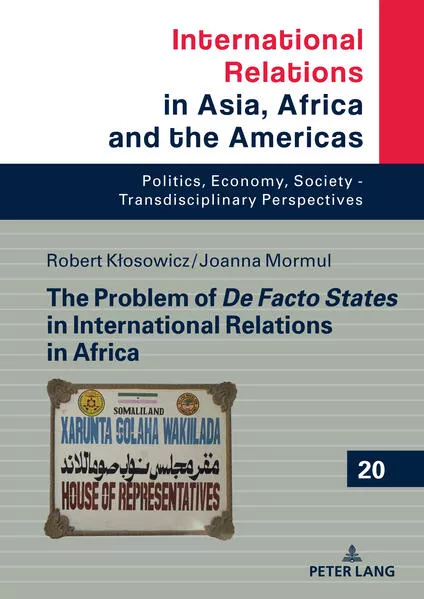
The Problem of De Facto States in International Relations in Africa
In Africa, the emergence of the first unrecognised/de facto states is
intricately linked to colonial legacy and subsequent decolonisation.
This legacy maintained the newly formed African states within the
artificial boundaries established on the continent by European colonisers. Paradoxically, both currently existing unrecognised states on the
African continent, Western Sahara and Somaliland, aspire to function
as independent entities within these colonial boundaries.
This volume delves into the issue of de facto states in Africa and their
impact on international relations on the continent. The book explores
theoretical and legal issues, such as international subjectivity, as well
as the origins of de facto statehood in Africa. It offers an in-depth
analysis of historical and contemporary examples of de facto states
on the continent.
The authors conduct a thorough examination of the Western Sahara
and Somaliland cases, highlighting their significance for international
relations regionally and continentally. Additionally, they draw comparisons with de facto state cases in other parts of the world, such as
Taiwan (Republic of China) or West Papua.
intricately linked to colonial legacy and subsequent decolonisation.
This legacy maintained the newly formed African states within the
artificial boundaries established on the continent by European colonisers. Paradoxically, both currently existing unrecognised states on the
African continent, Western Sahara and Somaliland, aspire to function
as independent entities within these colonial boundaries.
This volume delves into the issue of de facto states in Africa and their
impact on international relations on the continent. The book explores
theoretical and legal issues, such as international subjectivity, as well
as the origins of de facto statehood in Africa. It offers an in-depth
analysis of historical and contemporary examples of de facto states
on the continent.
The authors conduct a thorough examination of the Western Sahara
and Somaliland cases, highlighting their significance for international
relations regionally and continentally. Additionally, they draw comparisons with de facto state cases in other parts of the world, such as
Taiwan (Republic of China) or West Papua.
- Band: 21
- Autor: Laidler, Paweł
- Anzahl Bewertungen: 0
- Ø Bewertung:
- Medium: Buch
- Veröffentlicht: 25.11.2024
- Genre: Politik
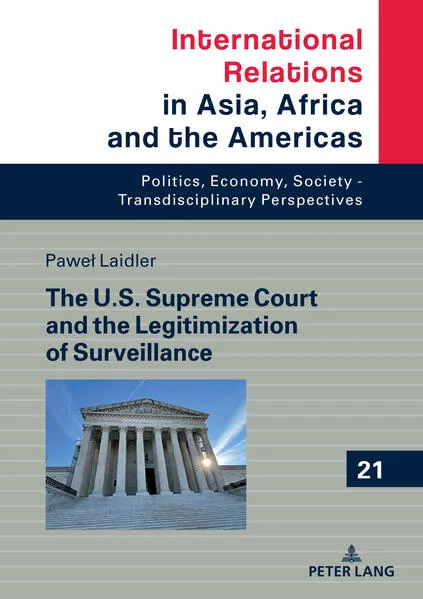
The U.S. Supreme Court and the Legitimization of Surveillance
The book analyzes the U.S. Supreme Court’s rulings in cases concerning
surveillance, both domestic and foreign intelligence, focusing on
how judicial activism or judicial restraint has legitimized the almost
uncontrolled surveillance of American citizens by government agencies.
The purpose of the research is to examine the judiciary’s impact
on the scope of government surveillance and, more broadly, on the
state of American democracy and the rule of law. By reviewing the
most important SCOTUS opinions on surveillance and applying the
famous “legitimate end” approach from McCulloch v. Maryland, the
author determines which values have prevailed in the judicial interpretation
of the Constitution: security or freedom. Furthermore, the book
evaluates the legal and political arguments used by the Court to justify
broad surveillance measures, including the national security paradigm
and secrecy, which have strengthened the executive branch’s position
in the U.S. governmental system.
surveillance, both domestic and foreign intelligence, focusing on
how judicial activism or judicial restraint has legitimized the almost
uncontrolled surveillance of American citizens by government agencies.
The purpose of the research is to examine the judiciary’s impact
on the scope of government surveillance and, more broadly, on the
state of American democracy and the rule of law. By reviewing the
most important SCOTUS opinions on surveillance and applying the
famous “legitimate end” approach from McCulloch v. Maryland, the
author determines which values have prevailed in the judicial interpretation
of the Constitution: security or freedom. Furthermore, the book
evaluates the legal and political arguments used by the Court to justify
broad surveillance measures, including the national security paradigm
and secrecy, which have strengthened the executive branch’s position
in the U.S. governmental system.