
Autorin
Margarita Alexandrou
3Publikationen
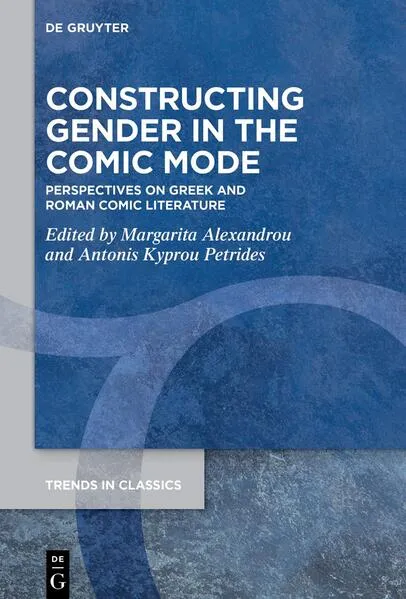
Aktuelle Bücher Constructing Gender in The Comic Mode
Margarita Alexandrou, University of Cyprus, Nicosia, Cyprus; Antonis K. Petrides, Open University of Cyprus, Nicosia, Cyprus.
Margarita Alexandrou, University of Cyprus, Nicosia, Cyprus; Antonis K. Petrides, Open University of Cyprus, Nicosia, Cyprus.
Gender was not theorised as such in Greco-Roman culture. Nonetheless, the concept of gender was never static or stable over the centuries—and if gender is a social construct, it is inevitably also a literary one. Ancient society and literature develop a dialectical, co-dependent dynamic in shaping and promulgating gender norms, perpetuating or challenging stereotypes.
Gender was not theorised as such in Greco-Roman culture. Nonetheless, the concept of gender was never static or stable over the centuries—and if gender is a social construct, it is inevitably also a literary one. Ancient society and literature develop a dialectical, co-dependent dynamic in shaping and promulgating gender norms, perpetuating or challenging stereotypes.
Gender was not theorised as such in Greco-Roman culture. Nonetheless, the concept of gender was never static or stable over the centuries—and if gender is a social construct, it is inevitably also a literary one. Ancient society and literature develop a dialectical, co-dependent dynamic in shaping and promulgating gender norms, perpetuating or challenging stereotypes.