Autor
Abhijit Bandyopadhyay
3Publikationen
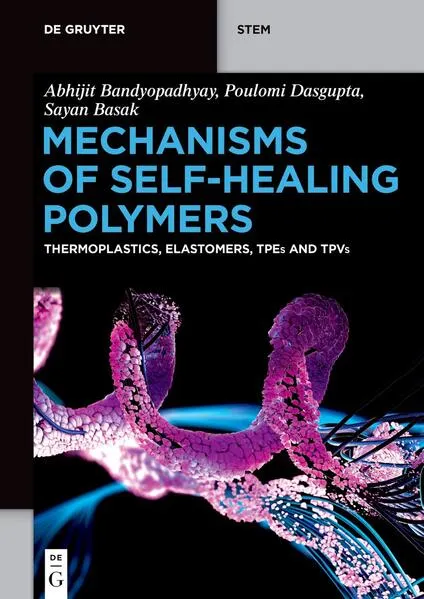
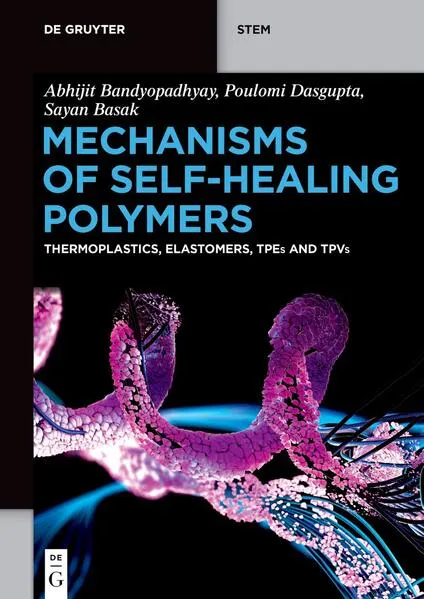
Aktuelle Bücher Mechanisms of Self-Healing Polymers
Abhijit Bandyopadhyay is currently serving as a full Professor in the Department of Polymer Science and Technology at the University of Calcutta and holds the position of Technical Director at South Asia Rubber and Polymers Park (SARPOL) in West Bengal. He completed his B.Sc. in Chemistry (Honors) from the University of Calcutta with first-class honors in 1997. Following this, he obtained his B.Tech. and M.Tech. in Polymer Science and Technology, both from the University of Calcutta, in 2000 and 2002, respectively, graduating with first-class distinctions. Subsequently, in 2005, he completed his Ph.D. in Polymer Nanocomposites from the Rubber Technology Centre, IIT Kharagpur. Prior to joining the University of Calcutta in November 2008, Dr. Bandyopadhyay served as an Assistant Professor at the Rubber Technology Centre, IIT Kharagpur from 2007 to 2008. His academic contributions include the publication of 90 papers in high-impact international journals, authoring three books, and filing two Indian patents. He has managed numerous funded research projects and provided consultancy services to esteemed companies such as Exide Industries Ltd., and Philips Carbon Black Ltd. He is a Fellow of the International Congress for Environmental Research since 2010, an Associate Member of the Indian Institute of Chemical Engineers, and a Life Member of the Society for Polymer Science, Kolkata Chapter, and the Indian Rubber Institute. Dr. Bandyopadhyay serves as an Editorial Board Member for two international journals. With over 12 years of teaching and research experience, he has received accolades such as the Young Scientist Award by the Materials Research Society of India, Kolkata Chapter in 2005, and the Career Award for Young Teachers by the All India Council for Technical Education, Government of India, in 2010. His research interests encompass various areas including polymer nanocomposites, reactive blending, adhesion, polymer hydrogel in drug delivery, waste-polymer composites, green polymer composites, and hyperbranched polymers. He has successfully supervised 11 research students for their doctorate degrees and is currently guiding 4 more.
Poulomi Dasgupta graduated with a Chemistry (Honors) degree from Vidyasagar College (Kolkata) in 2013. She later obtained her B.Tech. in 2016 and M.Tech. in 2019 from the Department of Polymer Science and Technology at the University of Calcutta. Notably, she was awarded a gold medal from the University of Calcutta during her B.Tech. Her research primarily focused on the Development of thermo- responsive self-healable elastomeric compound and its characterization.
Sayan Basak completed his B.Tech. in Polymer Science and Technology at the University of Calcutta (2015-2019) and earned his Ph.D. from the University of Akron (2019-2023), specializing in smart polymers. His research focused on shape memory and functional elastomers, aligning with his undergraduate studies. Currently, he works as a research investigator at Biocon India, contributing to the chemical development team. His transition from academia to industry reflects his commitment to applying polymer science knowledge in real-world settings.
Poulomi Dasgupta graduated with a Chemistry (Honors) degree from Vidyasagar College (Kolkata) in 2013. She later obtained her B.Tech. in 2016 and M.Tech. in 2019 from the Department of Polymer Science and Technology at the University of Calcutta. Notably, she was awarded a gold medal from the University of Calcutta during her B.Tech. Her research primarily focused on the Development of thermo- responsive self-healable elastomeric compound and its characterization.
Sayan Basak completed his B.Tech. in Polymer Science and Technology at the University of Calcutta (2015-2019) and earned his Ph.D. from the University of Akron (2019-2023), specializing in smart polymers. His research focused on shape memory and functional elastomers, aligning with his undergraduate studies. Currently, he works as a research investigator at Biocon India, contributing to the chemical development team. His transition from academia to industry reflects his commitment to applying polymer science knowledge in real-world settings.