
- Publikationen ca: 2
- Fragen & Antworten
Bindi Bennett
Professor Bindi Bennett (she/her) is a K/Gamilaroi woman, mother, and social worker and is a Professorial Research Fellow at Federation University living, playing and working on Jinibara lands. She is a social justice scholar, a compassionate radical and activist requesting transformational change. Her research areas are disability/neurodivergence, Remote, Rural and Regional Aboriginal wellbeing and AI in the First Nations space.
Professor Kelly Menzel is a Ngadjuri woman from mid north South Australia with ancestral connections to Bundjalung Nation. Bundjalung Country is where she lives, works and plays. She is a nurse by trade and has worked in higher education and research for over 20 years. Her research area of interest is radically challenging race-based violence in institutions, Indigenous Knowledge Systems, Indigenous Pedagogy and methodology, Aboriginal women in leadership and seeking socially just, transformational change. She is currently a Professor and inaugural Director, Aboriginal and Torres Strait Islander Initiative at the Burnet Institute.
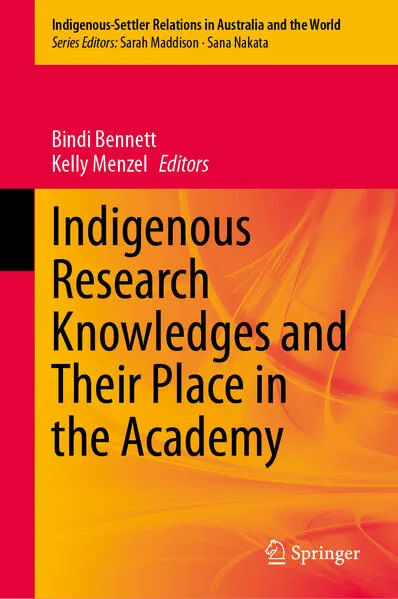
Indigenous Research Knowledges and Their Place in the Academy
This book privileges Indigenous ways of knowing, being and doing in research and serves as a voice in taking on some of the more marginal topics within methodologies. It is significant in that it is written by indigenous scholars themselves. The contributors shed light, for example, on Queer BlaQ bodies and place Indigenous women as central in reimagining fair academic practice; others return to their foundational texts to reflect on the growth of Indigenous Standpoint Theory.
Indigenous Research Knowledges and Their Place in the Academy
This book privileges Indigenous ways of knowing, being and doing in research and serves as a voice in taking on some of the more marginal topics within methodologies. It is significant in that it is written by indigenous scholars themselves. The contributors shed light, for example, on Queer BlaQ bodies and place Indigenous women as central in reimagining fair academic practice; others return to their foundational texts to reflect on the growth of Indigenous Standpoint Theory.