Autor
Pauline W. U. Chinn
4Publikationen
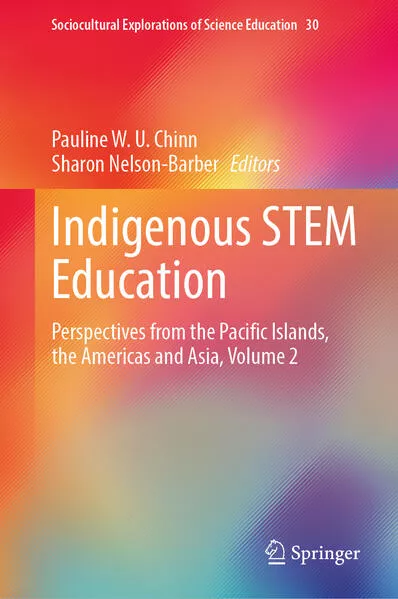
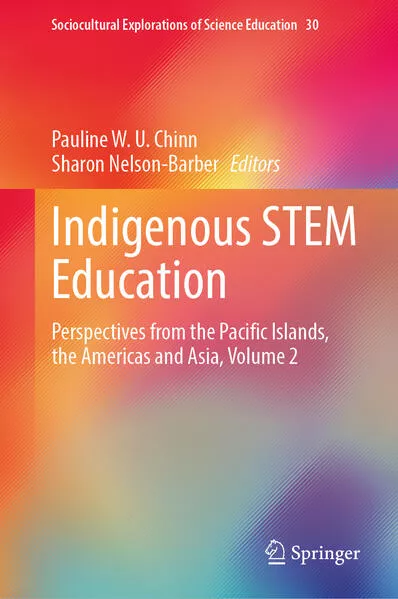
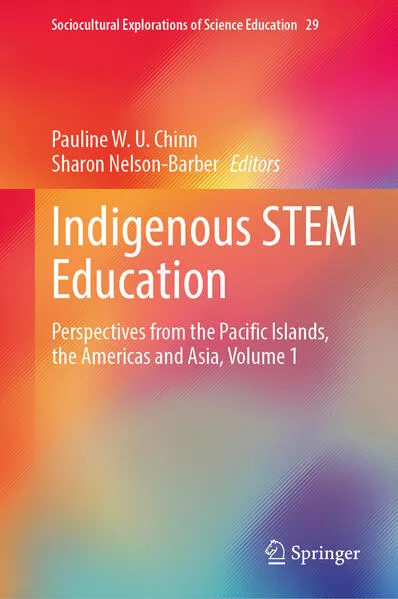
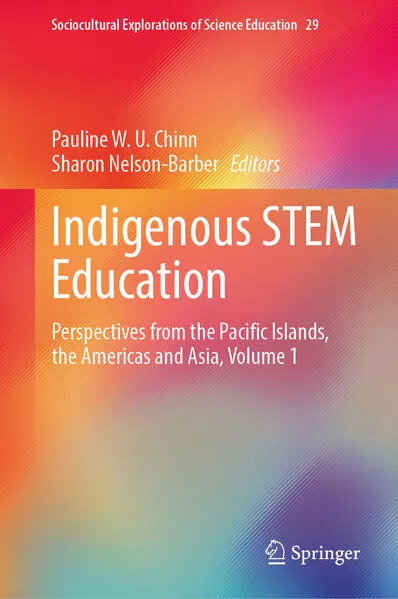
Aktuelle Bücher Indigenous STEM Education
Pauline W. U. Chinn’s great-grandparents arrived in Hawaiʻi when it was the Kingdom of Hawaiʻi and Hawaiian was the official language. After the Kingdomʻs illegal overthrow in 1893 and annexation by the United States in 1898, Hawaiian language was forbidden in education and government until a constitutional amendment in 1978. As a science teacher in Hawaiʻi’s public schools, she used textbooks from the continental U.S. except in Plants and Animals of Hawaiʻi, a class for non-college bound students. Creating a place-based curriculum allowed her to intersect her fishing, hiking, and gardening experiences with western biology frameworks. Seeing students in this “terminal” class become engaged as their lives and places entered the curriculum led to doctoral research exploring the roles of culture, gender, language, place, and power in underrepresentation of Kānaka Maʻoli, descendants of Polynesian voyagers, in science, technology, engineering, and mathematics (STEM). At the University of Hawaiʻi at Mānoa, her teacher education and professional development projects funded by the U.S. Department of Education and the National Science Foundation support research and education to develop teacher leaders who create place-based, culturally sustaining, inquiry-oriented curricula inclusive of diverse and underrepresented students. This work led to establishing an Interdisciplinary M.Ed. Place-based, Sustainability and a Graduate Certificate in Sustainability and Resilience Education.
Sharon Nelson-Barber, a sociolinguist and Senior Program Director at WestEd, has lifelong personal and professional experience in Indigenous communities. Her interests in STEM began early on as she accompanied her father and grandfather while subsistence hunting and fishing. Much of her research, funded by the National Science Foundation, centers on understanding ways in which students’ cultural backgrounds influence how they make sense of mathematics and science education. She also conducts studies aimed at developing more equitable assessment and testing methods that account for cultural influences. She closely collaborates with other Indigenous researchers and community partners across the US, the Northern Pacific islands of Micronesia, and parts of Polynesia. She is co-founder of POLARIS (Pivotal Opportunities to Learn, Advance and Research Indigenous Systems), a research and development network that promotes healthier communities by integrating Indigenous perspectives for thriving education futures. An ongoing project convenes Indigenous elders and scientists to document technical solutions to climate change from both Indigenous and western academic perspectives, and heighten international attention to the need to preserve cultures and societies amidst rising waters.
Sharon Nelson-Barber, a sociolinguist and Senior Program Director at WestEd, has lifelong personal and professional experience in Indigenous communities. Her interests in STEM began early on as she accompanied her father and grandfather while subsistence hunting and fishing. Much of her research, funded by the National Science Foundation, centers on understanding ways in which students’ cultural backgrounds influence how they make sense of mathematics and science education. She also conducts studies aimed at developing more equitable assessment and testing methods that account for cultural influences. She closely collaborates with other Indigenous researchers and community partners across the US, the Northern Pacific islands of Micronesia, and parts of Polynesia. She is co-founder of POLARIS (Pivotal Opportunities to Learn, Advance and Research Indigenous Systems), a research and development network that promotes healthier communities by integrating Indigenous perspectives for thriving education futures. An ongoing project convenes Indigenous elders and scientists to document technical solutions to climate change from both Indigenous and western academic perspectives, and heighten international attention to the need to preserve cultures and societies amidst rising waters.