
Kein Foto

Stanley Osezua / Masuku Ehiane

Stanley Osezua Ehiane is a Senior Lecturer in the Department of Political and Administrative Studies at the University of Botswanan, Gaborone, Botswana. He obtained his PhD in International Relations from the University of KwaZulu-Natal, South Africa. He recently co-edited Cybercrime and Challenges in South Africa and Engagement of Africa in Conflict Dynamics and Peace Architecture.


Mfundo Mandla Masuku is an Associate Professor in the School of Built Environment and Development Studies at the University of KwaZulu-Natal. He has published more than 50 scholarly articles, 13 book chapters, and 4 Edited books.  He has presented papers at both local and international conferences.


Kekgaoditse Suping is a Lecturer of International Relations at the University of Botswana. His research areas are diplomacy, migration studies and political ecology in the global south. His recent publications, include, amongst others, Migrant Mineworkers and South Africa’s Diplomatic Relations with Botswana and Lesotho (2022).
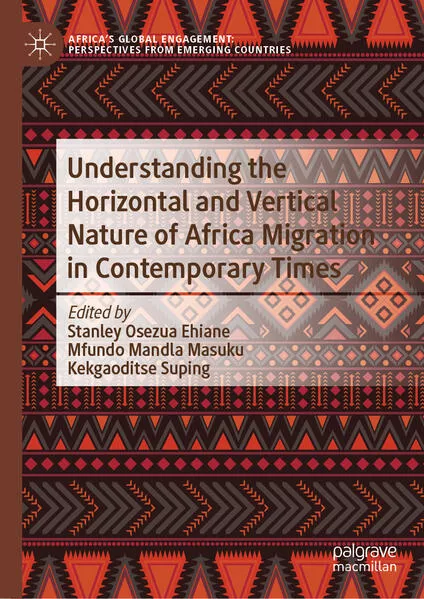
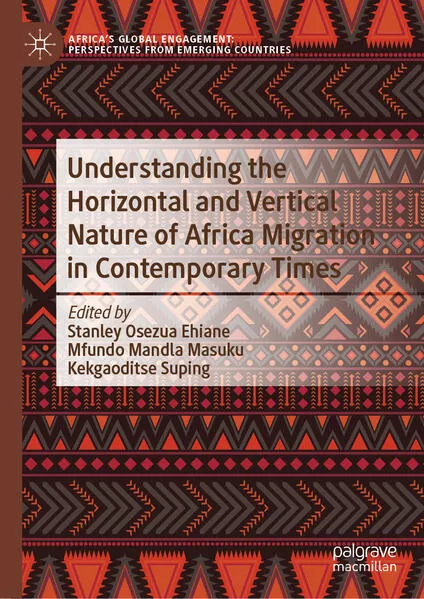
Understanding the Horizontal and Vertical Nature of Africa Migration in Contemporary Times

Understanding the Horizontal and Vertical Nature of Africa Migration in Contemporary Times

The book project strives to establish and interpret the experiences and realities of African migration using African epistemology and philosophy. The significance of this book is triggered by an observation that seeks to propound the Eurocentric paradigm as not being the only dominating, acceptable, or legitimate approach to knowledge in explaining the evolution and dynamics of African migration.

Understanding the Horizontal and Vertical Nature of Africa Migration in Contemporary Times

Understanding the Horizontal and Vertical Nature of Africa Migration in Contemporary Times

The book project strives to establish and interpret the experiences and realities of African migration using African epistemology and philosophy. The significance of this book is triggered by an observation that seeks to propound the Eurocentric paradigm as not being the only dominating, acceptable, or legitimate approach to knowledge in explaining the evolution and dynamics of African migration.