
- Publikationen ca: 1
- Fragen & Antworten
Francine Giese
Francine Giese is director of the Vitrocentre and the Vitromusée Romont. From 2014–2019 she held a SNSF professorship at the Institute of Art History of the University of Zurich, where she led the research project ‘Mudejarismo and Moorish Revival in Europe’ (SNSF, 2014–2019). From 2020–2024, she studied Islamic stucco and glass windows in Western museum collections within the framework of the SNSF project ‘Luminosity of the East’ (2020–2024). Currently, she is leading the SNSF project “Stained Glass in Islamic Lands. Trans-Mediterranean Networks, Local Identities and Glass Technology” (2025–2029), as well as the interdisciplinary project ‘The Royal Chapel of Córdoba Revisited’ (Gerda Henkel Stiftung, 2023–2026). Her research interests are transfer and exchange processes between the Islamic World and the West, architectural Orientalism, materiality, and the arts of glass.
PD Dr Francine Giese, francine.giese@vitrocentre.ch
Sophie Wolf studied geology and mineralogy before specializing in archaeological science and conservation during her doctoral and postdoctoral research. She was a research fellow at the Research Laboratory for Archaeology and the History of Art at the University of Oxford and held teaching and research positions at the University of Fribourg, the Swiss Gemmological Institute in Basel, and the ETH Zurich. Since October 2010, she has been affiliated with the Vitrocentre Romont, where she contributes to scientific research, as well as providing consulting and conservation services to external partners. Her research focuses on the history, provenance, technology, and conservation of stained glass and reverse glass paintings.
Dr Sophie Wolf, sophie.wolf@vitrocentre.ch
Sarah Tabbal studied art history, classical archaeology, and psychology at the Ludwig-Maximilians-Universität (LMU) in Munich and at the Université Paris 1 Panthéon-Sorbonne. In 2020, she completed her PhD on 19th-century French and Spanish Orientalist painting at the Institute of Art History at the LMU (“Das Gelb Marokkos. Auf den Spuren der Orientmaler Fortuny und Regnault”, Berlin: De Gruyter, 2023). From 2020 to 2024, she worked as a postdoctoral researcher on the SNSF project “Luminosity of the East. Materiality, Provenance and Reception of Islamic Stucco and Glass Windows in the West” at the Vitrocentre Romont in Switzerland, where she studied the reception of Islamic stucco and glass windows in Orientalist paintings, drawings and photographs. Her research interests include Orientalism, Islamic art, and the arts of glass.
Dr Sarah Tabbal, Sarah_Tabbal@hotmail.com
PD Dr Francine Giese, francine.giese@vitrocentre.ch
Sophie Wolf studied geology and mineralogy before specializing in archaeological science and conservation during her doctoral and postdoctoral research. She was a research fellow at the Research Laboratory for Archaeology and the History of Art at the University of Oxford and held teaching and research positions at the University of Fribourg, the Swiss Gemmological Institute in Basel, and the ETH Zurich. Since October 2010, she has been affiliated with the Vitrocentre Romont, where she contributes to scientific research, as well as providing consulting and conservation services to external partners. Her research focuses on the history, provenance, technology, and conservation of stained glass and reverse glass paintings.
Dr Sophie Wolf, sophie.wolf@vitrocentre.ch
Sarah Tabbal studied art history, classical archaeology, and psychology at the Ludwig-Maximilians-Universität (LMU) in Munich and at the Université Paris 1 Panthéon-Sorbonne. In 2020, she completed her PhD on 19th-century French and Spanish Orientalist painting at the Institute of Art History at the LMU (“Das Gelb Marokkos. Auf den Spuren der Orientmaler Fortuny und Regnault”, Berlin: De Gruyter, 2023). From 2020 to 2024, she worked as a postdoctoral researcher on the SNSF project “Luminosity of the East. Materiality, Provenance and Reception of Islamic Stucco and Glass Windows in the West” at the Vitrocentre Romont in Switzerland, where she studied the reception of Islamic stucco and glass windows in Orientalist paintings, drawings and photographs. Her research interests include Orientalism, Islamic art, and the arts of glass.
Dr Sarah Tabbal, Sarah_Tabbal@hotmail.com
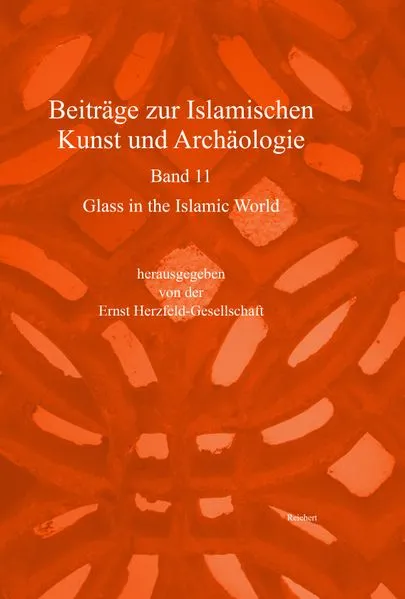
Beiträge zur Islamischen Kunst und Archäologie
Glass unites apparent opposites – it is at once malleable and solid, transparent and opaque, resilient and fragile. These qualities have long made it an important artistic and functional material. While vessel glass from Islamic regions has already been extensively studied, flat glass in its many forms – whether as window glass, mirrors, or components of mosaics – remained in the shadow of scholarship for a long time.