
Autor
Hala Ghoname
3Publikationen
Aktuelle Bücher Muḥammad ʿAlī’s Soft Power in Europe
Hala Hashim Ghoname, Technische Universität, Dresden, Germany.
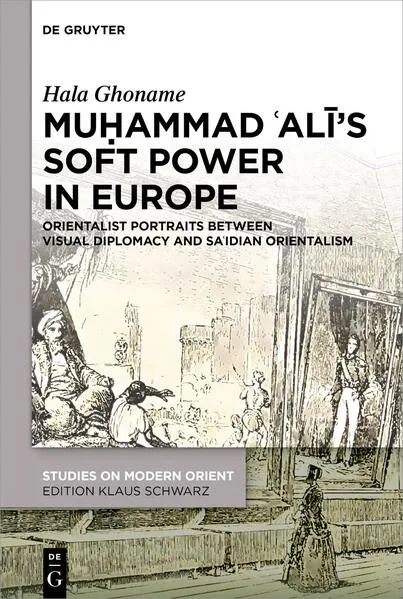
The profusion of literature on Muḥammad ʿAlī's Egypt (1805–1849) makes the Bāshā’s epoch significantly well-documented; however, one facet is perceptibly brushed out or rather overlooked. Published in 1945, Gaston Wiet’s Mohammed Ali et Les Beaux-Arts has been the only book deliberating the visual and artistic aspects of Muḥammad ʿAlī’s reign, and while it offers an extended survey of the Ottoman governor’s iconography and visual relics, the book wants the rudiments of critical analysis.
The profusion of literature on Muḥammad ʿAlī's Egypt (1805–1849) makes the Bāshā’s epoch significantly well-documented; however, one facet is perceptibly brushed out or rather overlooked. Published in 1945, Gaston Wiet’s Mohammed Ali et Les Beaux-Arts has been the only book deliberating the visual and artistic aspects of Muḥammad ʿAlī’s reign, and while it offers an extended survey of the Ottoman governor’s iconography and visual relics, the book wants the rudiments of critical analysis.
The profusion of literature on Muḥammad ʿAlī's Egypt (1805–1849) makes the Bāshā’s epoch significantly well-documented; however, one facet is perceptibly brushed out or rather overlooked. Published in 1945, Gaston Wiet’s Mohammed Ali et Les Beaux-Arts has been the only book deliberating the visual and artistic aspects of Muḥammad ʿAlī’s reign, and while it offers an extended survey of the Ottoman governor’s iconography and visual relics, the book wants the rudiments of critical analysis.