Kein Foto

Ifigenia Gonis

'Dr. Ifigenia G. Gonis holds a PhD in Romance Languages and Literatures from Harvard University, USA'. Her research interests include contemporary theatre studies, French cultural politics, and social justice. She is also an inaugural board member of the Boston-based Citizen TALES Commons. She currently teaches in Paris at the École Internationale Bilingue.
Re-Situating Public Theatre in Contemporary France

Re-Situating Public Theatre in Contemporary France

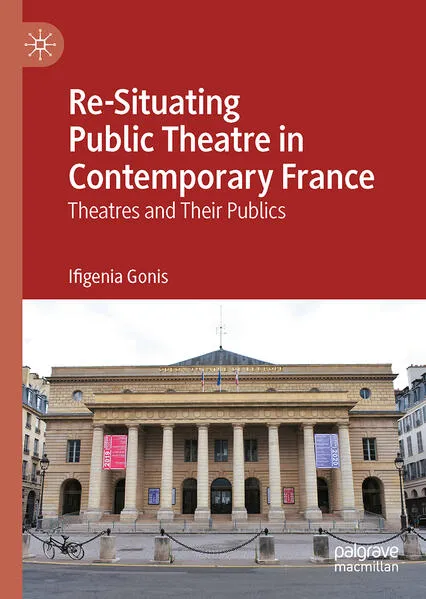
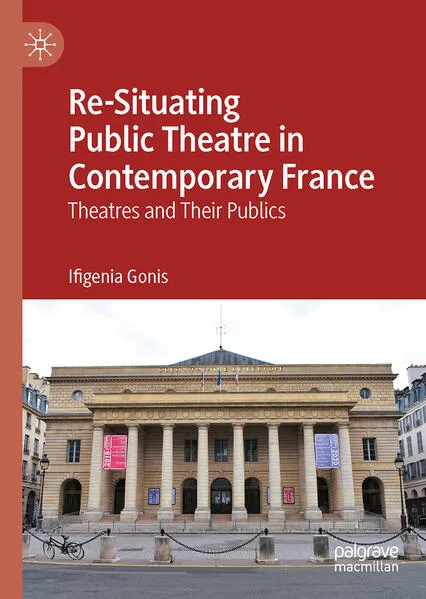
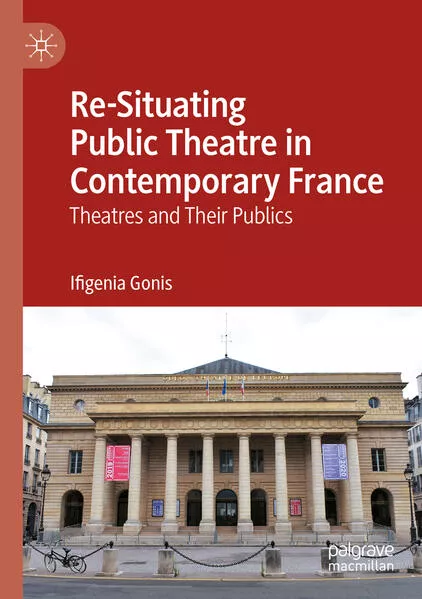
This book examines the dynamics of the relational and spatial politics of contemporary French theatrical production, with a focus on four theatres in the Greater Paris region. It situates these dynamics within the intersection of the histories of the public theatre and theatre decentralization in France, and the dialogues between live performances and the larger frameworks of artistic direction and programming as well as various imaginations of the “public”.

Re-Situating Public Theatre in Contemporary France

Re-Situating Public Theatre in Contemporary France

This book examines the dynamics of the relational and spatial politics of contemporary French theatrical production, with a focus on four theatres in the Greater Paris region. It situates these dynamics within the intersection of the histories of the public theatre and theatre decentralization in France, and the dialogues between live performances and the larger frameworks of artistic direction and programming as well as various imaginations of the “public”.

Re-Situating Public Theatre in Contemporary France

Re-Situating Public Theatre in Contemporary France

This book examines the dynamics of the relational and spatial politics of contemporary French theatrical production, with a focus on four theatres in the Greater Paris region. It situates these dynamics within the intersection of the histories of the public theatre and theatre decentralization in France, and the dialogues between live performances and the larger frameworks of artistic direction and programming as well as various imaginations of the “public”.