
- Publikationen ca: 5
- Fragen & Antworten
Madeleine O. Hosli
- Multilateralism and the United Nations Security Council
- The Global, Regional and Local Politics of Institutional Responses to COVID-19
Madeleine O. Hosli is Professor of International Relations at Leiden University, The Netherlands. She is author of The European Union and the United Nations in Global Governance (2022) and co-editor of The Changing Global Order (2020) and The Future of Multilateralism: Global Cooperation and International Organization (2021).
Amy Blessing is an initiative coordinator at the Global Counterterrorism Forum (GCTF) Administrative Unit based at T.M.C. Asser Institute, The Hague, and treasurer at Women in International Security Netherlands. She previously worked at Leiden University as a program coordinator and has LLMs from the University of Glasgow and University of Copenhagen.
Irini Iacovidou is a project coordinator at Perrett Laver, The Netherlands. She has an MSc from Leiden University in International Relations and Diplomacy. Her current research interests focus on multilateralism and international cooperation, particularly the EU’s position vis-à-vis its neighboring states.
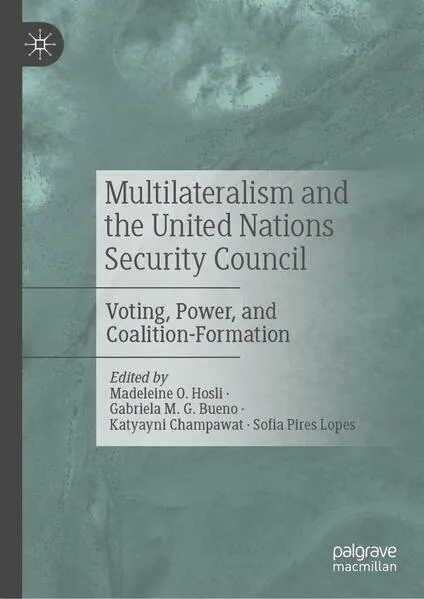
Multilateralism and the United Nations Security Council
This edited volume aims to address the gaps in research on the United Nations (UN)'s participation in intergovernmental relationships by delving into the working mechanisms of the United Nations Security Council (UNSC). The book offers a novel overview of the voting procedures of the UNSC and related outcomes in practice; most significantly, it examines members' voting behaviour, veto power, power dynamics, and diplomatic means of sponsoring resolutions and forming coalitions in the Council.
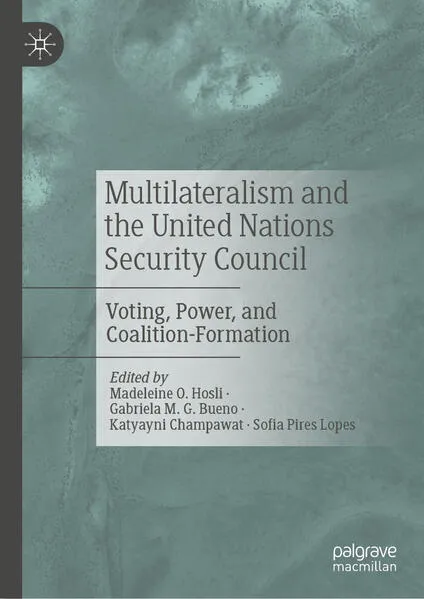
Multilateralism and the United Nations Security Council
This edited volume aims to address the gaps in research on the United Nations (UN)'s participation in intergovernmental relationships by delving into the working mechanisms of the United Nations Security Council (UNSC). The book offers a novel overview of the voting procedures of the UNSC and related outcomes in practice; most significantly, it examines members' voting behaviour, veto power, power dynamics, and diplomatic means of sponsoring resolutions and forming coalitions in the Council.
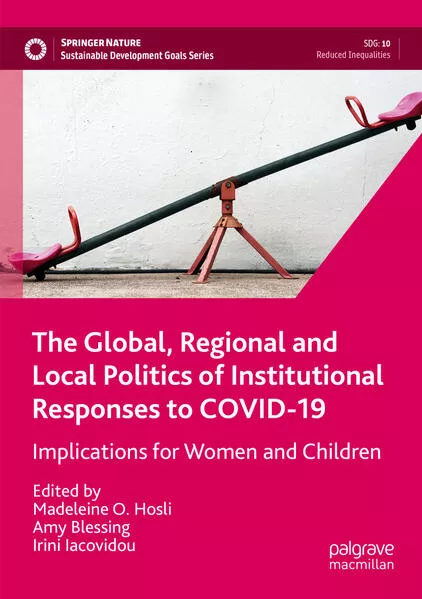
The Global, Regional and Local Politics of Institutional Responses to COVID-19
The shift from response to recovery is now noticeable as the world moves past the paralyzing effects of the COVID-19 pandemic. This book explores responses to the pandemic by international, regional, and local institutions, multilateral action, and crisis prevention efforts at different levels of governance, with a specific focus on the situation of women and children.
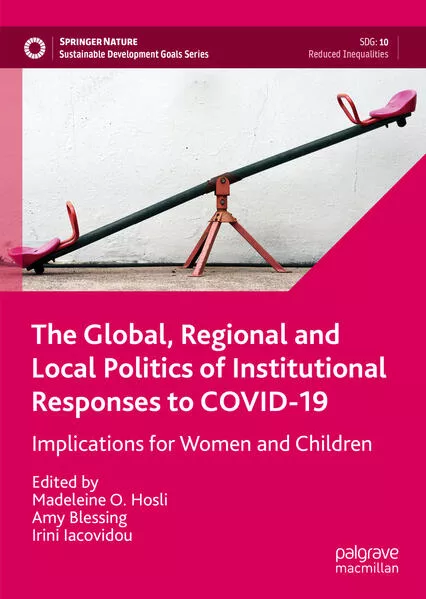
The Global, Regional and Local Politics of Institutional Responses to COVID-19
The shift from response to recovery is now noticeable as the world moves past the paralyzing effects of the COVID-19 pandemic. This book explores responses to the pandemic by international, regional, and local institutions, multilateral action, and crisis prevention efforts at different levels of governance, with a specific focus on the situation of women and children.
The Global, Regional and Local Politics of Institutional Responses to COVID-19
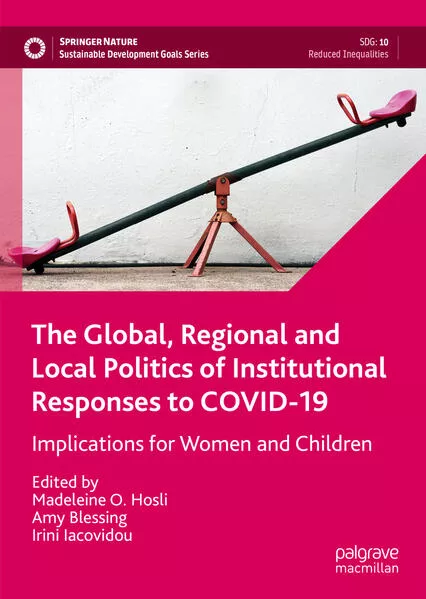
The shift from response to recovery is now noticeable as the world moves past the paralyzing effects of the COVID-19 pandemic. This book explores responses to the pandemic by international, regional, and local institutions, multilateral action, and crisis prevention efforts at different levels of governance, with a specific focus on the situation of women and children.