
- Publikationen ca: 2
- Fragen & Antworten
James F. Albrecht / Garth den Heyer
James Albrecht is a Professor in the Department of Criminal Justice and Homeland Security at Pace University. A Fulbright Fellow in 1998, he taught at Finland’s National Police College and is an expert in policing, terrorism response, and law enforcement leadership. He has lectured globally and consults for the UN, US Department of State, and other agencies. A 20-year NYPD veteran, he retired as Commanding Officer of Transit Bureau District 20 and was a first responder on 9/11. He later served as Police Chief for the EULEX mission in Kosovo. He has authored and edited books on policing, crime reduction, and law enforcement policy, with works on community policing, corruption, and counter-terrorism. His research informs policing strategies worldwide, shaping law enforcement effectiveness and public trust.
Dr. Garth den Heyer is a leading researcher in policing and counter-terrorism and an instructor at Arizona State University’s School of Criminology and Criminal Justice. He holds senior fellowships in the UK and US and earned his doctorate from Charles Sturt University. A former New Zealand police officer with over 38 years of service, he retired as an inspector. For more than 20 years, he led national efforts in border security, counter-terrorism, emergency management, and disaster response. He also managed strategy development for the Provincial Police Force in the Solomon Islands, focusing on police reform. An economist and mixed-methods researcher, his work examines police reform, service effectiveness, and responses to terrorism. He has published over 35 articles, 15 books, and 23 chapters on criminal justice topics. He serves on multiple police advisory committees and editorial boards, contributing to global policing research and policy development.
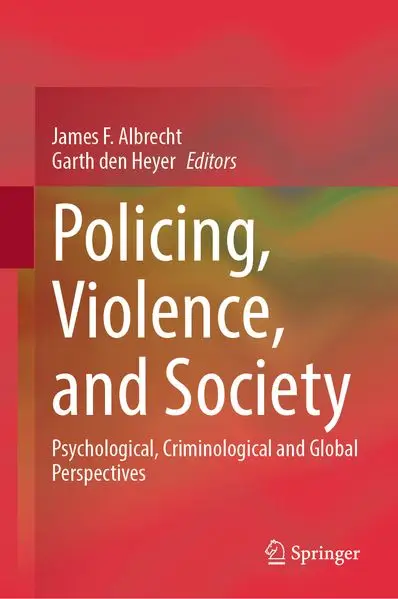
Policing, Violence, and Society
This book critically examines violence and violent crime through sociological, psychological, and theoretical perspectives, analyzing the complex relationships between policing, community conflict, and crime control. Bringing together leading experts, it explores the underlying factors that contribute to violence, the impact of police practices, and the challenges of balancing law enforcement with public trust.
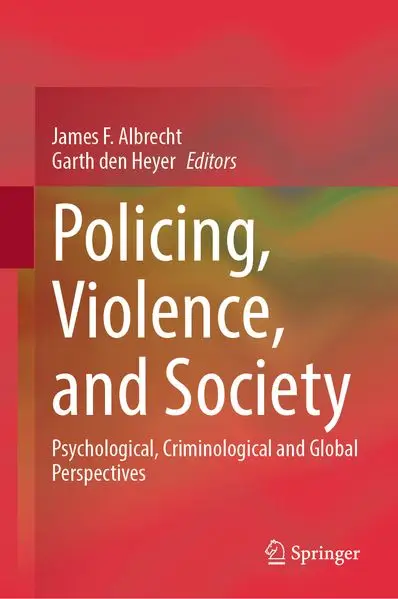
Policing, Violence, and Society
This book critically examines violence and violent crime through sociological, psychological, and theoretical perspectives, analyzing the complex relationships between policing, community conflict, and crime control. Bringing together leading experts, it explores the underlying factors that contribute to violence, the impact of police practices, and the challenges of balancing law enforcement with public trust.