
- Publikationen ca: 3
- Fragen & Antworten
Harem Karem
Harem Karem recently obtained his Ph.D. in the United Kingdom. He is currently an advisor to the Iraqi President and the executive director of a national NGO that focuses on research, training, and media. Formerly, Harem worked as a journalist covering the Middle East and worked as a researcher with a particular focus on democracy and elections.
Cyberdemocracy
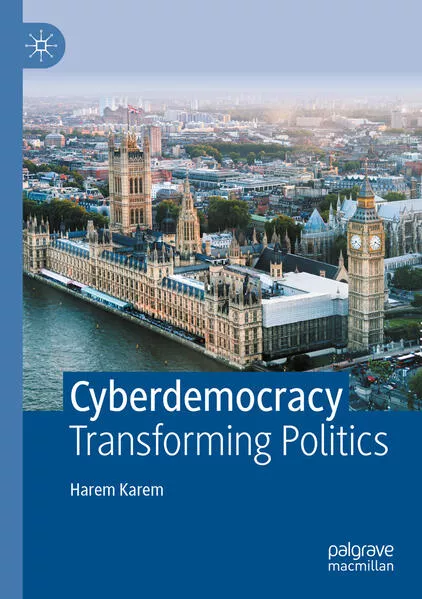
This book is explicitly modernist at a time when many scholars have either forgotten the emancipatory promise of the Enlightenment or railed against it in the name of postmodernism. The book, broadly, adopts a hybrid epistemology that utilises the critical insights of Geisteswissenschaften Tradition (Weberian ‘Ideal-Type Analysis’) and the Habermas (1988) notions of the ‘public sphere’ and deliberative/dialogic democracy (‘ideal speech’) to advance a general proposition of democratic renewal by way of cyberdemocracy.
Cyberdemocracy
This book is explicitly modernist at a time when many scholars have either forgotten the emancipatory promise of the Enlightenment or railed against it in the name of postmodernism. The book, broadly, adopts a hybrid epistemology that utilises the critical insights of Geisteswissenschaften Tradition (Weberian ‘Ideal-Type Analysis’) and the Habermas (1988) notions of the ‘public sphere’ and deliberative/dialogic democracy (‘ideal speech’) to advance a general proposition of democratic renewal by way of cyberdemocracy.
Cyberdemocracy
This book is explicitly modernist at a time when many scholars have either forgotten the emancipatory promise of the Enlightenment or railed against it in the name of postmodernism. The book, broadly, adopts a hybrid epistemology that utilises the critical insights of Geisteswissenschaften Tradition (Weberian ‘Ideal-Type Analysis’) and the Habermas (1988) notions of the ‘public sphere’ and deliberative/dialogic democracy (‘ideal speech’) to advance a general proposition of democratic renewal by way of cyberdemocracy.