
- Publikationen ca: 2
- Fragen & Antworten
John Komlos
John Komlos is Professor Emeritus of Economics and of Economic History, University of Munich. He also taught as a visitor at Harvard, Duke University, University of North Carolina, as well as in Vienna and St. Gallen (Switzerland). His mentor was the Nobel-Prize winning economist Robert Fogel, who suggested that he study the impact of economic processes on human biology. Komlos devoted most of his academic career developing and expanding this research agenda, which culminated in his founding of the field of “Economics and Human Biology” with the journal of the same name in 2003. Through that research program he became a humanistic economist realizing that conventional economics does not reflect well the way the real economy functions. Since the financial crisis of 2008 he has been writing about current economic issues from a humanistic perspective. His textbook, Foundations of Real-World Economics (2rd edition, Routledge, 2019), advocates for a “Capitalism with a Human Face".
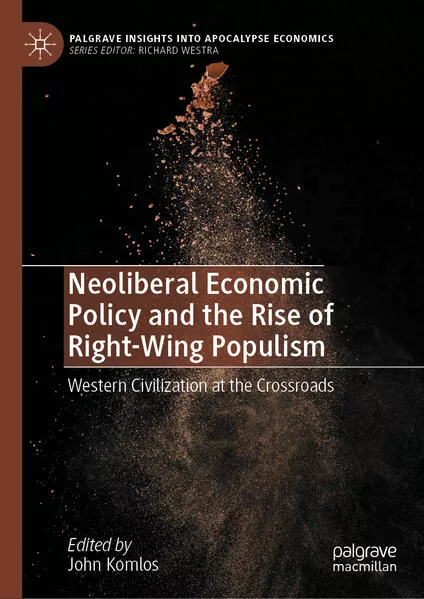
Neoliberal Economic Policy and the Rise of Right-Wing Populism
This edited volume explores and makes explicit the links between neoliberal economic policies and right-wing ideology. The book focuses on the case of the US while situating these trends in the global political economy.The book brings together contributions from an interdisciplinary perspective, integrating economics, political science and sociology to examine the connections between the economic precarity generated by neoliberalism and the rise of the far right.
Neoliberal Economic Policy and the Rise of Right-Wing Populism
This edited volume explores and makes explicit the links between neoliberal economic policies and right-wing ideology. The book focuses on the case of the US while situating these trends in the global political economy.The book brings together contributions from an interdisciplinary perspective, integrating economics, political science and sociology to examine the connections between the economic precarity generated by neoliberalism and the rise of the far right.