
- Publikationen ca: 2
- Fragen & Antworten
Catriona J. McKenzie
Catriona J. McKenzie is Associate Professor at the University of Exeter, UK. She has been developing the field of Applied Bioarchaeology through projects such as Literary Archaeology: Exploring the Lived Environment of the Slave (AHRC funded), and Care, the Great Human Tradition: A Multidisciplinary Collaborative Exploration of Family Care Across Time and Culture (Wellcome Trust funded). Previous books include the co-edited volume Writing Remains: New Intersections of Archaeology, Literature and Science; the co-authored book Life and Death in Medieval Gaelic Ireland: The Skeletons from Ballyhanna, Co. Donegal; and a co-edited volume The Science of a Lost Medieval Gaelic Cemetery: The Ballyhanna Research Project.
Lorna Tilley is an independent researcher living in Australia. Her research focuses on lived experiences of disability and care in the past, and the methodology she developed is described in Theory and Practice in the Bioarchaeology of Care (the first volume in the Bioarchaeology and Social Theory series). She has since co-edited a volume on advances in the bioarchaeology of care approach—New Developments in the Bioarchaeology of Care: Further Case Studies and Extended Theory and two Special Issues in the International Journal of Paleopathology on Mummy Studies and the Bioarchaeology of Care and Disability and Care in Western Europe during Medieval Times: A Bioarchaeological Perspective.
Jennifer E. Mack is the Lead Bioarchaeologist of the Asylum Hill Project at the University of Mississippi Medical Center, USA. Her research focuses on mortuary variation and evidence of health and disease in historic-period cemeteries, particularly those associated with public institutions. She co-authored Dubuque’s Forgotten Cemetery: Excavating a Nineteenth-century Burial Ground in a Twenty-first-century City, which won the Society for Historical Archaeology’s James Deetz book award in 2017.
Laura H. Evis is Senior Lecturer in Forensic Archaeology and Anthropology at the University of Exeter, UK. She develops and adapts bioarchaeological techniques to improve data capture in archaeological investigations and forensic casework. A core component of her work is fostering strong collaborative relationships with emergency services and heritage organizations, facilitating knowledge exchange and the translation of her research into professional practice.
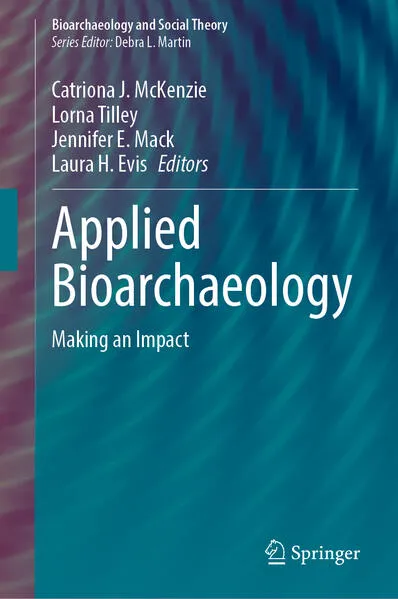
Applied Bioarchaeology
This is the first book to address theory and practice in Applied Bioarchaeology—a term used to describe bioarchaeological research which addresses matters of relevance today, and which actively engages people in the research process in ways that are respectful and relevant to the studied population, their communities, and their descendants.
Applied Bioarchaeology
This is the first book to address theory and practice in Applied Bioarchaeology—a term used to describe bioarchaeological research which addresses matters of relevance today, and which actively engages people in the research process in ways that are respectful and relevant to the studied population, their communities, and their descendants.