
- Publikationen ca: 3
- Fragen & Antworten
Evgeny Pashentsev
Evgeny Pashentsev is Professor and Leading Researcher at the Diplomatic Academy of the Ministry of Foreign Affairs of the Russian Federation, Russia. He is a coordinator of the International Research MUAI Group, and a member of the International Advisory Board of Comunicar, Spain, and the editorial board of the Journal of Political Marketing, USA.
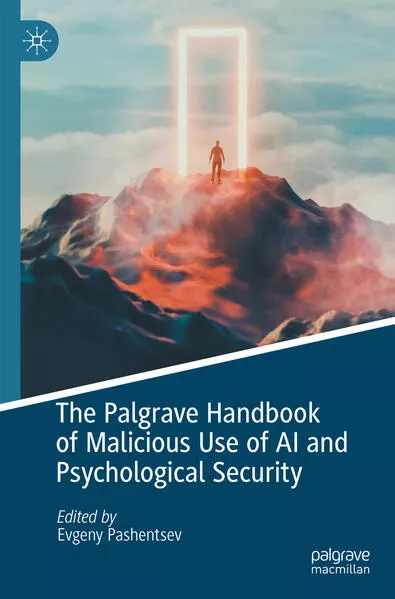
The Palgrave Handbook of Malicious Use of AI and Psychological Security
This handbook focuses on new threats to psychological security that are posed by the malicious use of AI and how it can be used to counteract such threats. Studies on the malicious use of AI through deepfakes, agenda setting, sentiment analysis and affective computing and so forth, provide a visual representation of the various forms and methods of malicious influence on the human psyche, and through this on the political, economic, cultural processes, the activities of state and non-state institutions.
The Palgrave Handbook of Malicious Use of AI and Psychological Security
This handbook focuses on new threats to psychological security that are posed by the malicious use of AI and how it can be used to counteract such threats. Studies on the malicious use of AI through deepfakes, agenda setting, sentiment analysis and affective computing and so forth, provide a visual representation of the various forms and methods of malicious influence on the human psyche, and through this on the political, economic, cultural processes, the activities of state and non-state institutions.
The Palgrave Handbook of Malicious Use of AI and Psychological Security
This handbook focuses on new threats to psychological security that are posed by the malicious use of AI and how it can be used to counteract such threats. Studies on the malicious use of AI through deepfakes, agenda setting, sentiment analysis and affective computing and so forth, provide a visual representation of the various forms and methods of malicious influence on the human psyche, and through this on the political, economic, cultural processes, the activities of state and non-state institutions.