Kein Foto

Maarit Piipponen

Maarit Piipponen is University Lecturer in English literature at Tampere University, Finland. Her research focuses on constructions of gender and ethnicity as well as mobility and spatiality in crime fiction. She is the co-editor of Topographies of Popular Culture (2016).


Helen Mäntymäki is Senior Lecturer at the Department of Language and Communication Studies at the University of Jyväskylä, Finland, where she teaches English literature and culture. Her main research interests include violence, gender and species in crime fiction.


Marinella Rodi-Risberg is Affiliated Researcher, Department of Language and Communication Studies, University of Jyväskylä, Finland, and has published on representations of trauma in journals and books including Critique: Studies in Contemporary Fiction, Studies in the Novel and Trauma and Literature (2018).
Transnational Crime Fiction

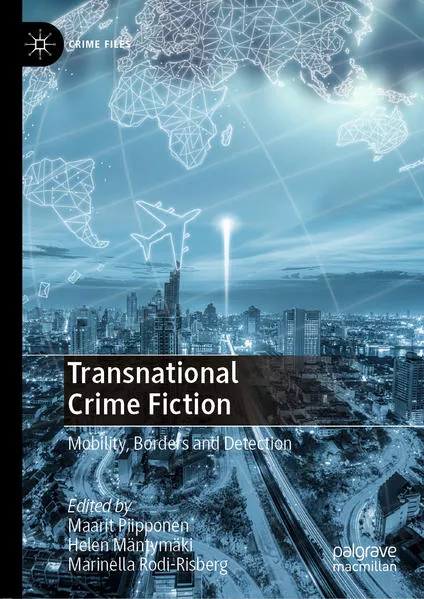
Transnational Crime Fiction

Focusing on contemporary crime narratives from different parts of the world, this collection of essays explores the mobility of crimes, criminals and investigators across social, cultural and national borders. The essays argue that such border crossings reflect on recent sociocultural transformations and geopolitical anxieties to create an image of networked and interconnected societies where crime is not easily contained.

Transnational Crime Fiction

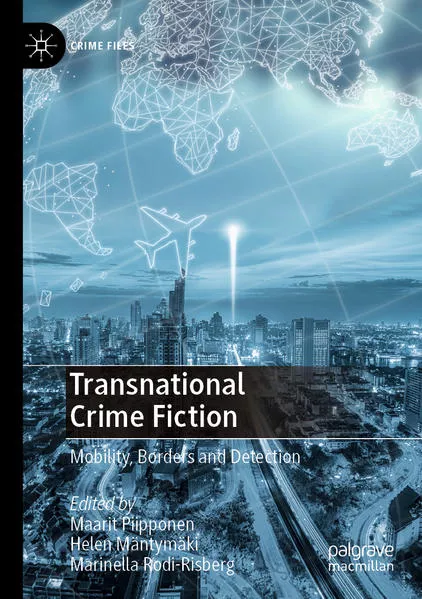
Transnational Crime Fiction

Focusing on contemporary crime narratives from different parts of the world, this collection of essays explores the mobility of crimes, criminals and investigators across social, cultural and national borders. The essays argue that such border crossings reflect on recent sociocultural transformations and geopolitical anxieties to create an image of networked and interconnected societies where crime is not easily contained.

Transnational Crime Fiction

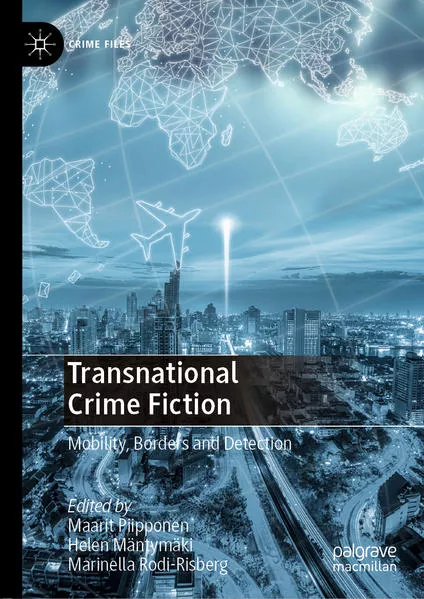
Transnational Crime Fiction

Focusing on contemporary crime narratives from different parts of the world, this collection of essays explores the mobility of crimes, criminals and investigators across social, cultural and national borders. The essays argue that such border crossings reflect on recent sociocultural transformations and geopolitical anxieties to create an image of networked and interconnected societies where crime is not easily contained.