Kein Foto

Jon Douglas Solomon

Jon Solomon is a professor in the Department of Chinese Literature, UniversitĂ© Jean Moulin Lyon 3 and a researcher attached to the Centre de Recherches Plurilingues et Multidisciplinaires, UniversitĂ© Paris Nanterre. His publications have focused on the biopolitics of translation, developing a critique of the disciplinary divisions of the Humanities in their relation to the economic and political divisions of the postcolonial world. Recent publications include a book in Chinese about the 2019 Hong Kong anti-ELAB movement, A Genealogy of Defeat of the Left: Translation, Transition, and Bordering in the anti-ELAB Movement in Hong Kong, and an article in English titled Logistical Species and Translational Process: A Critique of the Colonial—Imperial Modernity that appeared in the Montreal-based journal IntermĂ©dialitĂ©s.
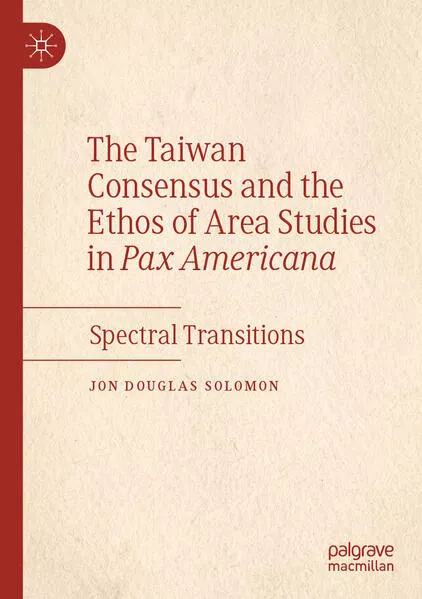
The Taiwan Consensus and the Ethos of Area Studies in Pax Americana

The Taiwan Consensus and the Ethos of Area Studies in Pax Americana

This book constitutes a timely intervention into debates over the status of Taiwan, at a moment when discussions of democracy and autocracy, imperialism and agency, unipolarity and multipolarity, dominate the intellectual agenda of the day. Pursuing a parallel trajectory that is both epistemic and historical, that is traced out in relation both to Taiwan’s recent history and to the disparate forms of knowledge production about that history, this work engages in scholarly debate about some of the burning issues of our time, including transitional justice, hegemony and conspiracy in the digital age, debt regimes, cultural difference, national language, and the traumatic legacies of war, colonialism, anticommunism, antiblackness, and neoliberalism.

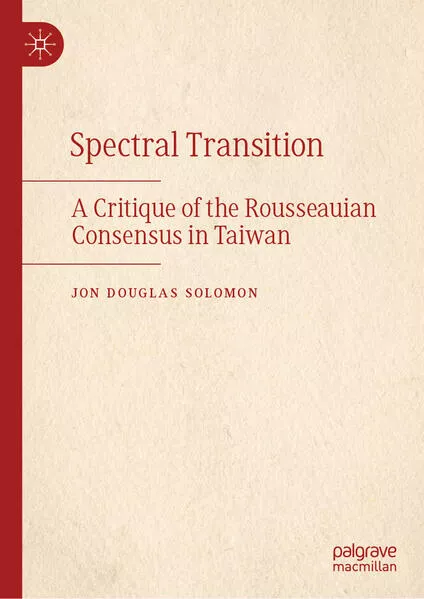
Spectral Transition

Spectral Transition

This book constitutes a timely intervention into debates over the status of Taiwan, at a moment when discussions of democracy and autocracy, imperialism and agency, unipolarity and multipolarity, dominate the intellectual agenda of the day. Pursuing a parallel trajectory that is both epistemic and historical, that is traced out in relation both to Taiwan’s recent history and to the disparate forms of knowledge production about that history, this work engages in scholarly debate about some of the burning issues of our time, including transitional justice, hegemony and conspiracy in the digital age, debt regimes, cultural difference, national language, and the traumatic legacies of war, colonialism, anticommunism, antiblackness, and neoliberalism.

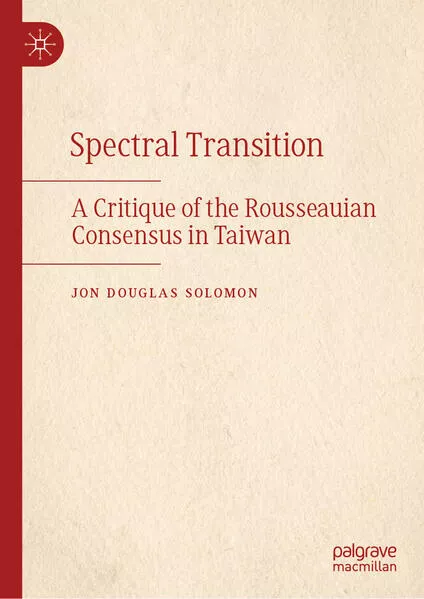
Spectral Transition

Spectral Transition

This book constitutes a timely intervention into debates over the status of Taiwan, at a moment when discussions of democracy and autocracy, imperialism and agency, unipolarity and multipolarity, dominate the intellectual agenda of the day. Pursuing a parallel trajectory that is both epistemic and historical, that is traced out in relation both to Taiwan’s recent history and to the disparate forms of knowledge production about that history, this work engages in scholarly debate about some of the burning issues of our time, including transitional justice, hegemony and conspiracy in the digital age, debt regimes, cultural difference, national language, and the traumatic legacies of war, colonialism, anticommunism, antiblackness, and neoliberalism.