
- Publikationen ca: 2
- Fragen & Antworten
Asheem Srivastav
Asheem Kumar Srivastav, Veteran Forester and former Indian Forest Service Officer, held the prestigious position of Principal Chief Conservator of Forests. He is Alumnus of the Indira Gandhi National Forest Academy and Delhi University, where he earned master’s degrees in natural resource management and zoology respectively. His education also includes training at the University of Edinburgh, the University of Wolverhampton, and the University of British Columbia in the fields of natural resource management and forestry. Over a career spanning 36 years, he has held various roles in policymaking, advisory, programmatic, and implementation capacities within the Indian government and international organizations such as the International Union for Conservation of Nature and Natural Resources, Traffic International, and the Ministry of Environment, Forests and Climate Change.
He has written approximately twenty-four research papers and four notable books, with ‘Energy Dynamics and Climate Change’ and ‘The Science and Impact of Climate Change’ being the most distinguished among them.
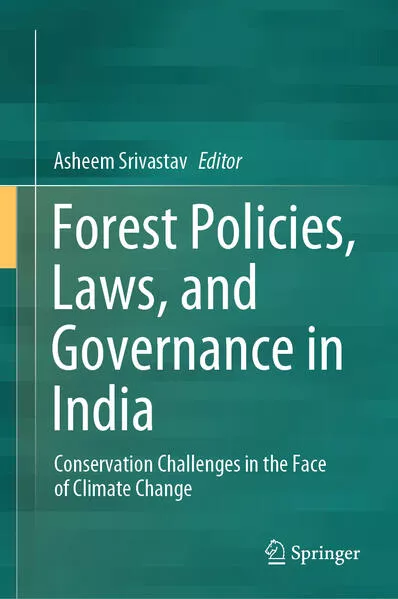
Forest Policies, Laws, and Governance in India
The book delves into the intricate relationship between India’s forest governance, laws, and policies over time, examining their effects on the quality and coverage of the country’s forests. Historically, especially during the British era and the initial phase following independence, forests were valued for timber, leading to increased deforestation to fulfill the rising demands of shipbuilding, railways, residential construction, and industry.
Forest Policies, Laws, and Governance in India
The book delves into the intricate relationship between India’s forest governance, laws, and policies over time, examining their effects on the quality and coverage of the country’s forests. Historically, especially during the British era and the initial phase following independence, forests were valued for timber, leading to increased deforestation to fulfill the rising demands of shipbuilding, railways, residential construction, and industry.