Chronologie aller Bände (1 - 2)
Die Reihenfolge beginnt mit dem Buch "Materiale Textkulturen". Wer alle Bücher der Reihe nach lesen möchte, sollte mit diesem Band von Thomas Meier beginnen. Mit insgesamt 2 Bänden wurde die Reihe über einen Zeitraum von ungefähr 7 Jahren fortgesetzt. Der neueste Band trägt den Titel "Image, Text, Stone".
- Anzahl der Bewertungen für die gesamte Reihe: 0
- Ø Bewertung der Reihe: 0
- Start der Reihe: 29.01.2015
- Neueste Folge: 18.07.2022
Diese Reihenfolge enthält 2 unterschiedliche Autoren.

- Band: 1
- Autor: Meier, Thomas
- Anzahl Bewertungen: 0
- Ø Bewertung:
- Medium: Buch
- Veröffentlicht: 29.01.2015
- Genre: Comedy
Materiale Textkulturen
How does one define and explore the “material presence of the written in non-typographical cultures?” The interdisciplinary and collaborative essays in this handbook present theoretical principles, describe text-bearing materials and objects, and investigate the diverse practices related to text-bearing artifacts. The analysis is illustrated with examples drawn from a period of over 4,500 years.
- Band: 36
- Autor: Dietrich, Nikolaus
- Anzahl Bewertungen: 0
- Ø Bewertung:
- Medium: Buch
- Veröffentlicht: 18.07.2022
- Genre: Roman
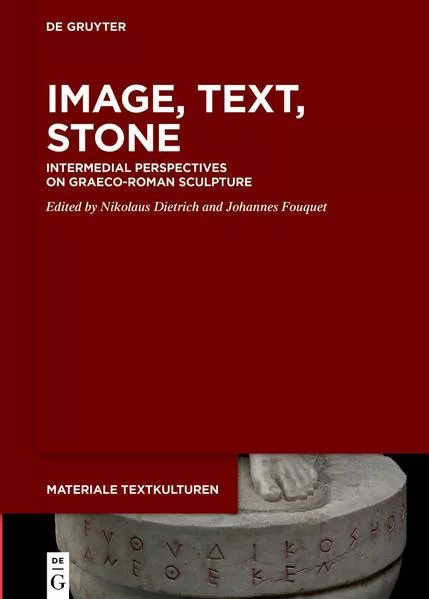
Image, Text, Stone
This edited volume explores the intermediality of image and text in Graeco-Roman sculpture. Through its choice of authors, disciplinary backgrounds are deliberately merged in order to bridge the traditional gap between archaeologists, epigraphists and philologists, who for a long time studied statues, material inscriptions and literary epigrams within the closely confined borders of their individual disciplines. Through its choice of objects, privileging works of which there are significant material remains, through its inclusion of all kinds of figural-cum-inscriptional designs, ranging from grand sculpture to reliefs and ‘decorative’ marble-objects, and through its methodological emphasis on ‘close viewing’ (and reading!) of individual objects, this volume focuses on the materiality of both sculpture and inscription. This perspective is enriched by two comparative chapters on inscribing Greek vases and Roman walls (graffiti). The intermediality of image and inscription is envisaged from various thematic angles, including the intricacies of combining image and epigram (both materially and in literary projection), the original production and reception of inscribed sculpture in its ‘long life’, the viewing and ‘reading’ of sculpture in a space of movement, the issue of (re-)naming statues, and the image and inscription in its social and gender-historical context.