Chronologie aller Bände (1 - 4)

Die Reihenfolge beginnt mit dem Buch "Adaptive Reuse for Urban Food Provision". Wer alle Bücher der Reihe nach lesen möchte, sollte mit diesem Band von Monika Szopińska-Mularz beginnen. Der zweite Teil der Reihe "Adaptive Reuse for Urban Food Provision" ist am 14.07.2023 erschienen. Mit insgesamt 4 Bänden wurde die Reihe über einen Zeitraum von ungefähr 4 Jahren fortgesetzt. Der neueste Band trägt den Titel "Green Urban Planning".
- Anzahl der Bewertungen für die gesamte Reihe: 0
- Ø Bewertung der Reihe: 0
- Start der Reihe: 13.07.2022
- Neueste Folge: 03.08.2026
Diese Reihenfolge enthält 4 unterschiedliche Autoren.
- Autor: Szopińska-Mularz, Monika
- Anzahl Bewertungen: 0
- Ø Bewertung:
- Medium: Buch
- Veröffentlicht: 13.07.2022
- Genre: Politik
Adaptive Reuse for Urban Food Provision
This book analyses the adaptive reuse potential of inner-city modern movement car parking structures for controlled environment agriculture systems and the contribution of such a transformation to urban development. Modern movement garages built over the last 60 years are becoming redundant due to changing mobility trends and growing environmental awareness. Adaptive reuse is one of the scenarios that can reconcile these megastructures with contemporary urban needs. The novel function proposed in this study for multi-storey garages is controlled environment agriculture, which is a food production technique that is now developing in cities as an innovative business and a secondary food source.
First, the study focuses on the theory of repurposing existing buildings for food production, which is then summarised in the form of a guide for the analysis of the adaptive reuse potential of inner-city car parking structures for controlled environment agriculture. Second, the guide is applied to two case studies, which allows exploring their potential to accommodate urban farming from planning, architectural, and environmental perspectives.The book aims to inspire and support decision-makers, architects, scholars and students when elaborating novel solutions for repurposing buildings for alternative functions. The publication encourages treating existing building stock as a resource that can become a stimulus for the new design process, which improves urban food provision.
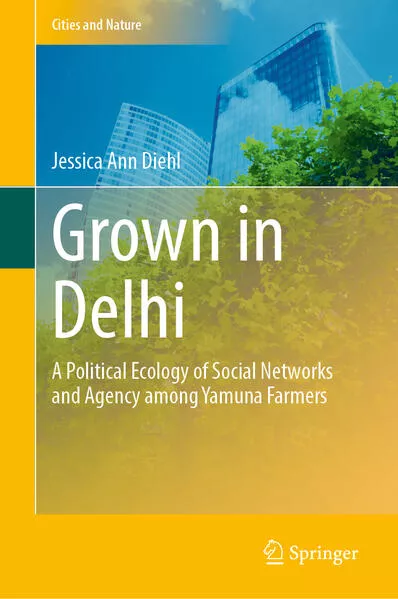
- Autor: Diehl, Jessica Ann
- Anzahl Bewertungen: 0
- Ø Bewertung:
- Medium: Buch
- Veröffentlicht: 10.04.2023
- Genre: Politik
Grown in Delhi
This monograph will be of interest to academic faculty and graduate students in critical geography, cultural anthropology, food studies, landscape architecture/urban planning, and sociology.
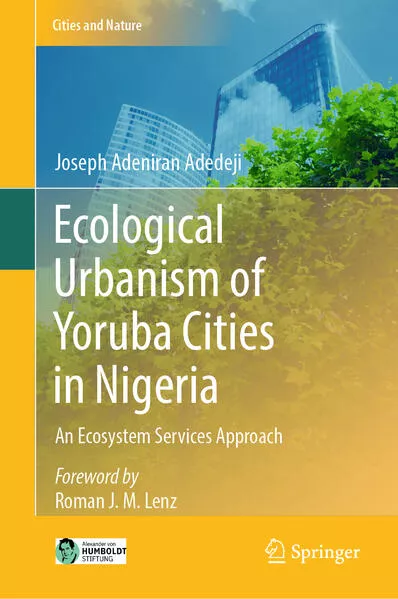
- Autor: Adedeji, Joseph Adeniran
- Anzahl Bewertungen: 0
- Ø Bewertung:
- Medium: Buch
- Veröffentlicht: 23.07.2023
- Genre: Roman
Ecological Urbanism of Yoruba Cities in Nigeria
- Autor: Meher Nigar Neema
- Anzahl Bewertungen: 0
- Ø Bewertung:
- Medium: Buch
- Veröffentlicht: 03.08.2026
- Genre: Sonstiges
Green Urban Planning
This book will be different and new in relation to the available books in the market, such as Urban Green utilizing Innovative Parks for Resurgent Cities, Green and Ecological Technologies for Urban Planning in relation to Creating Smart Cities. The book starts with basic concepts, identifies problems and possible solutions applying models with real context, providing recommendations for achieving green urban planning for sustainable urban development. This book provides a wide coverage on the possible response to the essential issues of green urban planning in rapidly growing urban spaces. This book shows how cities deal qualitatively with the environmental challenges posed by its growth using GA and GIS based techniques. The proposed book will definitely serve as a core course module with fundamental knowledge with complete coverage on all topics of green urban planning including many case studies using GA and GIS with worked out examples. These are the main features of this book. Moreover, the book will accompany ancillary content of the main text to help readers. The book is divided into twelve chapters. This book is unique in its field because Green Urban Planning for a Healthy, Sustainable, and Livable City encompasses everyone's interests and there are negligible books published on such a hot topic.
Human civilization is going through a critical phase in its history. Technological progress has resulted in the concentration of population in cities, consequently they are cut off from nature, voracious consumption of natural resources, and causes tremendous damage to the environment. Global warming and climate change pose serious challenges to the sustained advancement of mankind. Moreover, a sedentary lifestyle with gadgets designed to lessen physical exertion has become a threat to healthy living, wiping out some of the benefits of the development of medical science. Urban planning, like many other disciplines, has a role to play to reverse this trend and mitigate its adverse effects. Green urban planning is an emerging theory and practice that intends to address these issues and transform cities into settlements that offer a healthy and wholesome living environment at present without jeopardizing the future. This book presents a comprehensive perspective of green urban planning in relation to the multifaceted benefits it is expected to deliver. The conceptual development of green urban planning as well as practical case studies are presented with recommendations for practical applications.