Chronologie aller Bände (1 - 3)
Die Reihenfolge beginnt mit dem Buch "Johannes Kepler". Wer alle Bücher der Reihe nach lesen möchte, sollte mit diesem Band von Wolfgang Osterhage beginnen. Der zweite Teil der Reihe "William Dawes" ist am 01.12.2024 erschienen. Mit insgesamt 3 Bänden wurde die Reihe über einen Zeitraum von ungefähr 4 Jahren fortgesetzt. Der neueste Band trägt den Titel "William Dawes".
- Anzahl der Bewertungen für die gesamte Reihe: 6
- Ø Bewertung der Reihe: 5
- Start der Reihe: 28.05.2021
- Neueste Folge: 01.12.2024
Diese Reihenfolge enthält 3 unterschiedliche Autoren.
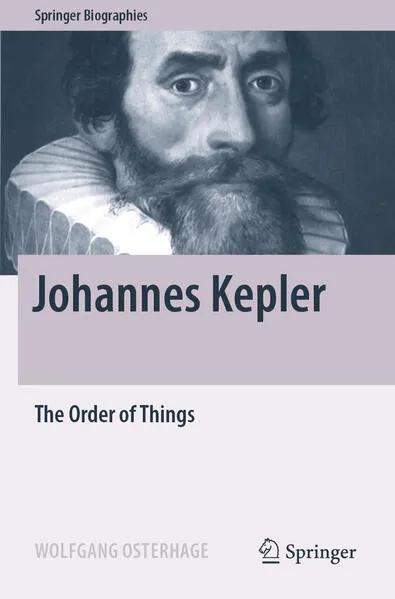
- Autor: Osterhage, Wolfgang
- Anzahl Bewertungen: 0
- Ø Bewertung:
- Medium: Buch
- Veröffentlicht: 28.05.2021
- Genre: Sonstiges
Johannes Kepler
This book traces the development of Kepler’s ideas along with his unsteady wanderings in a world dominated by religious turmoil. Johannes Kepler, like Galileo, was a supporter of the Copernican heliocentric world model. From an early stage, his principal objective was to discover “the world behind the world”, i.e. to identify the underlying order and the secrets that make the world function as it does: the hidden world harmony. Kepler was driven both by his religious belief and Greek mysticism, which he found in ancient mathematics.
His urge to find a construct encompassing the harmony of every possible aspect of the world – including astronomy, geometry and music – is seen as a manifestation of a deep human desire to bring order to the apparent chaos surrounding our existence. This desire continues to this day as we search for a theory that will finally unify and harmonise the forces of nature.
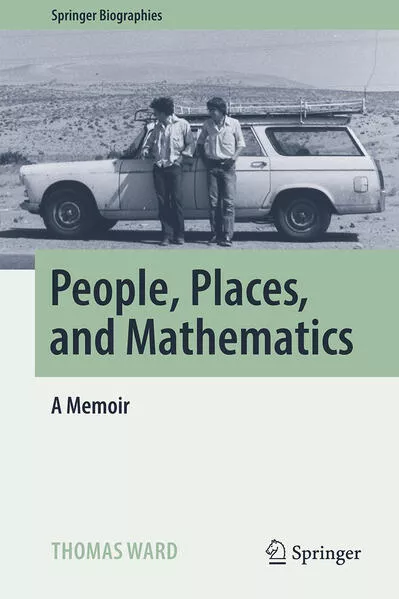
- Autor: Ward, Thomas
- Anzahl Bewertungen: 3
- Ø Bewertung: 5.0
- Medium: Buch
- Veröffentlicht: 23.11.2023
- Genre: Politik
People, Places, and Mathematics
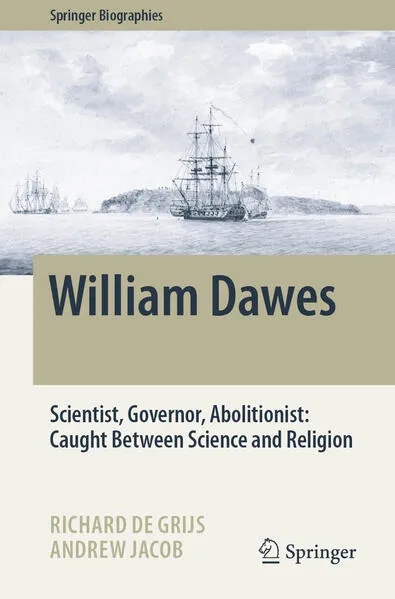
- Autor: de Grijs, Richard
- Anzahl Bewertungen: 0
- Ø Bewertung:
- Medium: Buch
- Veröffentlicht: 01.12.2024
- Genre: Sonstiges
William Dawes
This book describes William Dawes’ life and professional achievements. William Dawes was a British Marine serving as the official astronomer on board the First Fleet making the 1787–1788 voyage from Britain to the new colony of New South Wales. Between 1788 and 1791, Dawes established not one but two observatories within a kilometre of Sydney’s present-day city centre, a full seven decades before the construction of Sydney’s historical Observatory at Dawes’ Point, today a stone’s throw from the Sydney Harbour Bridge.
In this comprehensive biography, the authors discuss William Dawes’ life and his considerable impact—as astronomer, engineer, surveyor, ordnance officer and intellectual centre point—on the early colony in New South Wales (in essence, his impact on the earliest history of Sydney as a settlement) and, subsequently, on the British colonies of Sierra Leone on the West African coast and Antigua in the West Indies.Dawes’ life and professional achievements are closely linked to the earliest history of Sydney as a British settlement. He is often considered a man of high morals, and as such his interactions with the local populations in New South Wales, Sierra Leone and Antigua were mostly deemed respectful and above reproach. He is seen a truly enlightened individual, far ahead of his time.
The authors of this book have a significant track record of successful and engaging communication of complex concepts in physics and astronomy with experts and non-experts alike. This biography touches on numerous aspects related to 18th century maritime navigation (“sailing on the stars”), societal relationships, the exploration of newly discovered lands, as well as the early history of Sydney and New South Wales, and the colonial histories of Sierra Leone and the West Indies. As such, this book will appeal to a wide range of readers, from scholars in the history of science and maritime navigation, to history enthusiasts ranging from local historians on Australia’s eastern seaboard to members of the public with a keen interest in British colonial history.