Chronologie aller Bände (1 - 3)
Die Reihenfolge beginnt mit dem Buch "Islam, Migration and Jinn". Wer alle Bücher der Reihe nach lesen möchte, sollte mit diesem Band von Annabelle Böttcher beginnen. Der zweite Teil der Reihe "Postcolonialism and Social Theory in Arabic" ist am 13.09.2024 erschienen. Mit insgesamt 3 Bänden wurde die Reihe über einen Zeitraum von ungefähr 3 Jahren fortgesetzt. Der neueste Band trägt den Titel "Islamic Doctrines and Political Liberalism".
- Anzahl der Bewertungen für die gesamte Reihe: 0
- Ø Bewertung der Reihe: 0
- Start der Reihe: 15.03.2022
- Neueste Folge: 14.11.2024
Diese Reihenfolge enthält 3 unterschiedliche Autoren.
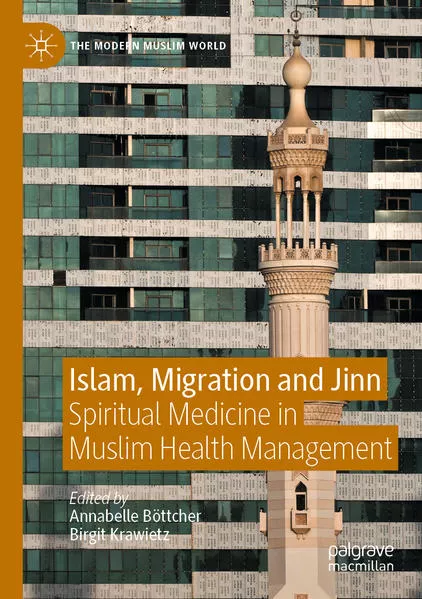
- Autor: Böttcher, Annabelle
- Anzahl Bewertungen: 0
- Ø Bewertung:
- Medium: Buch
- Veröffentlicht: 15.03.2022
- Genre: Politik
Islam, Migration and Jinn
This book explores the agency of Jinn, the so-called “demons of Islam”. They are regarded as mostly invisible and highly mobile creatures. In a globalized world with manifold forms of forced and voluntary migrations, Jinn are likewise on the move, interfering in the human world and affecting the mental and physical health of Muslims. This continuous challenge has so far been mainly addressed by traditional Muslim health management and by the so-called spiritual medicine or medicine of the Prophet. This book shifts perspective. Its interdisciplinary chapters deal with the transformation of manifold cultural resources by first analyzing the doctrinal and cultural history of Jinn and the treatment of Jinn affliction in Arabic texts and other sources. It then discusses case studies of Muslims and current health management approaches in the Middle East, namely in Egypt and Syria. Finally, it turns to the role of Jinn in a number of migratory settings such as Spain, Denmark, Great Britain and Guantanamo.
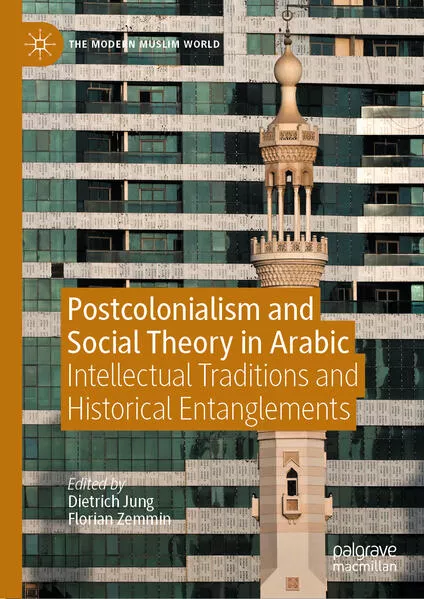
- Autor: Jung, Dietrich
- Anzahl Bewertungen: 0
- Ø Bewertung:
- Medium: Buch
- Veröffentlicht: 13.09.2024
- Genre: Politik
Postcolonialism and Social Theory in Arabic
Since Edward Said’s publication of Orientalism in 1978, so-called Western social theory and its claim to universal analytical validity has been exposed to severe criticism. Scholars from the field of postcolonial studies were most vocal in criticizing the Eurocentric nature of the conceptual apparatus of the social sciences. Indeed, contemporary social theory almost exclusively refers to the historical experiences of Western Europe and North America. Yet what is the alternative to these Eurocentric frameworks? Many postcolonial critics use very few non-English sources and tend to focus on the deconstruction of European and American theories.
The chapters of this volume provide a turn of perspective. The authors critically reflect upon the concepts of so-called Western social theory by engaging with social science literature and social theory in Arabic. Questions addressed include: What are the concepts, themes, and historical narratives in contemporary Arabic social theory? In which ways do Arab social theorists provide us with alternatives to the conceptual apparatuses employed by so-called Western social theory? To what extent are Arab and Western social theories entangled with each other?
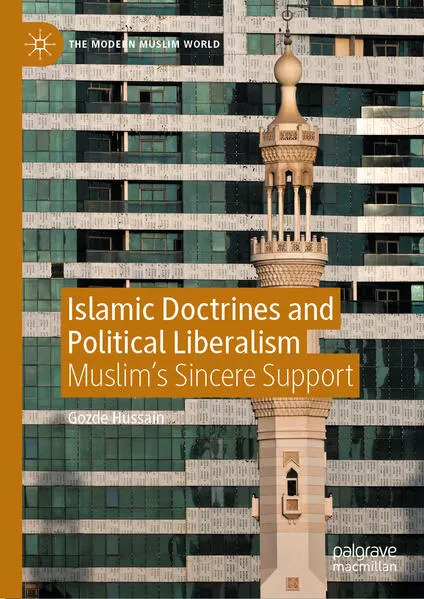
- Autor: Hussain, Gozde
- Anzahl Bewertungen: 0
- Ø Bewertung:
- Medium: Buch
- Veröffentlicht: 14.11.2024
- Genre: Politik
Islamic Doctrines and Political Liberalism
This book delves into the compatibility of Islam with liberal values, engaging in a comparative analysis of Islamic moral language and John Rawls's liberal democratic ideas. Rawls, a prominent modern liberal political philosopher, posits that diverse moral and religious doctrines in a pluralistic society should align with the principles of a liberal democratic political culture. The author shares Rawls's assumptions and maps out a spectrum of Islamic orthodoxy positions to assess the plausibility of reconciling Islamic doctrines with a liberal political order. While acknowledging that such compatibility is not the mainstream outlook, the book argues that it's feasible through reasonable interpretations of Islamic sources.
The central question addressed is the realism of observant Muslims endorsing a liberal democratic state from within their doctrinal tradition. By examining a range of Islamic orthodoxy positions, the book demonstrates that Muslims can theoretically find Islamic reasons, rooted in acceptable interpretations of divine sources, to justify their commitment to a liberal state. Furthermore, it provides moral reasons and strategies for the liberal state to address incompatible Islamic doctrines, ensuring Muslims can maintain religious practices without an Islamic political authority. This theoretical framework offers insights for future empirical and theoretical studies on Muslims navigating pluralistic liberal societies, making it a vital contribution to the discourse on Islam and liberalism.