T-Labs Series in Telecommunication Services
The Influence of Delay on Cloud Gaming Quality of Experience
Chronologie aller Bände (1 - 2)
Die Reihenfolge beginnt mit dem Buch "The Influence of Delay on Cloud Gaming Quality of Experience". Wer alle Bücher der Reihe nach lesen möchte, sollte mit diesem Band von Saeed Shafiee Sabet beginnen. Der zweite Teil der Reihe "The Influence of Delay on Cloud Gaming Quality of Experience" ist am 18.06.2022 erschienen. Die Reihe umfasst derzeit 2 Bände. Der neueste Band trägt den Titel "Assessing the Quality of Experience of Cloud Gaming Services".
- Anzahl der Bewertungen für die gesamte Reihe: 0
- Ø Bewertung der Reihe: 0
Diese Reihenfolge enthält 2 unterschiedliche Autoren.
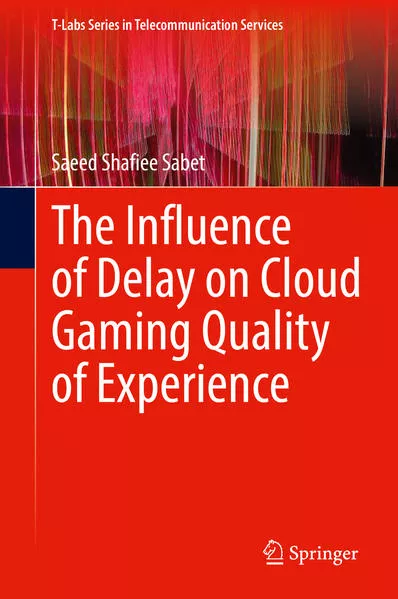
- Autor: Sabet, Saeed Shafiee
- Anzahl Bewertungen: 0
- Ø Bewertung:
- Medium: Buch
- Veröffentlicht: 19.06.2022
- Genre: Sachbuch
The Influence of Delay on Cloud Gaming Quality of Experience
This book provides an understanding of the impact of delay on cloud gaming Quality of Experience (QoE) and proposes techniques to compensate for this impact, leading to a better gaming experience when there are network delays. The author studies why some games in the cloud are more delay sensitive than others by identifying game characteristics influencing a user's delay perception and predicting the gaming QoE degraded by the delay. The author also investigates the impact of jitter and serial-position effects on gaming QoE and delay. Using the insight gained, the author presents delay compensation techniques that can mitigate the negative influence of delay on gaming QoE that use the game characteristics to adapt the games.
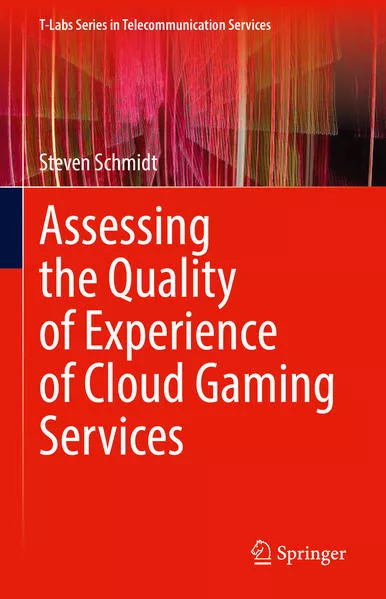
- Autor: Schmidt, Steven
- Anzahl Bewertungen: 0
- Ø Bewertung:
- Medium: Buch
- Veröffentlicht: 08.09.2022
- Genre: Sachbuch
Assessing the Quality of Experience of Cloud Gaming Services
This book provides an overview of concepts and challenges in intis investigated using structural equation modeling. The conveyed understanding of gaming QoE, empirical eraction quality in the domain of cloud gaming services. The author presents a unified evaluation approach by combining quantitative subjective assessment methods in a concise way. The author discusses a measurement tool, Gaming Input Quality Scale (GIPS), that assesses the interaction quality of such a service available. Furthermore, the author discusses a new framework to assess gaming Quality of Experience (QoE) using a crowdsourcing approach. Lastly, based on a large dataset including dominant network and encoding conditions, the evaluation method is investigated using structural equation modeling. The conveyed understanding of gaming QoE, empirical findings, and models presented in this book should be of particular interest to researchers working in the fields of quality and usability engineering, as well as service providers and network operators.