Applied Microbiology
Engineering of Pseudomonas taiwanensis VLB120 for the sustainable production of hydroxylated aromatics
Chronologie aller Bände (1 - 3)
Die Reihenfolge beginnt mit dem Buch "Engineering of Pseudomonas taiwanensis VLB120 for the sustainable production of hydroxylated aromatics". Wer alle Bücher der Reihe nach lesen möchte, sollte mit diesem Band von Benedikt Wynands beginnen. Der zweite Teil der Reihe "Metabolic Engineering ofPseudomonas taiwanensis VLB120 for sustainableProduction of 4-Hydroxybenzoate" ist am 14.02.2020 erschienen. Mit insgesamt 3 Bänden wurde die Reihe über einen Zeitraum von ungefähr 4 Jahren fortgesetzt. Der neueste Band trägt den Titel "Pseudomonas taiwanensis VLB120 synthetic biology: parts, modules, and chassis".
- Anzahl der Bewertungen für die gesamte Reihe: 0
- Ø Bewertung der Reihe: 0
- Start der Reihe: 13.05.2019
- Neueste Folge: 28.08.2023
Diese Reihenfolge enthält 3 unterschiedliche Autoren.
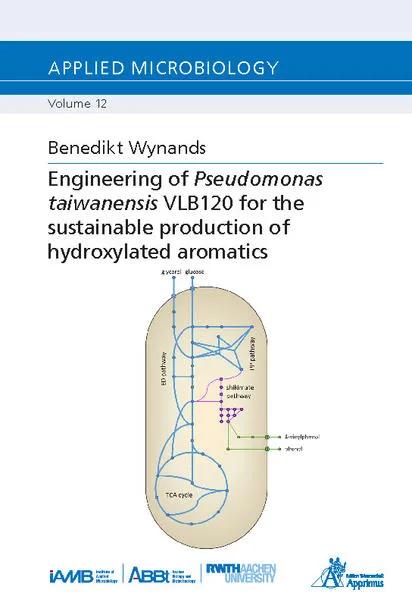
- Autor: Wynands, Benedikt
- Anzahl Bewertungen: 0
- Ø Bewertung:
- Medium: Buch
- Veröffentlicht: 13.05.2019
- Genre: Sonstiges
Engineering of Pseudomonas taiwanensis VLB120 for the sustainable production of hydroxylated aromatics
Aromatics are valuable compounds that are currently produced from non-renewable resources in polluting processes. In this thesis, we engineered solvent-tolerant Pseudomonas for the bio based production of model aromatics of industrial relevance. In this context, high-yield phenol and 4 vinylphenol production was achieved from renewable substrates. The knowledge gained contributes to the development of efficient biocatalysts needed for a sustainable bioeconomy.
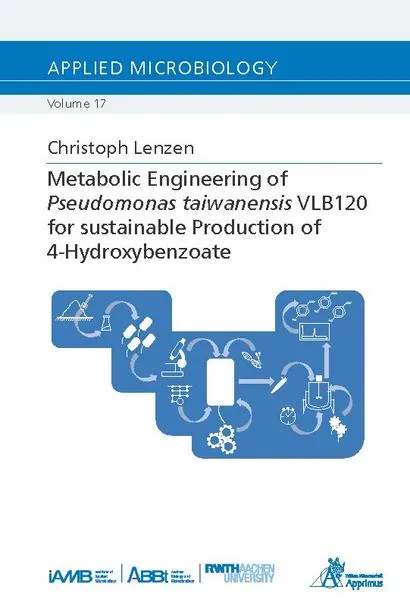
- Autor: Lenzen, Christoph
- Anzahl Bewertungen: 0
- Ø Bewertung:
- Medium: Buch
- Veröffentlicht: 14.02.2020
- Genre: Sonstiges
Metabolic Engineering ofPseudomonas taiwanensis VLB120 for sustainableProduction of 4-Hydroxybenzoate
By using microbial cell factories for the production of aromatics from sustainable substrates, drawbacks such as dependency on fossil resources as well as unfavorable production conditions can be circumvented.
This dissertation deals with the rational and non-rational metabolic engineering of Pseudomonas based biocatalysts for the production of 4-hydroxybenzoate in high yields from glucose and glycerol. The gained results bring the bio-economic formation of aromatics one step closer.
This dissertation deals with the rational and non-rational metabolic engineering of Pseudomonas based biocatalysts for the production of 4-hydroxybenzoate in high yields from glucose and glycerol. The gained results bring the bio-economic formation of aromatics one step closer.
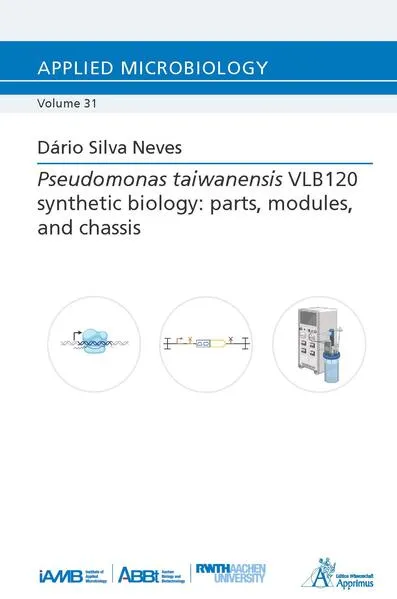
- Band: 31
- Autor: Silva Neves, Dário
- Anzahl Bewertungen: 0
- Ø Bewertung:
- Medium: Buch
- Veröffentlicht: 28.08.2023
- Genre: Sonstiges
Pseudomonas taiwanensis VLB120 synthetic biology: parts, modules, and chassis
Climate change is a pressing global issue that is caused by the consumption of fossil fuels, which releases greenhouse gases into the atmosphere. Cell factories are biological systems that are engineered to produce a wide range of products, such as biofuels, bioplastics, and pharmaceuticals which can play a crucial part in reducing the dependency on fossil fuels. Additionally, cell factories can be made more efficient and sustainable by using advanced technologies such as metabolic engineering and synthetic biology.
This thesis aimed to expand the genetic toolbox of Pseudomonas taiwanensis VLB120 and implement them for the generation of a chassis strain to enlarge the product portfolio of this emerging industrial-relevant cell factory. Sigma-70 dependent promoter libraries were generated and integrated into the single genomic locus attTn7 of P. taiwanensis VLB120 and E. coli TOP10 and characterized using a standardized promoter strength unit. Such characterization standards gave an insight into how a specific promoter behaves in each organism and create sets of promoters relevant to metabolic engineering purposes. This thesis also focused on the assessment of an optimized gene expression architecture to achieve high gene expression. This module achieved high gene expression across several expression vectors of two fluorescent reporter genes by incorporating mRNA stabilizing and translation-enhancing genetic parts. This module was also applied to increase the productivities of a short acetoin pathway and the relevance of mRNA stability was proven through qPCR-based mRNA decay rates. These tools were a component in the development of a P. taiwanensis VLB120 propionyl-CoA chassis strain to expand the portfolio of this pseudomonad to odd-chain products. The successful incorporation of propionyl-CoA in the metabolism of P. taiwanensis VLB120 was confirmed by the production of propionate after identifying the deletion of the methylcitrate synthase as a crucial factor.
In summary, this thesis contributes to the development of P. taiwanensis VLB120 as an emerging industrial-relevant workhouse by expanding the available genetic toolbox and setting the first stone to produce odd-chain products in this organism. It also contributes to the standardization of genetic tools characterization and cross-species studies to aid the identification of the most suitable microbe for specific biotechnological applications and fasten the human independence of fossil fuels.
This thesis aimed to expand the genetic toolbox of Pseudomonas taiwanensis VLB120 and implement them for the generation of a chassis strain to enlarge the product portfolio of this emerging industrial-relevant cell factory. Sigma-70 dependent promoter libraries were generated and integrated into the single genomic locus attTn7 of P. taiwanensis VLB120 and E. coli TOP10 and characterized using a standardized promoter strength unit. Such characterization standards gave an insight into how a specific promoter behaves in each organism and create sets of promoters relevant to metabolic engineering purposes. This thesis also focused on the assessment of an optimized gene expression architecture to achieve high gene expression. This module achieved high gene expression across several expression vectors of two fluorescent reporter genes by incorporating mRNA stabilizing and translation-enhancing genetic parts. This module was also applied to increase the productivities of a short acetoin pathway and the relevance of mRNA stability was proven through qPCR-based mRNA decay rates. These tools were a component in the development of a P. taiwanensis VLB120 propionyl-CoA chassis strain to expand the portfolio of this pseudomonad to odd-chain products. The successful incorporation of propionyl-CoA in the metabolism of P. taiwanensis VLB120 was confirmed by the production of propionate after identifying the deletion of the methylcitrate synthase as a crucial factor.
In summary, this thesis contributes to the development of P. taiwanensis VLB120 as an emerging industrial-relevant workhouse by expanding the available genetic toolbox and setting the first stone to produce odd-chain products in this organism. It also contributes to the standardization of genetic tools characterization and cross-species studies to aid the identification of the most suitable microbe for specific biotechnological applications and fasten the human independence of fossil fuels.