Chronologie aller Bände (1 - 2)
Die Reihenfolge beginnt mit dem Buch "Non-finito als Topos der Moderne". Wer alle Bücher der Reihe nach lesen möchte, sollte mit diesem Band von Christiane Wohlrab beginnen. Der zweite Teil der Reihe "Non-finito als Topos der Moderne" ist am 07.10.2016 erschienen. Mit insgesamt 2 Bänden wurde die Reihe über einen Zeitraum von ungefähr 3 Jahren fortgesetzt. Der neueste Band trägt den Titel "Transcultural Imaginations of the Sacred".
- Anzahl der Bewertungen für die gesamte Reihe: 0
- Ø Bewertung der Reihe: 0
- Start der Reihe: 07.10.2016
- Neueste Folge: 10.05.2019
Diese Reihenfolge enthält 2 unterschiedliche Autoren.
- Autor: Wohlrab, Christiane
- Anzahl Bewertungen: 0
- Ø Bewertung:
- Medium: Buch
- Veröffentlicht: 07.10.2016
- Genre: Sonstiges
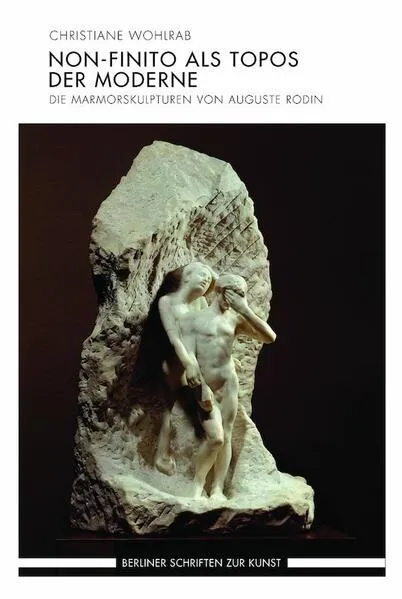
Non-finito als Topos der Moderne
Auguste Rodins Marmorskulpturen markieren eine Schwelle von der geschlossenen Formensprache des 19. Jahrhunderts hin zur fragmentarischen, offenen Form der Moderne. Ihrem hybriden Charakter zwischen Vorläufigem und Finalem, klassischem Material und skizzenhafter Ausführung wird ein traditioneller, auf Endgültigkeit ausgerichteter Werkbegriff nicht mehr gerecht.
Rodin etabliert das Non-finito als ästhetische Kategorie. Als sei der Werkprozess unterbrochen worden, entsteht der Eindruck des Auftauchens oder Zurücksinkens der artikulierten Form in den grob bossierten Block. Undefinierte Flächen werden zu Platzhaltern für neu zu bestimmende Inhalte, die eine traditionelle Ikonographie kompensieren. Diesen vermeintlich peripheren Zonen widmet sich die Studie, die erstmals Entstehungsbedingungen, kunsttheoretische und künstlerische Rezeption des Non-finito diskutiert.
Rodin etabliert das Non-finito als ästhetische Kategorie. Als sei der Werkprozess unterbrochen worden, entsteht der Eindruck des Auftauchens oder Zurücksinkens der artikulierten Form in den grob bossierten Block. Undefinierte Flächen werden zu Platzhaltern für neu zu bestimmende Inhalte, die eine traditionelle Ikonographie kompensieren. Diesen vermeintlich peripheren Zonen widmet sich die Studie, die erstmals Entstehungsbedingungen, kunsttheoretische und künstlerische Rezeption des Non-finito diskutiert.
- Autor: Malquori, Alessandra
- Anzahl Bewertungen: 0
- Ø Bewertung:
- Medium: Buch
- Veröffentlicht: 10.05.2019
- Genre: Sonstiges
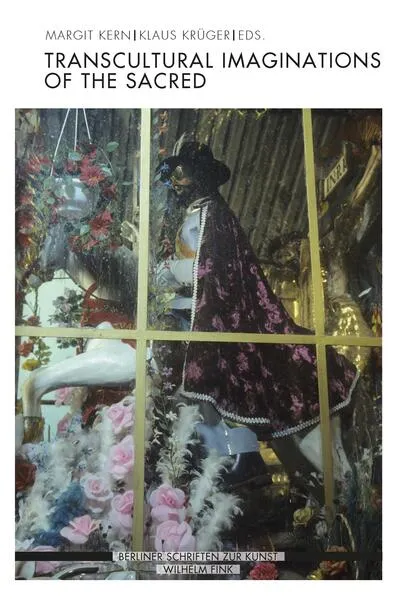
Transcultural Imaginations of the Sacred
Although we tend to suggest that clear constructions of identity are granted to religious symbols under the assumption that they distinguish between self and other explicitly, perceptions of alterity in fact play a vital role in sacral forms of representation. Markers of foreignness are used in a semantics of the exceptional that characterizes the sacral. Perceptions of difference are thus capable of making visible the remoteness of sacral forms from the profane world of experience. This book, therefore, asks: What role do traits of alterity play in the sacral context? How are various concepts of the sacred synthesized in situations of transcultural translation, for instance in the context of missionary activity? How did an artifact arrive at sacral potency in various cultures, and under what conditions did semantic shifts occur?