Chronologie aller Bände (1 - 12)
Die Reihenfolge beginnt mit dem eBook "Greenhouse Gases: Sources, Sinks and Mitigation". Wer alle eBookz der Reihe nach lesen möchte, sollte mit diesem Band von Saurabh Sonwani beginnen. Der zweite Teil der Reihe "Crime Scene Management within Forensic Science" ist am 23.03.2022 erschienen. Mit insgesamt 12 Bänden wurde die Reihe über einen Zeitraum von ungefähr 4 Jahren fortgesetzt. Der neueste Band trägt den Titel "DNA of Sustainability".
- Anzahl der Bewertungen für die gesamte Reihe: 0
- Ø Bewertung der Reihe: 0
- Start der Reihe: 21.01.2022
- Neueste Folge: 11.02.2026
Diese Reihenfolge enthält 12 unterschiedliche Autoren.
- Autor: Sonwani, Saurabh
- Anzahl Bewertungen: 0
- Ø Bewertung:
- Medium: E-Book
- Veröffentlicht: 21.01.2022
- Genre: Sonstiges
Greenhouse Gases: Sources, Sinks and Mitigation
- Autor: Singh, Jaskaran
- Anzahl Bewertungen: 0
- Ø Bewertung:
- Medium: E-Book
- Veröffentlicht: 23.03.2022
- Genre: Krimi
Crime Scene Management within Forensic Science
This book, the second volume of Crime Scene Management in Forensic Sciences, reviews the role and impact of forensic evidence in criminal investigations. It also addresses the importance of post mortem examination in criminal cases.
The book investigates the use of insects and arthropods to estimate post mortem intervals during forensic investigations. Further, it discusses the physiological effects of xenobiotics at the time of death, based on their concentration and distribution in the body at autopsy. Importantly, it also discusses digital forensic investigation, which can be used for the analysis of digital evidence produced at a court of law. Lastly, it defines the structure and legal framework of these forensic evidences for the effective administration of the criminal justice system. It is an excellent source of information for forensics scientists and legal professionals.

- Autor: Chatterjee, Indranath
- Anzahl Bewertungen: 0
- Ø Bewertung:
- Medium: E-Book
- Veröffentlicht: 01.01.2023
- Genre: Sonstiges
Cognizance of Schizophrenia:: A Profound Insight into the Psyche
This book provides the reader with a thorough understanding of schizophrenia as a complex brain disorder by explaining the various aspects investigated for its cognizance from epigenetics to chemistry and physics to computational approaches. The book covers the key notions of schizophrenia from a variety of facets such as neurogenetics, neurochemistry, neuropharmacology, neurobiology, psychotherapy, psychiatric treatment, cognitive studies, behavioral and societal studies, and computational neurosciences. Individual chapters are focused on crucial topics such as cognitive-behavioral therapy, brain functioning, computational neuroscience, neuro-imaging, and many more. This book explains each section and chapter with utmost clarity to maintain comprehensiveness for every kind of reader. This book covers various classical as well as recent topics from basic to advance level knowledge regarding schizophrenia. The book's contributions regarding its inclusivity of topics, comprehensiveness of language, diversity in knowledge, and focus on the subject will attract all kinds of readers. It can be considered a single comprehensive handy reference book for beginners, including medical students, neuroscientists, researchers, clinicians, and medical practitioners. Cognizance of Schizophrenia will be an invaluable asset for all who are involved in neuroscience research or clinical studies.
- Autor: Shrivastava, Pankaj
- Anzahl Bewertungen: 0
- Ø Bewertung:
- Medium: E-Book
- Veröffentlicht: 10.09.2023
- Genre: Krimi
Textbook of Forensic Science
This textbook provides essential and fundamental information to modern forensics investigations. It discusses criminalistics and crime scene aspects, including investigation, management, collecting and packaging various types of physical evidence, forwarding, and chain of custody. It presents fundamental principles, ethics, challenges and criticism of forensic sciences and reviews the crime typologies, the correlates of crime, criminology, penology, and victimology. It provides a viewpoint on legal aspects, including types of evidence, the procedure in the court and scrutiny of the evidence and experts.
The book summarizes forensic serological evidences such as blood, semen, saliva, milk-tears, sweat, vaginal fluids, urine, and sweat. It also provides an overview of forensic examination of different types of evidence and also includes comprehensive detailing of forensic ballistics including firearm classification, bullet comparison and matching. Further, it explores the examinations of drugs, chemicals, explosives, and petroleum products. It focuses on the various aspects of forensic toxicology, including the study of various poisons/toxins, associated signs and symptoms, a fatal dose /fatal period of poisons.The book also emphasizes digital and cyber forensics, including classification, data recovery tools, encryption and decryption methods, image, and video forensics.
It is a useful resource for graduate and post-graduate students in the field of Forensic Science.

- Autor: Kurokawa, Riki
- Anzahl Bewertungen: 0
- Ø Bewertung:
- Medium: E-Book
- Veröffentlicht: 29.09.2023
- Genre: Sonstiges
Phase Separation in Living Cells
This book presents the latest cutting-edge research on phase separation. It discusses the benefits and risks of phase separation for living cells from the perspectives of physics, chemistry, biology, and medicine.
Phase separation is a physico-chemical process that induces a single solution of solvent and intrinsically disordered proteins (IDPs) to separate into two phases, one phase containing only solvent and the other containing IDPs in the solvent. A key molecule in phase separation is the intrinsically disordered region (IDR) proteins (IDPs), mostly comprised of RNA-binding proteins (RBPs). One of the major roles of phase separation is to generate condensates, membrane-less organelles including stress granule, Cajal body, and nucleolus.
Biological actions of phase separation in various aspects of science have received increasing attention in recent years. The book consists of four parts; Part I on physics and chemistry includes topics on structural biology of RBP FUS/TLS and chaperone for phase separation, computational approach of phase separation, and chemistry of G-quadruplex of DNA and RNA. Part II on molecular biology presents molecular mechanism of IDR sequence phase separation and potential cellular function of these labile fibers, formation of membrane-less organelles, and roles of noncoding RNAs in phase separation. Part III on biology covers topics from nuclear pore complex, developmental biology regarding force-dependent remodeling, and neurobiology and higher order brain functions. Finally, Part IV on medicine presents condensates and cancer therapy, pathogenesis of neurodegenerative diseases based on IDPs, and responses of microglia to amyloid. The last chapter highlights the latest topic on how the SARS-Cov-2 virus takes advantage of phase separation for its infections.
This book brings together the studies of phase separation in each area in a single volume. The comprehensive approach provides new insights to the research andwill benefit the readers by responding to the emerging needs for understanding phase separation.
- Autor: Sharma, Laxmi Kant
- Anzahl Bewertungen: 0
- Ø Bewertung:
- Medium: E-Book
- Veröffentlicht: 23.09.2024
- Genre: Sonstiges
Conservation of Saline Wetland Ecosystems
This authored book is a comprehensive collection of information on saline wetland ecosystems, focusing on the application of advanced technologies like LiDAR, UAVs, and artificial intelligence for the conservation of these critical ecosystems.
Saline lakes, known for their extreme conditions, play a vital role in global water systems. This book investigates how advanced tools such as airborne and spaceborne multispectral/hyperspectral sensors, light detection and ranging (LiDAR), Unmanned Aircraft Vehicles (UAVs), and spectroradiometers, combined with AI and the Internet of Things (IoT), can be harnessed for effective restoration and conservation efforts. The book is enriched with detailed infographics, flowcharts, graphs, and tables, making complex information accessible and engaging. A dedicated section of case studies provides practical examples that highlight the real-world impact of the discussed technologies.
This book will be of interest to academicians, scientists, ecologists, hydrologists, limnologists, earth data scientists, ecosystem conservationists, environmental planners, engineers, policymakers, geologists, data analysts, climate scientists, and remote sensing and GIS specialists. It also serves as valuable reading material for undergraduate and graduate students of ecology, wetlands, and earth and environmental sciences
- Autor: Dash, Hirak Ranjan
- Anzahl Bewertungen: 0
- Ø Bewertung:
- Medium: Digital
- Veröffentlicht: 15.05.2025
- Genre: Sonstiges
Advances in Forensic Biology and Genetics
The book explores the interdisciplinary field that merges biochemistry, cell biology, molecular biology, and genetics to unravel the mysteries of biological evidence in forensic investigations. Delving into the core of this dynamic discipline, the book unveils how forensic biological scientists leverage a diverse range of techniques to address complex questions posed by investigative agencies.
The book meticulously covers different facets of forensic biology, from uncovering the origins of crucial body fluids to predicting the post-mortem time interval, while deciphering the cause and manner of death to individualizing biological samples. This book consolidates the latest breakthroughs in forensic biology and genetics, embracing both human and non-human DNA analyses, helpful for the forensic biological scientists. Chapters are written by researchers and practitioners from around the world.
This book serves as an indispensable resource for investigating officers, forensic scientists, medical practitioners, researchers, and students.
- Autor: Iqbal, Noushina
- Anzahl Bewertungen: 0
- Ø Bewertung:
- Medium: E-Book
- Veröffentlicht: 05.11.2025
- Genre: Sonstiges
Plant Signaling Molecules in Regulation of ROS-Scavenging System
This contributed volume provides a comprehensive understanding of the complex interplay between signaling molecules and ROS-scavenging systems in the adaptation of plants to climate change. Plants produce reactive oxygen species (ROS) like superoxide radicals (O2.-) and hydrogen peroxide (H2O2), especially under stress, which can cause oxidative damage and cell death. ROS homeostasis is maintained by a ROS-scavenging system, consisting of enzymatic antioxidants and non-enzymatic antioxidants. This system is vital for physiological processes and stress tolerance in plants.
Signaling molecules are crucial in plant growth, development, and environmental responses. The abiotic stress perception triggers signaling events involving calcium ions (Ca²⁺), ROS, and phytohormones like abscisic acid (ABA). Mitogen-activated protein kinase (MAPK) cascades also play a key role, where a series of phosphorylation events activate genes involved in antioxidant defense. ROS scavenging is regulated by phytohormones and signaling molecules, including auxins, gibberellins, cytokinins, ABA, ethylene, salicylic acid, melatonin, H2S, H2O2, nitric oxide, and brassinosteroids. These molecules interact to enhance stress resilience through ROS scavenging. Additionally, plant growth-promoting rhizobacteria (PGPR) work with phytohormones to alleviate stress. Integrative approaches combining molecular biology, genomics, and systems biology are needed to understand the crosstalk between stress signaling and ROS regulation. CRISPR/Cas9 gene editing dissects gene functions in ROS regulation, while omics approaches (transcriptomics, proteomics, metabolomics) provide insights into plant stress responses. This book focusses on the mechanisms that drive plant responses to changing environmental conditions, and the potential to harness this knowledge to develop resilient crop varieties.
This book is an essential read for academicians, researchers, and scientists working in the field of plant biology, plant physiology, plant stress physiology, plant molecular biology and agronomy.
- Autor: Du, Ming
- Anzahl Bewertungen: 0
- Ø Bewertung:
- Medium: Digital
- Veröffentlicht: 23.12.2025
- Genre: Sonstiges
Bioactive Proteins and Peptides from Marine Shellfish
This book intends to report a comprehensive exploration of the molecular composition, digestion, and diverse applications of marine bivalve proteins. With detailed chapters covering topics such as protein structure, absorption mechanisms, preparation, and identification, this book delves into the intricate world of bivalve proteins. Special features include in-depth discussions on their role in bone growth, hypertension, thrombosis, gout, and taste enhancement. Readers will benefit from a deep understanding of bivalve proteins' properties, their potential therapeutic applications, and insights into controlling allergenicity, making this book essential for researchers, professionals, and enthusiasts in the fields of biochemistry, food science, and biotechnology.
- Autor: Arora, Naveen Kumar
- Anzahl Bewertungen: 0
- Ø Bewertung:
- Medium: Digital
- Veröffentlicht: 31.12.2025
- Genre: Sonstiges
Biotechnological Solutions for a Sustainable Future
This book explores advanced biotechnologies addressing environmental and industrial challenges. It bridges the gap between scientific innovation and practical implementation, showcasing how microbial, nano-biotechnological and biochemical advancements can drive sustainability across agriculture, industry, and environmental remediation. This book opens with a focus on soil health, highlighting biochar-based fertilizers and microbial interventions to rejuvenate degraded soils, enhance crop productivity, and reduce chemical dependency. It then transitions to pollution control, featuring microbial biosurfactants and CRISPR-engineered microbes for pollutant cleanup, nanotechnology-driven wastewater treatment and innovative strategies for radioactive waste management. Industrial applications are equally emphasized, with chapters on antimicrobial food packaging to combat spoilage and microbial carotenoids for pharmaceutical and nutraceutical industries
This volume of Microorganisms for Sustainability book series is a vital resource for researchers, policymakers, and practitioners. It underscores biotechnology’s role in achieving the United Nations Sustainable Development Goals (SDGs), particularly in climate action (SDG 13), clean water and sanitation (SDG 6), and responsible consumption and production (SDG 12). By addressing both traditional and emerging fields—such as nano-biotechnology and microbial engineering—the book fosters interdisciplinary collaboration and inspires scalable, eco-conscious solutions for a resource-constrained world.
- Autor: Garg, Vanika
- Anzahl Bewertungen: 0
- Ø Bewertung:
- Medium: E-Book
- Veröffentlicht: 11.02.2026
- Genre: Sonstiges
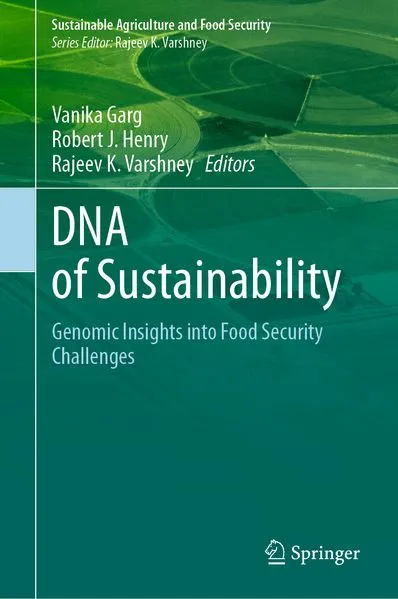
DNA of Sustainability
This book discusses the critical role of genomics in transforming agriculture. It then extends the discussion to the concept of pan-genomes and super-pangenomes, which represent the expansive genetic diversity within entire species, crucial for uncovering new genes for crop improvement. This book presents a series of innovative case studies that illustrate the significant impact of genomic selection and trait mapping in advancing crop resilience and enhancing productivity. It showcases how next-generation sequencing has revolutionized trait discovery, allowing for the precise identification and utilization of traits that bolster plant productivity. The integration of various omics technologies, including single-cell and spatial transcriptomics, is also explored. The book also examines how big data, machine learning, and artificial intelligence are revolutionizing agriculture, offering new ways to glean predictive insights and refine breeding techniques.
- Band: 31
- Autor: Ramawat, K.G.
- Anzahl Bewertungen: 0
- Ø Bewertung:
- Medium: E-Book
- Veröffentlicht: 09.03.2023
- Genre: Sonstiges
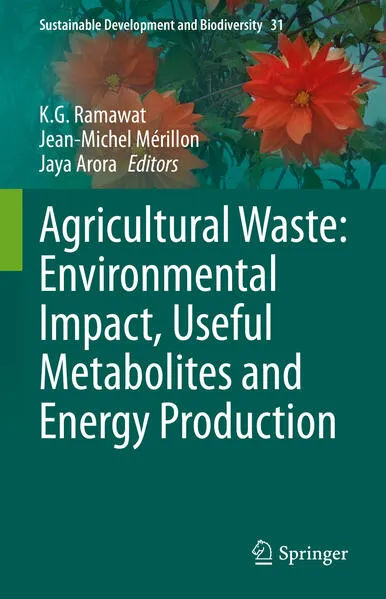
Agricultural Waste: Environmental Impact, Useful Metabolites and Energy Production
This contributed volume deals with problems associated with huge biomass generated by crop plants and the processing of fruits and food materials. The main focus is to address problems associated with organic residues from agro-industrial processes. This book aims to provide a comprehensive and up-to-date account of various processes involved in the valorization of this huge biomass available from agro-industrial processes and obtaining valuable primary and secondary metabolites which will have an impact on the rural economy. Decrease in forest cover associated with the production of agriculture-based waste resulting in pollutants like smoke by burning of residual crops, waste from breweries, food processing, pruning of bushes and trees, and from industries producing proteins, vegetable oils and fruit juices etc.
This book is of interest to teachers, researchers, climate change scientists, agriculture scientists and policymakers. The book brings out the latest reading material for botanists, biotechnologists, environmentalists, biologists, policymakers and NGOs working for environmental protection.