Chronologie aller Bände (1 - 6)
Die Reihenfolge beginnt mit dem eBook "Strategic Human Resource Management in Higher Education". Wer alle eBookz der Reihe nach lesen möchte, sollte mit diesem Band von Toshiyuki Kaneda beginnen. Der zweite Teil der Reihe "Fractional Grey System Model and Its Application" ist am 06.03.2025 erschienen. Mit insgesamt 6 Bänden wurde die Reihe über einen Zeitraum von ungefähr 3 Jahren fortgesetzt. Der neueste Band trägt den Titel "Futurisks: Risk Management in the Digital Age".
- Anzahl der Bewertungen für die gesamte Reihe: 0
- Ø Bewertung der Reihe: 0
- Start der Reihe: 03.01.2022
- Neueste Folge: 09.06.2025
Diese Reihenfolge enthält 6 unterschiedliche Autoren.
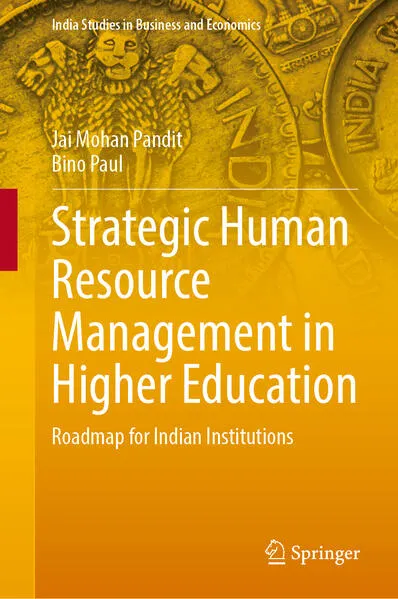
- Autor: Pandit, Jai Mohan
- Anzahl Bewertungen: 0
- Ø Bewertung:
- Medium: E-Book
- Veröffentlicht: 20.11.2023
- Genre: Politik
Strategic Human Resource Management in Higher Education
This book explores the practices and policies of human resource management (HRM) in higher education institutions (HEI), while also analyzing the governance and structural challenges. It explains the assessment of university as an organization, outlining the distinction between universities and firms from an HRM point of view by analysing various objectives, parameters and outcomes. The book broadly probes the relevance of HRM systems in HEIs in India and their potential impact. It also examines whether existing HRM practices and policies in HEIs in India drive motivation and enable employees to perform their functions to achieve the highest possible levels of excellence. It explores whether the enhanced motivation of employees consistently impacts students, their placements, progress to higher education, and quality teaching and research output. To strengthen the research output, to better understand the functioning of HRM practices in foreign HEIs and for comparative reasons, the book also studies HEIs in the United States against a diverse set of HEIs in India. It concludes by highlighting the impact of India’s National Education Policy 2020 and its scope to transform and professionalise the higher education system in the country. The book is indispensable for researchers in education management and policy studies and those in governing positions in higher education institutions. It is also a valuable resource for regulatory and government bodies, and policy-formulating think tanks in South Asia which have a similar education system as India.
- Autor: McQueenie, Jock
- Anzahl Bewertungen: 0
- Ø Bewertung:
- Medium: E-Book
- Veröffentlicht: 13.12.2023
- Genre: Sonstiges
Community, Culture, Commerce
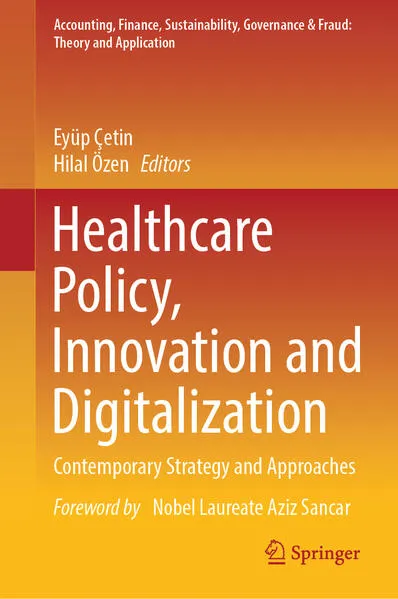
- Autor: Çetin, Eyüp
- Anzahl Bewertungen: 0
- Ø Bewertung:
- Medium: E-Book
- Veröffentlicht: 29.12.2023
- Genre: Sonstiges
Healthcare Policy, Innovation and Digitalization
This book takes a deep look at healthcare in today’s post-pandemic world. It combines both theory and application to reflect a new era for healthcare. The need for innovation, digitalization, and enhanced policies in healthcare has never been greater than it is today. Taking this need into consideration, this book offers a multidisciplinary approach to healthcare, in both managerial and clinical views. Since the book combines both qualitative and quantitative studies about healthcare, readers will receive a broad view of healthcare issues and policies in today’s world.

- Autor: Wu, Lifeng
- Anzahl Bewertungen: 0
- Ø Bewertung:
- Medium: E-Book
- Veröffentlicht: 06.03.2025
- Genre: Sonstiges
Fractional Grey System Model and Its Application
This book covers up-to-date theoretical and applied advances in fractional order grey systems theory from across the world and vividly presents the reader with the overall picture of this new theory and its frontier research. Many of the concepts, models, and methods in the book are original by the author, including grey system model with the fractional order accumulation and its properties, the relationship between the sample size and the stability of grey forecasting model, applications of the fractional order grey models in sustainable development and energy consumption forecasting, grey forecasting model for the middle size data, etc.
This book is appropriate as a reference and/or professional book for courses of environmental management and grey system theory for graduate students or high-level undergraduate students, majoring in areas of science, technology, agriculture, environmental science, earth science, economics, and management. It is also utilized by researchers and practitioners in research institutions, business entities, and government agencies.
- Autor: Kıral, Halis
- Anzahl Bewertungen: 0
- Ø Bewertung:
- Medium: E-Book
- Veröffentlicht: 09.06.2025
- Genre: Krimi
Futurisks: Risk Management in the Digital Age
This book explores the profound impact of digital transformation on enterprise risk management. It highlights the shifting dynamics of supply and demand influenced by technological advancements, evolving customer preferences, geopolitical tensions, and regulatory developments. Beyond building digital infrastructure, digital transformation requires organizations to rethink strategic decisions, business processes, and the legal and ethical frameworks governing operations. The book identifies critical risk areas amplified by digital transformation, including cybersecurity, data privacy, compliance, labor, third-party dependencies, business continuity, environmental sustainability, and regulatory challenges. The book underscores the need for organizations to move beyond superficial digital updates and adopt transformative approaches to business models, processes, and structures. It offers actionable strategies for leaders to navigate the complexities of rapid technological change and turn emerging risks into opportunities.
- Band: 25
- Autor: Kaneda, Toshiyuki
- Anzahl Bewertungen: 0
- Ø Bewertung:
- Medium: E-Book
- Veröffentlicht: 03.01.2022
- Genre: Sachbuch
Simulation and Gaming for Social Design
This book is a collection of research articles that deal with three aspects of simulation and gaming for social design: (1) Theory and methodology, including game system theory and agent-based modeling; (2) Sustainability, including global warming and the energy–food nexus);; and (3) Social entrepreneurship, including business, ethnic, and ethical understanding. The latter two especially form two major areas of clinical knowledge in contemporary life.
Simulation and gaming, with its participatory approach, provides participants with a seamless integration of problem solving and education. It has been known as a tool for interdisciplinary communication since the 1960s, and now it is being developed to contribute to global society in the twenty-first century. This is the first book on simulation and gaming for social design that covers all aspects from the methodological foundations to practical examples in the fields of sustainability and social entrepreneurship.Regardless of the size of the problematics, societal system design involves (1) The visioning and conception aspects due to the long-term, overall nature of the goal; (2) Interdisciplinary thinking and communication for the exploration of new states of accommodation with technological systems; and (3) The “human dimension” aspect including education that must be dealt with, thus academic developments of simulation and gaming for social design as system thinking and practice methodologies are anticipated.
Simulation and gaming has great potential for development as a tool to facilitate the transfer between theoretical and clinical knowledge.