Chronologie aller Bände (1 - 2)

Die Reihenfolge beginnt mit dem eBook "Cyber Crisis Management". Wer alle eBookz der Reihe nach lesen möchte, sollte mit diesem Band von Holger Kaschner beginnen. Der zweite Teil der Reihe "Truth and Fake in the Post-Factual Digital Age" ist am 28.05.2023 erschienen. Die Reihe umfasst derzeit 2 Bände. Der neueste Band trägt den Titel "Truth and Fake in the Post-Factual Digital Age".
- Anzahl der Bewertungen für die gesamte Reihe: 0
- Ø Bewertung der Reihe: 0
- Start der Reihe: 04.01.2022
- Neueste Folge: 28.05.2023
Diese Reihenfolge enthält 2 unterschiedliche Autoren.
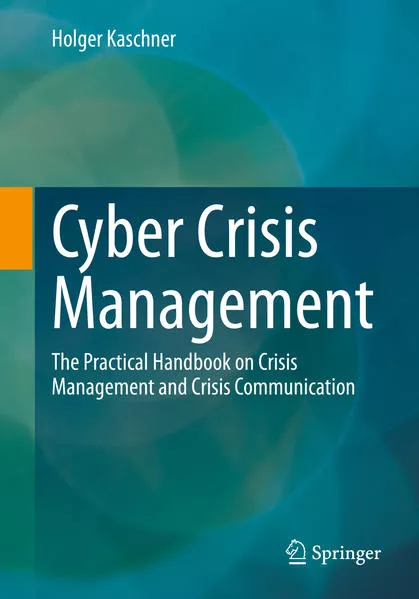
- Autor: Kaschner, Holger
- Anzahl Bewertungen: 0
- Ø Bewertung:
- Medium: E-Book
- Veröffentlicht: 04.01.2022
- Genre: Krimi
Cyber Crisis Management
This book is a translation of the original German 1st edition Cyber Crisis Management by Holger Kaschner, published by Springer Fachmedien Wiesbaden GmbH, part of Springer Nature in 2020. The translation was done with the help of artificial intelligence (machine translation by the service DeepL.com). A subsequent human revision was done primarily in terms of content, so that the book will read stylistically differently from a conventional translation. Springer Nature works continuously to further the development of tools for the production of books and on the related technologies to support the authors.
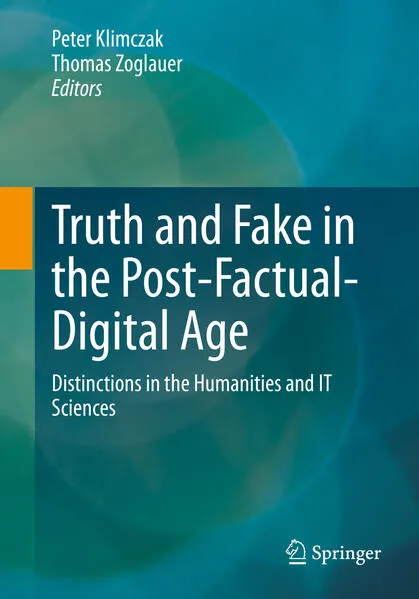
- Autor: Klimczak, Peter
- Anzahl Bewertungen: 0
- Ø Bewertung:
- Medium: E-Book
- Veröffentlicht: 28.05.2023
- Genre: Sonstiges
Truth and Fake in the Post-Factual Digital Age
The increase in fake news, the growing influence on elections, increasing false reports and targeted disinformation campaigns are not least a consequence of advancing digitalisation. Information technology is needed to put a stop to these undesirable developments. With intelligent algorithms and refined data analysis, fakes must be detected more quickly in the future and their spread prevented. However, in order to meaningfully recognize and filter fakes by means of artificial intelligence, it must be possible to distinguish fakes from facts, facts from fictions, and fictions from fakes. This book therefore also asks questions about the distinctions of fake, factual and fictional. The underlying theories of truth are discussed, and practical-technical ways of differentiating truth from falsity are outlined. By considering the fictional as well as the assumption that information-technical further development can profit from humanities knowledge, the authors hope that content-related, technical and methodological challenges of the present and future can be overcome.