Chronologie aller Bände (1 - 3)

Die Reihenfolge beginnt mit dem Buch "The Tea Party, Occupy Wall Street, and the Great Recession". Wer alle Bücher der Reihe nach lesen möchte, sollte mit diesem Band von Nils C. Kumkar beginnen. Der zweite Teil der Reihe "The Politics of Vulnerable Groups" ist am 03.07.2022 erschienen. Mit insgesamt 3 Bänden wurde die Reihe über einen Zeitraum von ungefähr 5 Jahren fortgesetzt. Der neueste Band trägt den Titel "The Dialectics of Liberation in Dark Times".
- Anzahl der Bewertungen für die gesamte Reihe: 0
- Ø Bewertung der Reihe: 0
- Start der Reihe: 21.03.2018
- Neueste Folge: 07.07.2023
Diese Reihenfolge enthält 3 unterschiedliche Autoren.
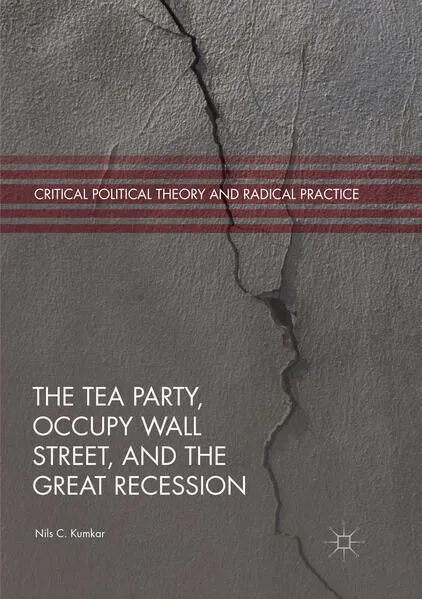
- Autor: Kumkar, Nils C.
- Anzahl Bewertungen: 0
- Ø Bewertung:
- Medium: Buch
- Veröffentlicht: 26.01.2019
- Genre: Sonstiges
The Tea Party, Occupy Wall Street, and the Great Recession
This book analyzes the Tea Party and Occupy Wall Street as symptoms of the structural crisis of US capitalism and its class structure. It shows that the protests have to be understood as rooted in the petty bourgeoisie’s lived experience of crisis, which also plays a crucial role in current political developments like the successful presidential campaign of Donald Trump. The book explains the Great Recession as an acute phase of the structural crisis of the finance-dominated accumulation regime, identifies the social classes from which the core-participants of the respective protests recruited themselves and the socioeconomic developments to which they were exposed in the years leading up to the protests, and interprets interviews and group discussions conducted with activists to reconstruct the habitus that structured both their experience of the crisis and their resonance with the respective protest practices. It thereby provides an encompassing understanding of the social logicsnot only of these social movements, but of the current political conjuncture in the US.
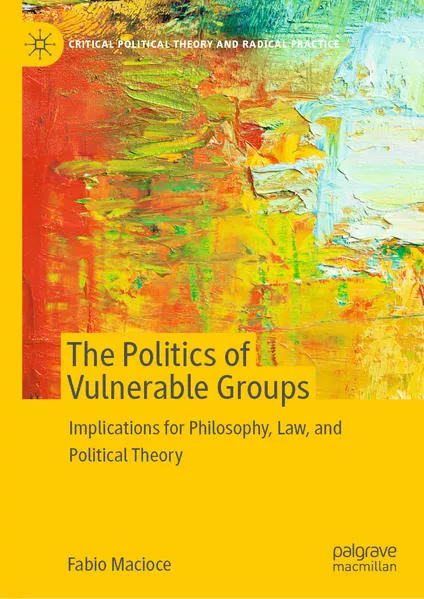
- Autor: Macioce, Fabio
- Anzahl Bewertungen: 0
- Ø Bewertung:
- Medium: Buch
- Veröffentlicht: 03.07.2022
- Genre: Politik
The Politics of Vulnerable Groups
This book describes and analyzes the conceptual ambiguity of vulnerability, in an effort to understand its particular applications for legal and political protection when relating to groups. Group vulnerability has become a common concept within legal and political scholarship but remains largely undertheorized as a phenomenon itself. At the same time, in academia and within legal circles, vulnerability is primarily understood as a phenomenon affecting individuals, and the attempts to identify vulnerable groups are discredited as essentialist and stereotypical. In contrast, this book demonstrates that a conception of group vulnerability is not only theoretically possible, but also politically and legally necessary. Two conceptions of group vulnerability are discussed: one focuses on systemic violence or oppression directed toward several individuals, while another requires a common positioning of individuals within a given context that conditions their agency, ability to cope with risks and uncertainties, and manage their consequences. By comparing these two definitions of group vulnerability and their implications, Macioce seeks a more precise delineation of the theoretical boundaries of the concept of group vulnerability.
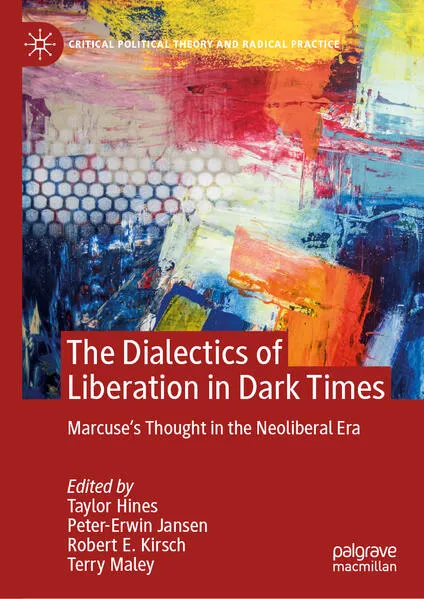
- Autor: Hines, Taylor
- Anzahl Bewertungen: 0
- Ø Bewertung:
- Medium: Buch
- Veröffentlicht: 07.07.2023
- Genre: Politik
The Dialectics of Liberation in Dark Times
This book develops Marcuse’s critique of advanced industrial society and deploys it as a lens to critically analyze contemporary neoliberalism and its structural failures. In the chapters, Marcuse scholars explore three related topics: First, Marcuse’s theory as it applies to the relationship between neoliberalism and authoritarianism, including both the historical relationship between the two and the modern re-emergence of authoritarianism and nationalism in neoliberal states today. Second, a re-examination of the relationship between neoliberal subjectivity and technological rationality that seeks to understand the stabilizing forces of neoliberal society and the way these forces register at the level of thought. Third and finally, Marcuse’s conception of socialism in conversation with contemporary neoliberal rationality, and ways in which alternatives to the status quo remain possible. Together, this volume contributes to recent discussions of neoliberalism and contribute to thedevelopment of Marcuse scholarship.