Chronologie aller Bände (1 - 2)

Die Reihenfolge beginnt mit dem Buch "The Lower Danube River". Wer alle Bücher der Reihe nach lesen möchte, sollte mit diesem Band von Abdelazim Negm beginnen. Der zweite Teil der Reihe "The Lower Danube River" ist am 29.06.2023 erschienen. Die Reihe umfasst derzeit 2 Bände. Der neueste Band trägt den Titel "Climate Change Impacts in India".
- Anzahl der Bewertungen für die gesamte Reihe: 0
- Ø Bewertung der Reihe: 0
- Start der Reihe: 15.06.2022
- Neueste Folge: 25.10.2023
Diese Reihenfolge enthält 2 unterschiedliche Autoren.
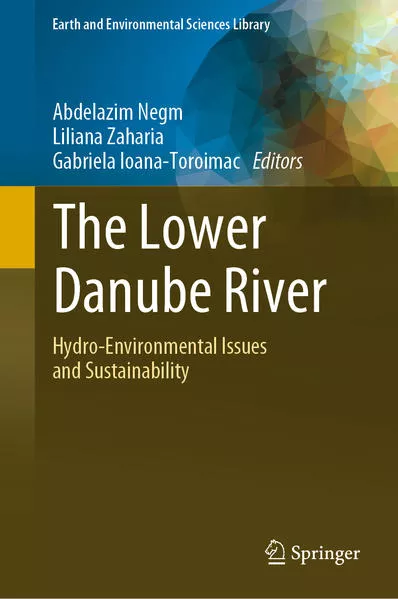
- Autor: Negm, Abdelazim
- Anzahl Bewertungen: 0
- Ø Bewertung:
- Medium: Buch
- Veröffentlicht: 15.06.2022
- Genre: Politik
The Lower Danube River
This book provides essential information and recent findings on hydro-environmental issues in the Lower Danube River, particularly its hydrological and hydromorphological processes; physico-chemical features; climate and water-related hazards; and not only the biodiversity and quality but also the sustainable management and governance of its hydro-environment. Accordingly, it presents a broad range of scientific information on the lower sector of the second-longest river in Europe, which holds major economic importance and has been severely impacted by human pressures, especially since the second part of the last century. The engineering works (e.g. dams, reservoirs, levees, channelization, etc.) on the Danube and its tributaries, despite their benefits to society, have altered its flow and significantly reduced its sediment load, with consequences for hydromorphological processes and aquatic ecosystems. These ecosystems have also been affected by pollutionfrom various sources. To promote sustainable management of the Danube River and its watershed, several strategies and measures have been developed by a number of institutions, from the European level to the national and regional levels (commissions, national authorities, non-governmental organizations, etc.).
Compared to the upper and middle sectors of the Danube, the lower sector has received less attention in the international scientific literature in terms of hydro-environmental issues. The book fills this gap and provides current and original insights and findings from recent studies conducted by scientists from three countries drained by the Lower Danube River and its tributaries: Bulgaria, Romania and Serbia.
This unique book will be of great scientific interest to professional engineers, policy planners and policymakers in the three countries mentioned above, helping them to implement their own sustainable development plans. It also offers a valuable resource for graduate students, researchers and stakeholders.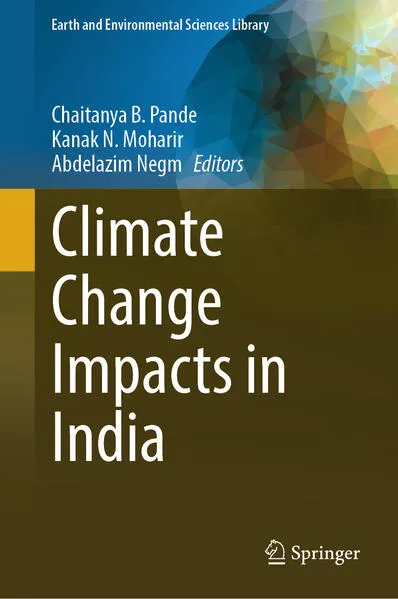
- Autor: Pande, Chaitanya B.
- Anzahl Bewertungen: 0
- Ø Bewertung:
- Medium: Buch
- Veröffentlicht: 25.10.2023
- Genre: Sonstiges
Climate Change Impacts in India
This book focuses on the impact of climate change on India, addressing environmental problems and conducting an analysis of the climate change impact on mitigation processes. It examines crucial factors such as soil capability, soil erosion, soil salinity, and watershed planning, as well as the influence of climate change on water resources, including groundwater. The book explores the interconnections between climate change, soil erosion, natural resources, and agricultural practices, emphasizing their direct or indirect effects on water, vegetation, irrigation planning, and the environment.
Furthermore, it delves into various aspects of soil erosion, soil compaction, soil nutrients, aquifers, and the impact of climate change on vegetation, crops, pests, moisture, and sustainable yield. These factors contribute to the development of climate change-related factors within the agricultural sector, ultimately fostering sustainable development and management practices for the future.
The book also highlights the significance of parameters such as land use change analysis, rainfall, water resources, crop yield, sustainable agricultural development, pest management, and disease control in accurately assessing the impact of climate change. The insights gained from these analyses can inform future development and planning strategies. Therefore, this book serves as a valuable resource for researchers, scientists, NGOs, and academics interested in understanding the impact of climate change on natural resources and ecological systems.