Chronologie aller Bände (1 - 3)

Die Reihenfolge beginnt mit dem Buch "The East Asian Dimension of the First World War". Wer alle Bücher der Reihe nach lesen möchte, sollte mit diesem Band von Katrin Bromber beginnen. Mit insgesamt 3 Bänden wurde die Reihe über einen Zeitraum von ungefähr 7 Jahren fortgesetzt. Der neueste Band trägt den Titel "At the Periphery of a World War?".
- Anzahl der Bewertungen für die gesamte Reihe: 0
- Ø Bewertung der Reihe: 0
- Start der Reihe: 04.10.2018
- Neueste Folge: 18.12.2025
Diese Reihenfolge enthält 3 unterschiedliche Autoren.
- Band: 35
- Autor: Schmidt, Jan
- Anzahl Bewertungen: 0
- Ø Bewertung:
- Medium: Buch
- Veröffentlicht: 11.03.2020
- Genre: Sonstiges
The East Asian Dimension of the First World War
Which role did East Asia play in the First World War? How did East Asian commentators see and interpret the total(izing) war in Europe and elsewhere? Which lessons did they draw from this experience for their own societies? How did economic networks shift? Which influence did the war have on East Asian visions of world order? This volume aims to introduce new scholarship, in many cases by hitherto untranslated East Asian authors. It is part of a larger movement in current historiography to emphasize the globality of the First World War, without losing sight of local repercussions and developments in East Asia.

- Band: 36
- Autor: Bromber, Katrin
- Anzahl Bewertungen: 0
- Ø Bewertung:
- Medium: Buch
- Veröffentlicht: 04.10.2018
- Genre: Sonstiges
The Long End of the First World War
2014 was marked by extensive commemoration activities in many parts of the world to the First World War. This book focuses on the relation between global history and social history, highlighting actors and regions, and it systematically engages with the issue of diverse periodizations. In discussing linkages between experience, historiography, and commemoration, the contributions in this volume aim at unsettling the notion of a static and clearly defined »end« of the Great War, a construct mainly based on European developments.
How did the developments which marked the end of the War differ regionally, and how did prisoners of war, demobilized soldiers, women, or children from and in Asia, Africa, and the Middle East perceive and experience the »end«? How did this »end« influence new networks, social movements, society, economic processes, or ecological developments? And how were these questions discussed by contemporaries? Can the loss of »Zeitzeugen« be compensated by the use of electronic and other media? And does this make transnational commemoration easier (or more difficult)? What is written out of historical narratives and what is being (re)discovered?
How did the developments which marked the end of the War differ regionally, and how did prisoners of war, demobilized soldiers, women, or children from and in Asia, Africa, and the Middle East perceive and experience the »end«? How did this »end« influence new networks, social movements, society, economic processes, or ecological developments? And how were these questions discussed by contemporaries? Can the loss of »Zeitzeugen« be compensated by the use of electronic and other media? And does this make transnational commemoration easier (or more difficult)? What is written out of historical narratives and what is being (re)discovered?
- Band: 43
- Autor: Tato, María Inés
- Anzahl Bewertungen: 0
- Ø Bewertung:
- Medium: Buch
- Veröffentlicht: 18.12.2025
- Genre: Sonstiges
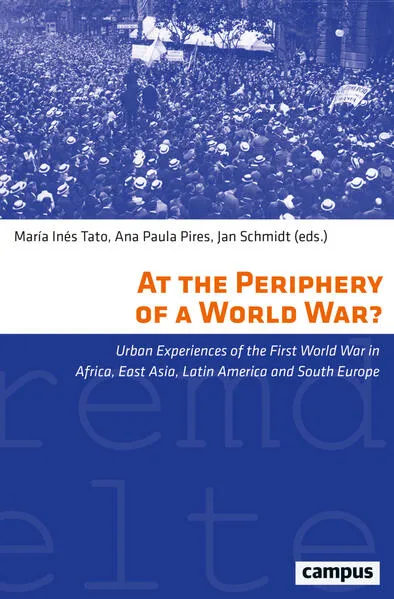
At the Periphery of a World War?
The First World War and its aftermath were significant events with widespread consequences that impacted everyday people. This book is the first comprehensive analysis of the various ways in which the Great War affected urban life, extending beyond the typically recognized regions such as the European Great powers, the USA, and its colonies and spheres of influence. It explores the impacts on peripheral cities in East Asia, Southern Europe, Latin America, and Africa, which have often been overlooked in the historiography of the 1914-1918 conflict. Despite their historical neglect, these urban areas felt the repercussions of the war as it reshaped their structures, rhythms, and daily routines. This transformation influenced both private and public life, highlighting the crucial role these cities played as actors during wartime.