Emerging Contaminants and Associated Treatment Technologies
Managing Persistent Organic Pollutants (POPs) in India
Chronologie aller Bände (1 - 3)
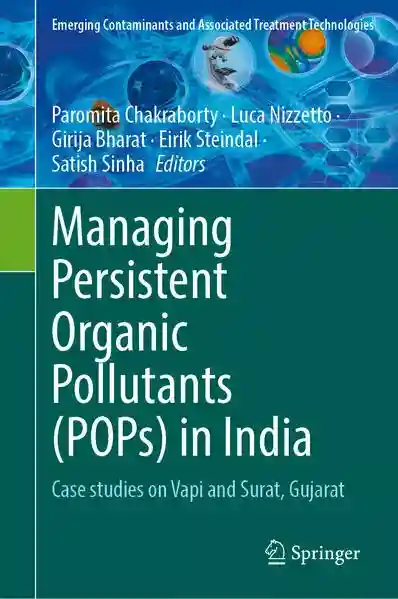
Die Reihenfolge beginnt mit dem Buch "Dust and Health". Wer alle Bücher der Reihe nach lesen möchte, sollte mit diesem Band von Ali Al-Dousari beginnen. Der zweite Teil der Reihe "Dust and Health" ist am 28.02.2023 erschienen. Die Reihe umfasst derzeit 3 Bände. Der neueste Band trägt den Titel "Managing Persistent Organic Pollutants in India".
- Anzahl der Bewertungen für die gesamte Reihe: 0
- Ø Bewertung der Reihe: 0
- Start der Reihe: 28.02.2023
- Neueste Folge: 15.07.2024
Diese Reihenfolge enthält 2 unterschiedliche Autoren.
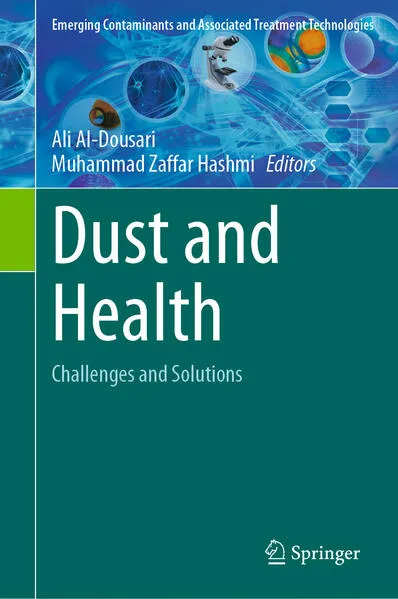
- Autor: Al-Dousari, Ali
- Anzahl Bewertungen: 0
- Ø Bewertung:
- Medium: Buch
- Veröffentlicht: 01.03.2023
- Genre: Sonstiges
Dust and Health
- Autor: Chakraborty, Paromita
- Anzahl Bewertungen: 0
- Ø Bewertung:
- Medium: Buch
- Veröffentlicht: 08.07.2023
- Genre: Politik
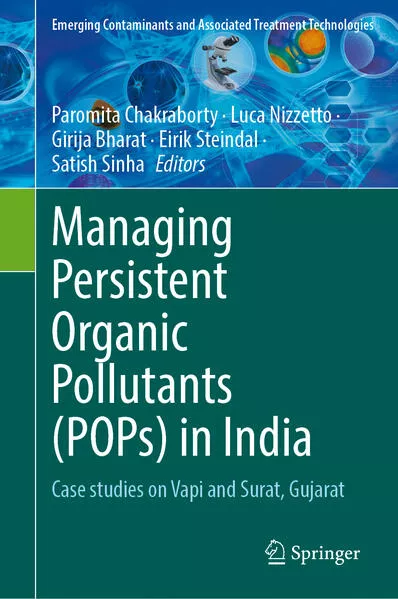
Managing Persistent Organic Pollutants (POPs) in India
Persistent Organic Pollutants (POPs) are a class of chemicals that are persistent, bio accumulative and toxic (PBT), which are restricted for use under the Stockholm Convention. They adversely impact the environment, human and animal health. Most of the POPs are semi-volatile organic compounds (SVOCs) and known to have a long-range transport potential and are often deposited in colder climate and found in places away from the regions they are produced. POPs are usually hydrophobic (i.e., “water-hating”) and lipophilic (i.e., “fat-loving”) chemicals, due to which they bind to solids, particularly organic matter, and fatty tissues in both marine and terrestrial environments. As a result, POPs may move up the food chain.
This book focuses on determining the sources, fate, analytical techniques of detecting POPs as well as their health impacts. It further dwells on the regulatory aspects, management of POPs, best environmental practices (BEPs), Indian and international case studies, gaps in understanding the regulatory aspects. A few key recommendations for the way forward form the concluding chapters of this book.
- Autor: Chakraborty, Paromita
- Anzahl Bewertungen: 0
- Ø Bewertung:
- Medium: Buch
- Veröffentlicht: 15.07.2024
- Genre: Politik
Managing Persistent Organic Pollutants in India
Persistent Organic Pollutants (POPs) are a class of chemicals that are persistent, bio accumulative and toxic (PBT), which are restricted for use under the Stockholm Convention. They adversely impact the environment, human and animal health. Most of the POPs are semi-volatile organic compounds (SVOCs) and known to have a long-range transport potential and are often deposited in colder climate and found in places away from the regions they are produced. POPs are usually hydrophobic (i.e., “water-hating”) and lipophilic (i.e., “fat-loving”) chemicals, due to which they bind to solids, particularly organic matter, and fatty tissues in both marine and terrestrial environments. As a result, POPs may move up the food chain.
This book focuses on determining the sources, fate, analytical techniques of detecting POPs as well as their health impacts. It further dwells on the regulatory aspects, management of POPs, best environmental practices (BEPs), Indian and international case studies, gaps in understanding the regulatory aspects. A few key recommendations for the way forward form the concluding chapters of this book.