Chronologie aller Bände (1 - 2)
Die Reihenfolge beginnt mit dem eBook "The Holocaust and European Societies". Wer alle eBookz der Reihe nach lesen möchte, sollte mit diesem Band von Frank Bajohr beginnen. Der zweite Teil der Reihe "The Holocaust and European Societies" ist am 30.11.2016 erschienen. Die Reihe umfasst derzeit 2 Bände. Der neueste Band trägt den Titel "Family Networks and the Russian Revolutionary Movement, 1870–1940".
- Anzahl der Bewertungen für die gesamte Reihe: 0
- Ø Bewertung der Reihe: 0
- Start der Reihe: 30.11.2016
- Neueste Folge: 04.12.2017
Diese Reihenfolge enthält 2 unterschiedliche Autoren.
- Autor: Bajohr, Frank
- Anzahl Bewertungen: 0
- Ø Bewertung:
- Medium: E-Book
- Veröffentlicht: 30.11.2016
- Genre: Sonstiges
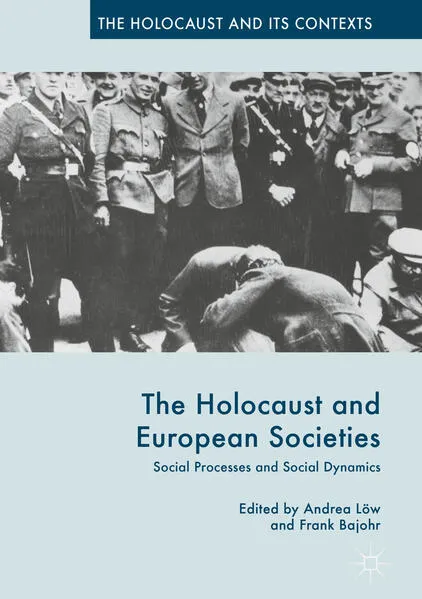
The Holocaust and European Societies
This book explores the Holocaust as a social process. Although the mass murder of European Jews was essentially the result of political-ideological decisions made by the Nazi state leadership, the events of the Holocaust were also part of a social dynamic. All European societies experienced developments that led to the social exclusion, persecution and murder of the continent’s Jews. This volume therefore questions Raul Hilberg´s category of the ‘bystander’. In societies where the political order expects citizens to endorse the exclusion of particular groups in the population, there cannot be any completely uninvolved bystanders. Instead, this book examines the multifarious forms of social action and behaviour connected with the Holocaust. It focuses on institutions and persons, helpers, co-perpetrators, facilitators and spectators, beneficiaries and profiteers, as well as Jewish victims and Jewish organisations trying to cope with the dynamics of exclusion and persecution.
- Autor: Turton, Katy
- Anzahl Bewertungen: 0
- Ø Bewertung:
- Medium: E-Book
- Veröffentlicht: 04.12.2017
- Genre: Sonstiges
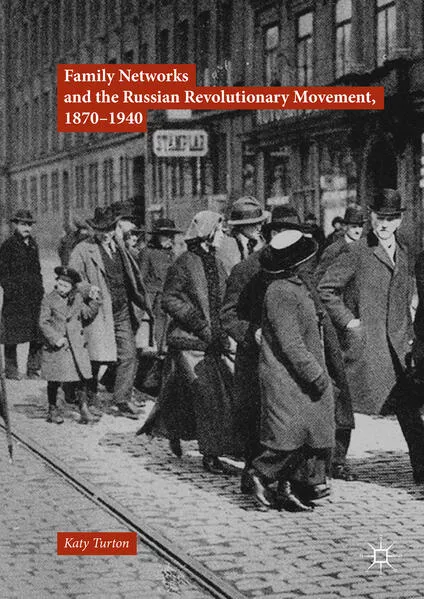
Family Networks and the Russian Revolutionary Movement, 1870–1940
This book explores the role played by families in the Russian revolutionary movement and the first decades of the Soviet regime. While revolutionaries were expected to sever all family ties or at the very least put political concerns before personal ones, in practice this was rarely achieved. In the underground, revolutionaries of all stripes, from populists to social-democrats, relied on siblings, spouses, children and parents to help them conduct party tasks, with the appearance of domesticity regularly thwarting police interference. Family networks were also vital when the worst happened and revolutionaries were imprisoned or exiled. After the revolution, these family networks continued to function in the building of the new Soviet regime and amongst the socialist opponents who tried to resist the Bolsheviks. As the Party persecuted its socialist enemies and eventually turned on threats perceived within its ranks, it deliberately included the spouses and relatives of its opponents in an attempt to destroy family networks for good.