Chronologie aller Bände (1 - 2)
Die Reihenfolge beginnt mit dem Buch "Here Be Dragons.". Wer alle Bücher der Reihe nach lesen möchte, sollte mit diesem Band von Christian Wessely beginnen. Der zweite Teil der Reihe "Here Be Dragons." ist am 15.11.2023 erschienen. Die Reihe umfasst derzeit 2 Bände. Der neueste Band trägt den Titel "Escaping the Moment".
- Anzahl der Bewertungen für die gesamte Reihe: 0
- Ø Bewertung der Reihe: 0
- Start der Reihe: 15.11.2023
- Neueste Folge: 15.11.2024
Diese Reihenfolge enthält 2 unterschiedliche Autoren.
- Band: 2
- Autor: Wessely, Christian
- Anzahl Bewertungen: 0
- Ø Bewertung:
- Medium: Buch
- Veröffentlicht: 15.11.2023
- Genre: Manga
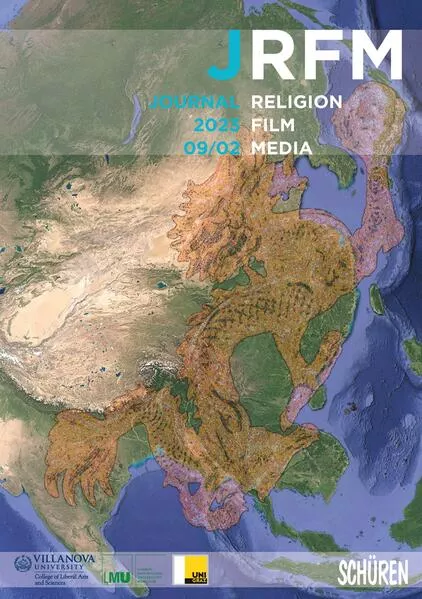
Here Be Dragons.
Media industry is a vibrant element of East Asian popular culture that has become increasingly important on a global level in the last decades. Japanese, and recently South Korean and Chinese films or TV series have a growing and worldwide audience not least because of easier access through streaming services. The many film productions provide a multifaceted arena of highly diverse content that spans nearly all aspects of the cultural developments in the countries. Religion has always played a major role in these contexts in various ways and in accordance with the highly diversified religious landscape of East Asia. Consequently, this issue brings together contributions on Japanese, Chinese and Korean films, including one additional glimpse to South Asia, thereby presenting portrayals of independent filmmakers, highly renowned classics, but also specimina of manga and anime, the cyberpunk genre, or on most recent highly successful streaming series. The admittedly tiny sample we can provide is intended to pique curiosity and encourage readers to delve deeper into the multifaceted and intriguing relationship between religion and media in Asia. If the presented contributions, which have been carefully selected, lead to academic discourse and inspire further research, then this issue will have served its purpose.
- Band: 24
- Autor: Eberhardt, Verena Marie
- Anzahl Bewertungen: 0
- Ø Bewertung:
- Medium: Buch
- Veröffentlicht: 15.11.2024
- Genre: Sonstiges
Escaping the Moment
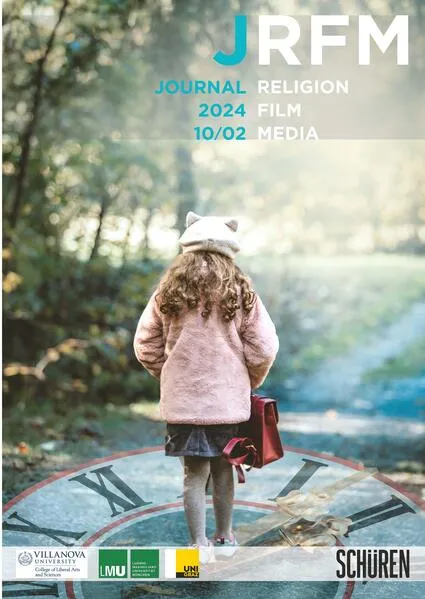
As we all know, time flies, and that is also true for us: JRFM is celebrating its 10th anniversary. When we think back to the beginnings of our journal, we take a mental journey through time. This issue is therefore dedicated to the topic of time travel, which is a strong motif in the media and popular culture. The cover of this issue evokes a character influential in popular culture for over 150 years: Alice, renowned for her adventures in Wonderland, strides resolutely across the gears of the Grand Clock of All Times to start a journey into the past. The books in which Lewis Carroll developed the character of Alice have been widely read and often adapted: The time-travel motif is central in the Disney film Alice Through the Looking Glass (James Bobin, US 2016). At the start of the film, Alice’s mother dismisses her daughter’s confession that she once believed she “could do as many as six impossible things before breakfast”, but the film will deliver the impossible over the ensuing ninety minutes.
This issue of the Journal for Religion, Film and Media is dedicated to the apparently impossible phenomenon of time travel. Time travel is a frequently explored motif in literature, art, music, and audiovisual productions. In this editorial, we navigate with Alice Through the Looking Glass through this fascinating theme, formulating theses that thread through the motif of time travel and presenting the contributions in this issue.
The Disney film is intriguing in its allegorical conception of time and in presenting associated religious moments that prompt us to reflect on values and power, on identity, and on our understanding of the world. In this issue we discuss time travel as transcendent per se – it cannot be observed and is impossible in everyday life. If we understand religion as a process of negotiation with the transcendent, then time travel can be taken as in effect a religious motif. Time travel exists in narrative content, but it is also heavily influenced by its media staging. With their unique cinematic techniques, films can take us on a journey through time, inviting us to contemplate our understanding of time and reality, of fantasy and contingency, of transcendence and immanence. This issue proposes that time, an inherently abstract concept, is materialised on multiple levels in media, in its narration and in its aesthetics.
This issue of the Journal for Religion, Film and Media is dedicated to the apparently impossible phenomenon of time travel. Time travel is a frequently explored motif in literature, art, music, and audiovisual productions. In this editorial, we navigate with Alice Through the Looking Glass through this fascinating theme, formulating theses that thread through the motif of time travel and presenting the contributions in this issue.
The Disney film is intriguing in its allegorical conception of time and in presenting associated religious moments that prompt us to reflect on values and power, on identity, and on our understanding of the world. In this issue we discuss time travel as transcendent per se – it cannot be observed and is impossible in everyday life. If we understand religion as a process of negotiation with the transcendent, then time travel can be taken as in effect a religious motif. Time travel exists in narrative content, but it is also heavily influenced by its media staging. With their unique cinematic techniques, films can take us on a journey through time, inviting us to contemplate our understanding of time and reality, of fantasy and contingency, of transcendence and immanence. This issue proposes that time, an inherently abstract concept, is materialised on multiple levels in media, in its narration and in its aesthetics.