Chronologie aller Bände (1 - 3)
Die Reihenfolge beginnt mit dem Buch "50 Jahre danach – 50 Jahre davor". Wer alle Bücher der Reihe nach lesen möchte, sollte mit diesem Band von Rüdiger Ahrens beginnen. Der zweite Teil der Reihe "Jugend ohne Sinn?" ist am 10.10.2022 erschienen. Mit insgesamt 3 Bänden wurde die Reihe über einen Zeitraum von ungefähr 11 Jahren fortgesetzt. Der neueste Band trägt den Titel "Jugend – Musik – Bewegung".
- Anzahl der Bewertungen für die gesamte Reihe: 0
- Ø Bewertung der Reihe: 0
- Start der Reihe: 22.10.2014
- Neueste Folge: 12.05.2025
Diese Reihenfolge enthält 3 unterschiedliche Autoren.
- Autor: Ahrens, Rüdiger
- Anzahl Bewertungen: 0
- Ø Bewertung:
- Medium: Buch
- Veröffentlicht: 22.10.2014
- Genre: Sonstiges
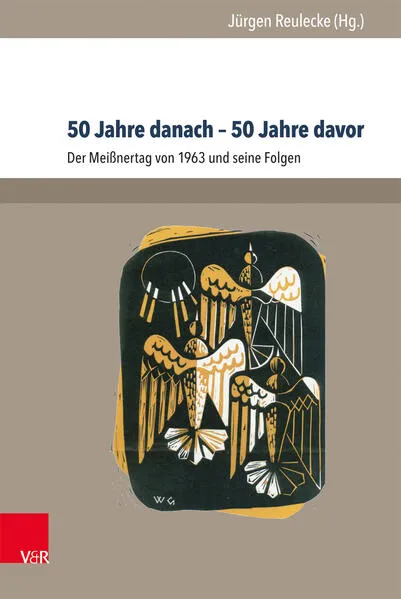
50 Jahre danach – 50 Jahre davor
At the Meißner meeting in 1963 – a youth camp and traditional festival, and an occasion for critical self-reflection and debate over the definition of their democratic position – young people from the youth movement associations of the post-war years met with participants of the Free German Youth Day of 1913 – a once-in-a-century event. Against the background of the “second founding phase of the Federal Republic of Germany” (zweite Gründungsphase der Bundesrepublik”), the 50-year anniversary marked a turning point in the debate over the influential Meißner Rule. The present volume documents the participation of youth associations in the tradition of the historic youth movement in the societal opening of the 1960s from an experiential and generational historical perspective.
- Autor: Angermann, Eric
- Anzahl Bewertungen: 0
- Ø Bewertung:
- Medium: Buch
- Veröffentlicht: 10.10.2022
- Genre: Sonstiges
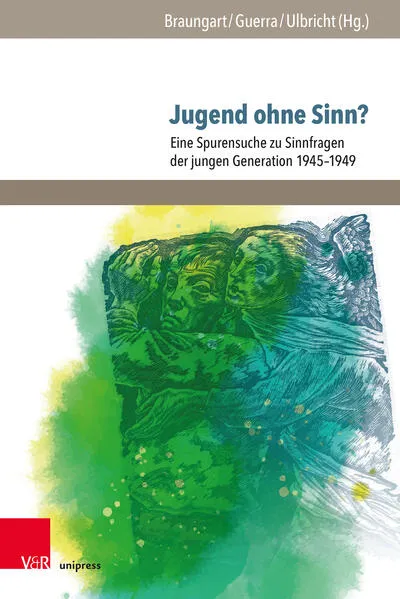
Jugend ohne Sinn?
Es liegt die Vermutung nahe, dass es für ›die Jugend‹ gerade in den frühen Nachkriegsjahren einen großen Bedarf an Sinn und Trost, an Religion und ›Religioidem‹ (Simmel) gegeben habe. Aber war es tatsächlich so? Gerade die junge Generation hatte sich mit einer nie dagewesenen »transzendentalen Obdachlosigkeit« (G. Lukács) auseinanderzusetzen. Wenn sie das denn wirklich tat! Wie ging sie mit der Schuldfrage um? Griff sie auf das zurück, was sich in Literatur, Philosophie, Theologie längst ›bewährt‹ hatte? Konnten die Vergemeinschaftungsprozesse der historischen Jugendbewegung mit ihrer Semantik noch für die Bedürfnisse nach weltanschaulicher Zugehörigkeit einen Raum bieten? Nahm Jugend den Charakter eines Sondermilieus an, um sich abzugrenzen von denen, die die Katastrophe zu verantworten hatten? Diesen und anderen Fragen widmet sich der vorliegende Band.
One would think that for ‘the youth’ there was a great need for meaning and comfort, for religion and “religioids” (Simmel), especially in the early post-war years. But was this really the case? The young generation in particular had to deal with an unprecedented “transcendental homelessness” (G. Lukács). If it really did so! How did it deal with the question of guilt? Did it fall back on what had long been “tried and tested” in literature, philosophy, theology? Could the communal processes of the historical youth movement with its semantics still offer a space for socializing for the need for ideological affiliation? Did youth take on the character of a special milieu in order to distance itself from those who were responsible for the catastrophe? This volume deals with these and other questions.
One would think that for ‘the youth’ there was a great need for meaning and comfort, for religion and “religioids” (Simmel), especially in the early post-war years. But was this really the case? The young generation in particular had to deal with an unprecedented “transcendental homelessness” (G. Lukács). If it really did so! How did it deal with the question of guilt? Did it fall back on what had long been “tried and tested” in literature, philosophy, theology? Could the communal processes of the historical youth movement with its semantics still offer a space for socializing for the need for ideological affiliation? Did youth take on the character of a special milieu in order to distance itself from those who were responsible for the catastrophe? This volume deals with these and other questions.
- Autor: Baader, Meike
- Anzahl Bewertungen: 0
- Ø Bewertung:
- Medium: Buch
- Veröffentlicht: 12.05.2025
- Genre: Sonstiges
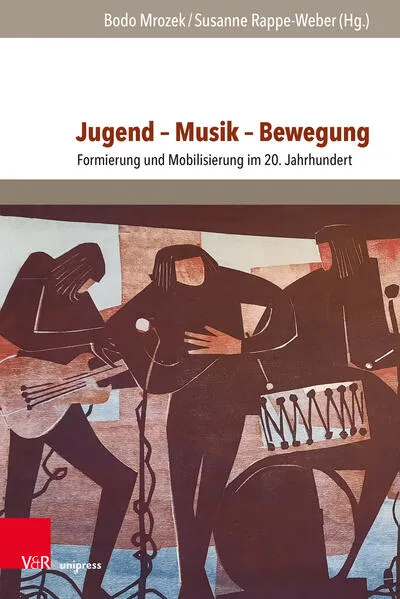
Jugend – Musik – Bewegung
Für das 20. Jahrhundert, das Jahrhundert der Jugend, umspannen die Begriffe ›Jugend – Musik – Bewegung‹ ein Feld, aus dem eine Fülle von Fragestellungen zur Beschreibung und Erklärung nicht nur musikalischer, sondern auch gesellschaftlicher Entwicklungen erwächst. Diese werden hier als Formierung und Mobilisierung gefasst. Dabei spielte die Musik für unterschiedliche Bewegungen stets eine wesentliche, nicht nur kultur-, sondern auch ideen- und politikhistorische Rolle. Die Entwicklungen in großer Bandbreite und über die Zäsuren des 20. Jahrhunderts hinweg abzustecken, ist das Ziel des vorliegenden Bandes. Der Zugriff ist dabei transdisziplinär: Die Beitragenden kommen aus der Geschichts-, Politik- und Musikwissenschaft, den Sound und Popular Music Studies sowie aus der Pädagogik.
For the 20th century, often referred to as the century of young adults, concepts such as “youth – music – movement” describe a field from which various questions arise for describing and explaining both musical and social developments. Here, these concepts are defined as formation and mobilisation. Music has always played a key role for various movements, not only in terms of culture, but also in the history of ideas and politics. The aim of the present volume is to demonstrate the various developments in detail and to shed light on the caesuras it underwent during the 20th century. The approach is transdisciplinary: the contributors come from various disciplines such as history studies, political sciences, musicology, sound and popular music studies as well as pedagogy.
For the 20th century, often referred to as the century of young adults, concepts such as “youth – music – movement” describe a field from which various questions arise for describing and explaining both musical and social developments. Here, these concepts are defined as formation and mobilisation. Music has always played a key role for various movements, not only in terms of culture, but also in the history of ideas and politics. The aim of the present volume is to demonstrate the various developments in detail and to shed light on the caesuras it underwent during the 20th century. The approach is transdisciplinary: the contributors come from various disciplines such as history studies, political sciences, musicology, sound and popular music studies as well as pedagogy.