O'Neil Ford Monograph Series
Moisej J. Ginzburg, Ignatij F. Milinis: Narkomfin, Moscow 1928–1930
Chronologie aller Bände (1 - 2)
Die Reihenfolge beginnt mit dem Buch "Moisej J. Ginzburg, Ignatij F. Milinis: Narkomfin, Moscow 1928–1930". Wer alle Bücher der Reihe nach lesen möchte, sollte mit diesem Band von Danilo Udovički-Selb beginnen. Mit insgesamt 2 Bänden wurde die Reihe über einen Zeitraum von ungefähr 5 Jahren fortgesetzt. Der neueste Band trägt den Titel "The Little Chapel in the Woods".
- Anzahl der Bewertungen für die gesamte Reihe: 4
- Ø Bewertung der Reihe: 5
- Start der Reihe: 20.01.2016
- Neueste Folge: 01.06.2021
Diese Reihenfolge enthält 2 unterschiedliche Autoren.
- Band: 6
- Autor: Udovički-Selb, Danilo
- Anzahl Bewertungen: 3
- Ø Bewertung: 5.0
- Medium: Buch
- Veröffentlicht: 20.01.2016
- Genre: Sonstiges
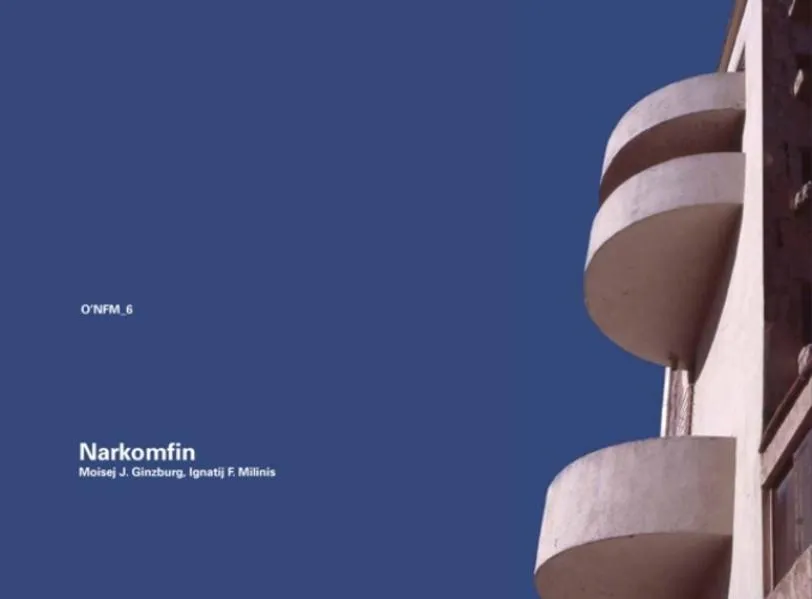
Moisej J. Ginzburg, Ignatij F. Milinis: Narkomfin, Moscow 1928–1930
Der sechste Band der O'Neil Ford Monograph-Reihe, herausgegeben vom Center for American Architecture and Design (CAAD) und dem O'Neil Ford Chair in Architecture an der University of Texas at Austin. Jede dieser Monografien in englischer Sprache analysiert ein wichtiges Bauwerk moderner Architektur in fundierten Essays und an Hand von zahlreichen Fotos, Originalskizzen und Plänen. Die schön aufgemachten Bände ermöglichen so dem Leser ein ausgesprochen detailliertes Studium ausgesuchter architektonischer Werke.
The House of the Narkomfin was built, or better, "Montage" – as the Constructivist Moisej J. Ginzburg (1896–1946) preferred to call it – between 1928 and 1931. It is therefore contemporaneous with Le Corbusier’s Villa Savoye, as well as with Le Corbusier’s visit to Moscow. On a superficial level, they both share a common aesthetic that in France was nicknamed "le style paquebot," while the Narkomfin was soon called the "The Steamer," or even the "Agit-Steamer" in a symbolic reference to the boats of the Agit-Prop movement that carried the message of the Revolution along the rivers of the Soviet Union.
On a deeper level, the Narkomfin is more than a housing block with a recognizable style. It is the converging point of the history of Constructivism. It is the most sophisticated expression of a "social condenser," in Ginzburg’s words, where purposefully reassembled functional spaces are given an active role in transforming everyday social life. Echoing the Russian Formalist method of analytic editing, like the cinematic "montage of attractions" – to use Eisenstein’s expression – it stems from reconfigured semantic series of the notion of traditional abode, intended to transform everyday life – the "byt." In this sense, the Narkomfin – a building without precedent – is more than a symbol; it is, in a nutshell, the very program of Constructivism. It is also the zenith of five years of intensive experimentation under Soviet Russian government sponsorship, from 1926 and 1930, with new ways of dwelling, boasting emancipatory social relationships for women in particular.
Intended for the working class, these industrialized dwelling types sought ways to raise numbers without sacrificing quality. Widely transcending the confines of Soviet architectural practice itself, the Narkomfin anticipated by twenty years Le Corbusier's own experimental housing block in Marseille, which resulted directly from his visit to Moscow in 1928.
The Narkomfin was also the last building Ginzburg’s Society of Contemporary Architects (OSA) built with its team of brilliant young professionals, trained at the VHUTEMAS (the Soviet ‘BAUHAUS’), Mihail Baršč in the first place. The 1930 Bolshevik Central Committee decree condemned the experimentation as "phantasies that would alienate people from the very idea of Socialism." The effort was now seen, under Stalin’s "Revolution from above," as diverting resources from the main goal of the 1928 Five-Year-Plan, aimed exclusively at rapid industrialization of the country. "Temporary" wooden barracks, lacking essential living amenities, supplanted in a permanent way OSA’s innovative drive for affordable ways to raise the living standards of all, eliminating in the first the plague of shared apartments. Ginzburg’s resistance to the new trend, known as Socialist Realism, resulted however as late as 1938, in a sanatorium at Kislovodsk (the Caucasus) with front façades designed in the "Novecento" style to elude censorship. Hidden behind the sanatorium’s main façades – the only likely to be photographed – were tangible quotations of Le Corbusier’s, Mies van der Rohe’s, and Gropius’ architecture, including fragments of his own Narkomfin.
The House of the Narkomfin was built, or better, "Montage" – as the Constructivist Moisej J. Ginzburg (1896–1946) preferred to call it – between 1928 and 1931. It is therefore contemporaneous with Le Corbusier’s Villa Savoye, as well as with Le Corbusier’s visit to Moscow. On a superficial level, they both share a common aesthetic that in France was nicknamed "le style paquebot," while the Narkomfin was soon called the "The Steamer," or even the "Agit-Steamer" in a symbolic reference to the boats of the Agit-Prop movement that carried the message of the Revolution along the rivers of the Soviet Union.
On a deeper level, the Narkomfin is more than a housing block with a recognizable style. It is the converging point of the history of Constructivism. It is the most sophisticated expression of a "social condenser," in Ginzburg’s words, where purposefully reassembled functional spaces are given an active role in transforming everyday social life. Echoing the Russian Formalist method of analytic editing, like the cinematic "montage of attractions" – to use Eisenstein’s expression – it stems from reconfigured semantic series of the notion of traditional abode, intended to transform everyday life – the "byt." In this sense, the Narkomfin – a building without precedent – is more than a symbol; it is, in a nutshell, the very program of Constructivism. It is also the zenith of five years of intensive experimentation under Soviet Russian government sponsorship, from 1926 and 1930, with new ways of dwelling, boasting emancipatory social relationships for women in particular.
Intended for the working class, these industrialized dwelling types sought ways to raise numbers without sacrificing quality. Widely transcending the confines of Soviet architectural practice itself, the Narkomfin anticipated by twenty years Le Corbusier's own experimental housing block in Marseille, which resulted directly from his visit to Moscow in 1928.
The Narkomfin was also the last building Ginzburg’s Society of Contemporary Architects (OSA) built with its team of brilliant young professionals, trained at the VHUTEMAS (the Soviet ‘BAUHAUS’), Mihail Baršč in the first place. The 1930 Bolshevik Central Committee decree condemned the experimentation as "phantasies that would alienate people from the very idea of Socialism." The effort was now seen, under Stalin’s "Revolution from above," as diverting resources from the main goal of the 1928 Five-Year-Plan, aimed exclusively at rapid industrialization of the country. "Temporary" wooden barracks, lacking essential living amenities, supplanted in a permanent way OSA’s innovative drive for affordable ways to raise the living standards of all, eliminating in the first the plague of shared apartments. Ginzburg’s resistance to the new trend, known as Socialist Realism, resulted however as late as 1938, in a sanatorium at Kislovodsk (the Caucasus) with front façades designed in the "Novecento" style to elude censorship. Hidden behind the sanatorium’s main façades – the only likely to be photographed – were tangible quotations of Le Corbusier’s, Mies van der Rohe’s, and Gropius’ architecture, including fragments of his own Narkomfin.
- Band: 8
- Autor: Ford, O'Neil
- Anzahl Bewertungen: 1
- Ø Bewertung: 5.0
- Medium: Buch
- Veröffentlicht: 01.06.2021
- Genre: Sonstiges
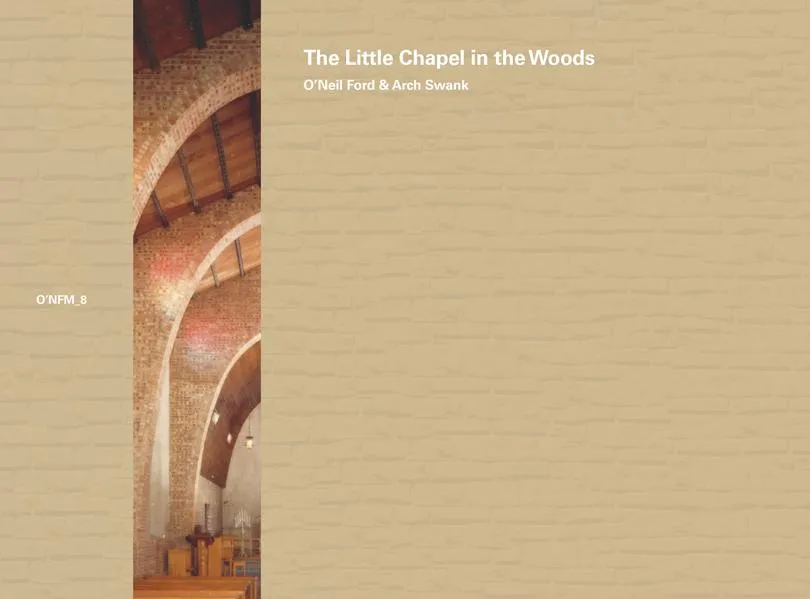
The Little Chapel in the Woods
Als Teil von Franklin D. Roosevelts Infrastrukturprogramm — dem WPA — wurde The Little Chapel in the Woods in Denton, Texas, am Ende der großen Wirtschaftskrise mit Hilfe von 300 Studentinnen des „Texas State College for Women“ und jungen Männern der National Youth Administration errichtet. Der einfache Baukörper wartet im Inneren mit zwei Überraschungen auf: innovativen Parabolbögen, inspiriert von Felix Candela, und aufwendig gestalteten Kirchenfenstern — entwor- fen und hergestellt von Studentinnen, die das Recht der Frauen an einem fairen Anteil am modernen Leben reklamieren.
Eine Reihe von Aufsätzen ordnet die Kapelle in den internationalen und regionalen Kontext ein. Reproduktionen aus dem Alexander Architectural Archive an der University of Texas at Austin, School of Architecture, geben einen detaillierten Einblick in die sorgfältige Gestaltung dieses viel bewunderten Manifests regionaler Architektur von O‘Neil Ford und Arch Swank.
Eine Reihe von Aufsätzen ordnet die Kapelle in den internationalen und regionalen Kontext ein. Reproduktionen aus dem Alexander Architectural Archive an der University of Texas at Austin, School of Architecture, geben einen detaillierten Einblick in die sorgfältige Gestaltung dieses viel bewunderten Manifests regionaler Architektur von O‘Neil Ford und Arch Swank.