Chronologie aller Bände (1 - 3)
Die Reihenfolge beginnt mit dem Buch "Catalogue of Works of Carl Friedrich Abel". Wer alle Bücher der Reihe nach lesen möchte, sollte mit diesem Band von Günter von Zadow beginnen. Die Reihe umfasst derzeit 3 Bände. Der neueste Band trägt den Titel "COMPENDIUM MUSICAE".
- Anzahl der Bewertungen für die gesamte Reihe: 0
- Ø Bewertung der Reihe: 0
- Start der Reihe: 07.02.2023
- Neueste Folge: 16.12.2024
Diese Reihenfolge enthält 3 unterschiedliche Autoren.
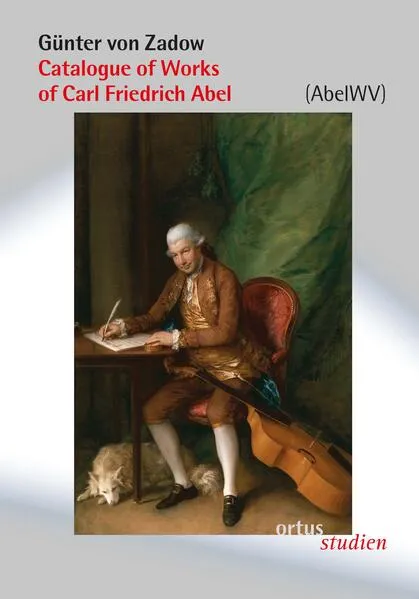
- Band: 26
- Autor: von Zadow, Günter
- Anzahl Bewertungen: 0
- Ø Bewertung:
- Medium: Buch
- Veröffentlicht: 07.02.2023
- Genre: Sonstiges
Catalogue of Works of Carl Friedrich Abel
In 1971 Walter Knape published his catalogue of Abel’s works, which lists 233 work numbers. In the last decades, however, numerous other works have been discovered, as well as additional sources of known works. Therefore, for the Abel anniversary in 2023 (300th birthday on 22 December), this new, contemporary and up-to-date work catalogue is published. It describes 420 works, ranging from a single minuet for viola da gamba to the Sinfonia Concertante. Each work is presented with incipits and associated sources and concordances. Each category of works begins with an overview chapter placing the works in an overall context. Eight directories facilitate orientation, and a chronological table contains all known data on the creation and publication of the works. In the appendix, 34 title pages of historical prints and 19 portraits are reproduced full-page.
- Band: 27
- Autor: Siegfried Meier
- Anzahl Bewertungen: 0
- Ø Bewertung:
- Medium: Buch
- Veröffentlicht: 16.12.2024
- Genre: Sonstiges
Melchior-Franck-Werkverzeichnis (MFWV)
Der Coburger Hofkapellmeister Melchior Franck (~1580–1639) gilt als einer der bedeutendsten und produktivsten Komponisten im deutschen Sprachraum in der ersten Hälfte des 17. Jahrhunderts. Er schuf zahlreiche Vokal- und Instrumentalwerke, mehrere Cantionale, Werke für die Schule sowie anlassbezogene Kompositionen zu Hochzeiten und Todesfällen sowohl für den Hof als
auch für das städtische Bürgertum und eine große Zahl an weltlichen Liedern. Sein Bekanntheitsgrad reichte weit über seinen fränkischen Wirkungskreis hinaus. Zu seinen Lebzeiten und auch späterhin wurde seine Musik im gesamten protestantisch geprägten Raum musiziert. Das umfangreiche Werk Francks ist beinahe ausnahmslos in zeitgenössischen Drucken überliefert, die gegenwärtig in zahlreichen Bibliotheken Europas und Amerikas aufbewahrt werden. Im Melchior-Franck-Werkeverzeichnis
(MFWV) erhält erstmals jedes Einzelwerk, auch innerhalb von Sammlungen, eine Werknummer, werden die Überlieferung und die Quellen dokumentiert und durch umfassende Register erschlossen.
- Band: 32
- Autor: Printz, Wolfgang Caspar
- Anzahl Bewertungen: 0
- Ø Bewertung:
- Medium: Buch
- Veröffentlicht: 20.12.2023
- Genre: Sonstiges