Chronologie aller Bände (1 - 3)
Die Reihenfolge beginnt mit dem Buch "The Former Soviet Union and East Central Europe between Conflict and Reconciliation". Wer alle Bücher der Reihe nach lesen möchte, sollte mit diesem Band von Lily Gardner Feldman beginnen. Der zweite Teil der Reihe "Transdisciplinary Approaches on Reconciliation Research" ist am 15.04.2024 erschienen. Mit insgesamt 3 Bänden wurde die Reihe über einen Zeitraum von ungefähr 5 Jahren fortgesetzt. Der neueste Band trägt den Titel "Transdisciplinary Approaches on Reconciliation Research".
- Anzahl der Bewertungen für die gesamte Reihe: 0
- Ø Bewertung der Reihe: 0
- Start der Reihe: 03.12.2018
- Neueste Folge: 15.04.2024
Diese Reihenfolge enthält 3 unterschiedliche Autoren.
- Autor: Gardner Feldman, Lily
- Anzahl Bewertungen: 0
- Ø Bewertung:
- Medium: Buch
- Veröffentlicht: 03.12.2018
- Genre: Sonstiges
The Former Soviet Union and East Central Europe between Conflict and Reconciliation
This volume examines the role of identity formation and stages of sequencing of the steps of reconciliation – which is an enduring rather than ad an ad hoc phenomenon. RIPAR 4 asks for both the challenges to it from the domestic and international systems and the actors involved, as well as for the role of »history,« »memory« and »remembrance« either as catalysts for or obstacles to reconciliation. The analyzing of the connection among the past, the present and the future in actual or prospective reconciliation embraces all these topics and questions.Influenced by the crisis in the former Sovjet Union following the March 2014 Russian annexation/integration of Crimea and the movement of Russian soldiers into Eastern Ukraine to aid Ukrainian separatists the essays in this volume were written in 2015. »Reconciliation« is a frequently ill-defined term. As an aspiration in this volume it encompasses three senses: an incipient, thin and minimal form amounting to passive, peaceful coexistence after enmity; a more elaborate, intermediate and engaged form that is captured by the term rapprochement; and a thick or fuller form denoting active friendship, empathy, trust, magnanimity and, ultimately, amity. Beyond the definitional goal, the volume addresses ten themes. Firstly, reconciliation is being questioned as a process and/ or a terminal condition. A view is made on the requirements for the transition from conflict to a reconciliatory process, and the obstacles to beginning a process of reconciliation. Its »soft« and »hard« expressions inter alia in emotional and political dimensions are also subject of the author's interest. The observations about conflict and cooperation offered in this volume wish to add significantly to the burgeoning literature of reconciliation. These essays demonstrate that we need a variety of disciplinary and theoretical perspectives to grapple with conflict and to promote reconciliation.
- Autor: Anselm, Reiner
- Anzahl Bewertungen: 0
- Ø Bewertung:
- Medium: Buch
- Veröffentlicht: 14.08.2023
- Genre: Sonstiges
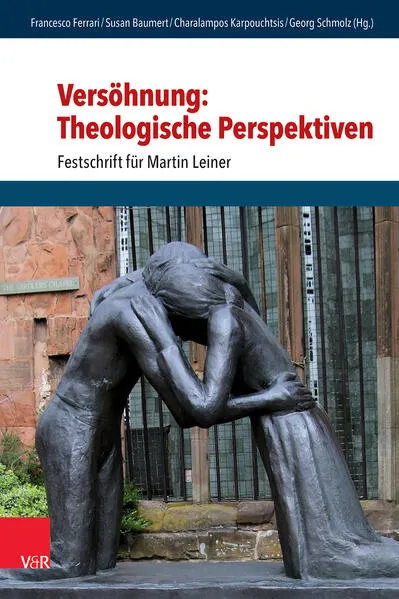
Versöhnung: Theologische Perspektiven
Martin Leiner hat die Versöhnungsforschung und -praxis in den vergangenen Jahren maßgeblich geprägt und gefördert. Als Gründer und Leiter des 2013 ins Leben gerufenen Jena Center for Reconciliation Studies/Zentrum für Versöhnungsforschung (JCRS) an der Theologischen Fakultät der Friedrich-Schiller-Universität Jena ist er ein unermüdlicher Brückenbauer und Netzwerker über die universitären Grenzen hinaus.
Gerade die Schwerpunkte der vergleichenden Konflikterforschung und der Untersuchung von Versöhnungsprozessen weltweit verleihen dem Jenaer Forschungszentrum eine Sonderstellung, die sowohl durch zahlreiche akademische Impulse (Theoriebildung und praxisnahe Fallstudien) als auch durch den Einbezug internationaler Doktoranden und Gastdozenten unterstrichen wird.
Die vorliegende Festschrift feiert nicht nur den 60. Geburtstag Martin Leiners, sondern versammelt auch die Beiträge von Theologen, Philosophen, Religionspädagogen und -wissenschaftlern sowie Versöhnungstheoretikern und -praktikern, die in einem transdisziplinären Dialog dem Thema der Versöhnung aus theologischer Perspektive nachgehen und dadurch die vielfältige Tätigkeit des Jubilars verdeutlichen und wiederspiegeln. Die Beiträge reichen von einem Erfahrungsbericht aus der Friedensarbeit über Themen wie religionspädagogische Erziehung zur Versöhnung, das Verständnis von Vergeben in Hannah Arendts politischer Theorie, die Sündevergebung in jüdisch-christlicher Tradition sowie die Untersuchung der erkenntnistheoretischen Toleranz als Grundlage heutiger Ökumene bis hin zur Untersuchung wertschätzender Wahrnehmung, Selbstliebe und politischer, philosophischer sowie theologischer Wertediskurse. Damit bietet der Sammelband zugleich einen Überblick über aktuelle Herausforderungen und Chancen der Versöhnungsforschung.
Gerade die Schwerpunkte der vergleichenden Konflikterforschung und der Untersuchung von Versöhnungsprozessen weltweit verleihen dem Jenaer Forschungszentrum eine Sonderstellung, die sowohl durch zahlreiche akademische Impulse (Theoriebildung und praxisnahe Fallstudien) als auch durch den Einbezug internationaler Doktoranden und Gastdozenten unterstrichen wird.
Die vorliegende Festschrift feiert nicht nur den 60. Geburtstag Martin Leiners, sondern versammelt auch die Beiträge von Theologen, Philosophen, Religionspädagogen und -wissenschaftlern sowie Versöhnungstheoretikern und -praktikern, die in einem transdisziplinären Dialog dem Thema der Versöhnung aus theologischer Perspektive nachgehen und dadurch die vielfältige Tätigkeit des Jubilars verdeutlichen und wiederspiegeln. Die Beiträge reichen von einem Erfahrungsbericht aus der Friedensarbeit über Themen wie religionspädagogische Erziehung zur Versöhnung, das Verständnis von Vergeben in Hannah Arendts politischer Theorie, die Sündevergebung in jüdisch-christlicher Tradition sowie die Untersuchung der erkenntnistheoretischen Toleranz als Grundlage heutiger Ökumene bis hin zur Untersuchung wertschätzender Wahrnehmung, Selbstliebe und politischer, philosophischer sowie theologischer Wertediskurse. Damit bietet der Sammelband zugleich einen Überblick über aktuelle Herausforderungen und Chancen der Versöhnungsforschung.
- Autor: Ferrari, Francesco
- Anzahl Bewertungen: 0
- Ø Bewertung:
- Medium: Buch
- Veröffentlicht: 15.04.2024
- Genre: Sonstiges
Transdisciplinary Approaches on Reconciliation Research
Reconciliation studies are concerned with the processes of rebuilding and improving damaged relationships after major wrongdoings. They focus on factors such as law, economics, and international relations, as well as on elements such as emotions and ethics, culture and religion, media and education. Reconciliation research therefore requires a transdisciplinary approach, to analyse both the procedures leading to the recognition of truth as well as those in which justice is administered; both the impact of public apologies and cooperation agreements; both the implementation of memory policies and civil society initiatives; both the outcomes of trauma therapy and intergenerational encounter groups. While on the surface the relationships in question are those between states, groups, organisations, and individuals, at a deeper level reconciliation always addresses and involves many axes of damaged relationships: those with others (intergroup); those with one’s own group (intragroup); those with oneself; those with the environment; and those with transcendence. Reconciliation studies deal, therefore, with a much broader spectrum of relationships than that taken into consideration by neighbouring disciplines such as conflict resolution and peace studies.
In this volume, Francesco Ferrari and Davide Tacchini brought together examples of Leiner’s approach to reconciliation studies as a cooperative project of different disciplines.
The articles are divided into two sections:
1. A series of case studies about Japan-South Korea relations, German-Czech reconciliation, Nagorno-Karabakh conflict using the methods of Martin Leiner, Sayyid Qutb view of American society, and South Africans revisiting TRC.
2. A series of theoretical clarifications on reconciliation and moderation from a Palestinian point of view, evolutionary game theory looking at reconciliation processes by a team of economists, grace and reconciliation from a Catholic theological point of view, philosophical reflections on the concept of reconciliation after Auschwitz, cognitive and affective aspects in reconciliation from a Catholic theological point of view, ecology and spatiality of reconciliation seen by a social geographer, and political dimensions of reconciliation.
In this volume, Francesco Ferrari and Davide Tacchini brought together examples of Leiner’s approach to reconciliation studies as a cooperative project of different disciplines.
The articles are divided into two sections:
1. A series of case studies about Japan-South Korea relations, German-Czech reconciliation, Nagorno-Karabakh conflict using the methods of Martin Leiner, Sayyid Qutb view of American society, and South Africans revisiting TRC.
2. A series of theoretical clarifications on reconciliation and moderation from a Palestinian point of view, evolutionary game theory looking at reconciliation processes by a team of economists, grace and reconciliation from a Catholic theological point of view, philosophical reflections on the concept of reconciliation after Auschwitz, cognitive and affective aspects in reconciliation from a Catholic theological point of view, ecology and spatiality of reconciliation seen by a social geographer, and political dimensions of reconciliation.