Studien und Texte zu Antike und Christentum / Studies and Texts in Antiquity and Christianity
The Nag Hammadi Codices as Monastic Books
Chronologie aller Bände (1 - 2)
Die Reihenfolge beginnt mit dem Buch "The Nag Hammadi Codices as Monastic Books". Wer alle Bücher der Reihe nach lesen möchte, sollte mit diesem Band von Hugo Lundhaug beginnen. Der zweite Teil der Reihe ""Räume" im antiken Christentum" ist am 31.12.2024 erschienen. Die Reihe umfasst derzeit 2 Bände. Der neueste Band trägt den Titel ""Räume" im antiken Christentum".
- Anzahl der Bewertungen für die gesamte Reihe: 0
- Ø Bewertung der Reihe: 0
- Start der Reihe: 31.07.2023
- Neueste Folge: 31.12.2024
Diese Reihenfolge enthält 2 unterschiedliche Autoren.
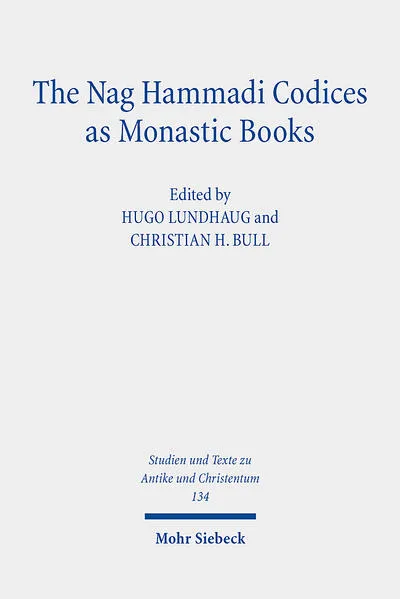
- Autor: Lundhaug, Hugo
- Anzahl Bewertungen: 0
- Ø Bewertung:
- Medium: Buch
- Veröffentlicht: 31.07.2023
- Genre: Sonstiges
The Nag Hammadi Codices as Monastic Books
Since their discovery in 1945, the significance of the texts contained in the thirteen papyrus manuscripts now known as the Nag Hammadi Codices has been fiercely debated. In the history of scholarship, the texts have primarily been analyzed in light of the contexts of their hypothetical Greek originals, which in a majority of cases have been thought to have been authored in the second and third centuries CE in a variety of contexts. The articles in this volume take a different approach. Instead of focusing on hypothetical originals, they ask how the texts may have been used and understood by those who read the Coptic papyrus codices in which the texts have been preserved and take as their point of departure recent research indicating that these manuscripts were produced and used by early Egyptian monastics. It is shown that the reading habits and theological ideas attested historically for Upper Egyptian monasticism in the fourth and fifth centuries resonate well with several of the texts within the Nag Hammadi Codices.
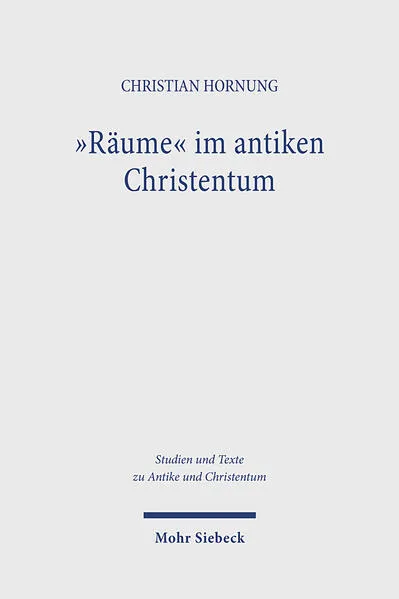
- Autor: Hornung, Christian
- Anzahl Bewertungen: 0
- Ø Bewertung:
- Medium: Buch
- Veröffentlicht: 31.12.2024
- Genre: Sonstiges
"Räume" im antiken Christentum
Christian Hornung untersucht "Räume" im antiken Christentum. Vor dem Hintergrund des in den Geistes- und Sozialwissenschaften intensiv diskutierten spatial turn analysiert er erstmals literarische Beschreibungen des kirchlichen Gebäudekomplexes (u. a. Kirche, Bischofshaus und Annexbauten) sowie Synoden, das Mönchtum oder auch den sogenannten öffentlichen Raum (u. a. Prozessionen und Feste). "Räume" erscheinen dabei nicht mehr nur als bloße Container, die durch Länge, Breite und Höhe bestimmt sind, sondern als soziale Größen, die durch eine komplexe Relationalität von Individuen charakterisiert sind. Im Kontext der Institutionengeschichte werden "Räume" in ihrer Mehrdimensionalität sichtbar und erscheinen als wesentliche Formen kirchlicher Inszenierung und Repräsentation.