Chronologie aller Bände (1 - 2)

Die Reihenfolge beginnt mit dem Buch "Gender interkonfessionell gedacht". Wer alle Bücher der Reihe nach lesen möchte, sollte mit diesem Band von Luisa Coscarelli-Larkin beginnen. Der zweite Teil der Reihe "Vergleichendes Sehen in den Konfessionen der Frühen Neuzeit" ist am 15.02.2021 erschienen. Die Reihe umfasst derzeit 2 Bände. Der neueste Band trägt den Titel "Vergleichendes Sehen in den Konfessionen der Frühen Neuzeit".
- Anzahl der Bewertungen für die gesamte Reihe: 1
- Ø Bewertung der Reihe: 5
Diese Reihenfolge enthält 2 unterschiedliche Autoren.
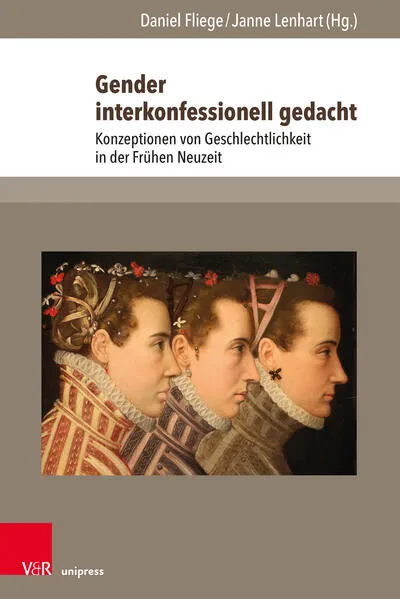
- Autor: Coscarelli-Larkin, Luisa
- Anzahl Bewertungen: 1
- Ø Bewertung: 5.0
- Medium: Buch
- Veröffentlicht: 05.10.2020
- Genre: Sonstiges
Gender interkonfessionell gedacht
Die Reformation markiert einen Aufbruch, der Frauen neue Handlungsmöglichkeiten eröffnete und Vorstellungen der Geschlechterordnung sowie der Rollen von Männern und Frauen, Müttern und Vätern, Eheleuten und der Familie wandelte. Der Band nimmt daher nicht nur Konzepte von Weiblichkeit in den Blick, sondern auch Männlichkeit, Ehe und Familie. Der Schwerpunkt liegt darauf, diese Phänomene in Hinblick auf unterschiedliche künstlerische und mediale Repräsentationsformen von Geschlechtlichkeit in konfessionellen Kontexten zu erkunden. Als gemeinsamer methodischer Zugriff dient dabei das Konzept der Interkonfessionalität: So sollen Durchlässigkeiten zwischen den Konfessionen und konfessionsübergreifende Konstruktionen von Geschlechtlichkeit in der Frühen Neuzeit erfasst werden.
The Reformation marks a time of change that opened up new possibilities for women to act and transformed ideas about the order and coexistence of gender and the roles of men and women, mothers and fathers, husbands and wives, and the family. The volume therefore explicitly takes into account not only concepts of femininity, but also masculinity, marriage, and family. The main focus of the volume is to explore these phenomena in terms of different artistic and medial forms of representation of gender in denominational contexts. The concept of interconfessionality serves as a common methodological approach: in this way, permeabilities between denominations and cross-denominational constructions of gender in the early modern period are explored.
The Reformation marks a time of change that opened up new possibilities for women to act and transformed ideas about the order and coexistence of gender and the roles of men and women, mothers and fathers, husbands and wives, and the family. The volume therefore explicitly takes into account not only concepts of femininity, but also masculinity, marriage, and family. The main focus of the volume is to explore these phenomena in terms of different artistic and medial forms of representation of gender in denominational contexts. The concept of interconfessionality serves as a common methodological approach: in this way, permeabilities between denominations and cross-denominational constructions of gender in the early modern period are explored.
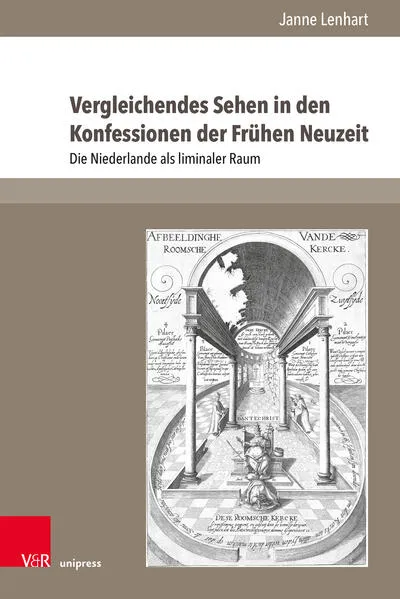
- Autor: Lenhart, Janne
- Anzahl Bewertungen: 0
- Ø Bewertung:
- Medium: Buch
- Veröffentlicht: 15.02.2021
- Genre: Sonstiges
Vergleichendes Sehen in den Konfessionen der Frühen Neuzeit
Die Reformation ging in den Niederlanden mit dem Achtzigjährigen Krieg einher. Nicht nur über konfessionelle Positionen, auch über territoriale Hoheit wurde gestritten. Besonders vakant war die daraus resultierende Grenzregion zwischen Nord und Süd, die als liminaler Raum verstanden werden kann. In ihrer kunsthistorischen Untersuchung über die Ausbildung und Dynamik konfessioneller Identitäten analysiert die Autorin wie Zugehörigkeit und Differenz bildlich markiert und inszeniert wurden. Der Band wählt einen grenzübergreifenden Zugriff und untersucht, mit welchen visuellen Strategien Raum angeeignet und codiert wurde. Raum wird dabei nicht als Rahmen konfessioneller Identitätsbildung aufgefasst, sondern als Gefüge verstanden, in dem verschiedene Parteien über konfessionelle Zugehörigkeit verhandelten und erprobten, mit welchen bildlichen und räumlichen Gestaltungsmitteln das jeweilige Bekenntnis zum Ausdruck gebracht werden konnte.
The Reformation in the Netherlands came along with the Eighty Years’ War. Contentious points were not only denominational positions, but also territorial sovereignty. In particularly vacant was the resulting border region between north and south, which can be understood as a liminal space. In her art-historical analysis of the creation and dynamics of denominational identities, the author analyses how belonging and difference were visually marked and organised. The volume chooses a cross-country approach and examines the visual strategies with which space was adopted and coded. Here, space is not understood as a framework for denominational identity formation, but as a structure in which various parties negotiated on denominational belongings, and tested with which visual and spatial design tools the respective denomination could be expressed.
The Reformation in the Netherlands came along with the Eighty Years’ War. Contentious points were not only denominational positions, but also territorial sovereignty. In particularly vacant was the resulting border region between north and south, which can be understood as a liminal space. In her art-historical analysis of the creation and dynamics of denominational identities, the author analyses how belonging and difference were visually marked and organised. The volume chooses a cross-country approach and examines the visual strategies with which space was adopted and coded. Here, space is not understood as a framework for denominational identity formation, but as a structure in which various parties negotiated on denominational belongings, and tested with which visual and spatial design tools the respective denomination could be expressed.