Chronologie aller Bände (1 - 5)

Die Reihenfolge beginnt mit dem Buch "Colonial Heritage, Power, and Contestation". Wer alle Bücher der Reihe nach lesen möchte, sollte mit diesem Band von Camila Andrea Malig Jedlicki beginnen. Der zweite Teil der Reihe "Colonial Heritage, Power, and Contestation" ist am 01.01.2024 erschienen. Die Reihe umfasst derzeit 5 Bände. Der neueste Band trägt den Titel "Guerrillas in Latin America".
- Anzahl der Bewertungen für die gesamte Reihe: 0
- Ø Bewertung der Reihe: 0
- Start der Reihe: 26.12.2023
- Neueste Folge: 17.11.2025
Diese Reihenfolge enthält 5 unterschiedliche Autoren.
- Autor: Malig Jedlicki, Camila Andrea
- Anzahl Bewertungen: 0
- Ø Bewertung:
- Medium: Buch
- Veröffentlicht: 26.12.2023
- Genre: Sonstiges
Colonial Heritage, Power, and Contestation
- Autor: Lizárraga-Mendiola, Liliana
- Anzahl Bewertungen: 0
- Ø Bewertung:
- Medium: Buch
- Veröffentlicht: 30.03.2024
- Genre: Politik
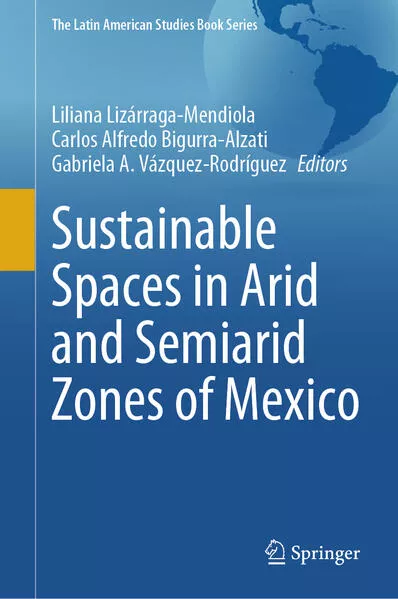
Sustainable Spaces in Arid and Semiarid Zones of Mexico
This book portrays interesting aspects of communities where livability, comfort, materials, and traditional construction procedures are part of the cultural context. The book is focused on the importance of incorporating environmental criteria and sustainable infrastructure to contribute to the Sustainable Development Goals and to improve the population's quality of life in arid and semi-arid zones of the Global South. This book constitutes an introduction to the sustainable construction of livable spaces for undergraduate and postgraduate students, although professionals of the construction industry and urban policy makers will also find this work valuable.
- Autor: Corzo Perez, Gerald Augusto
- Anzahl Bewertungen: 0
- Ø Bewertung:
- Medium: Buch
- Veröffentlicht: 27.06.2024
- Genre: Politik
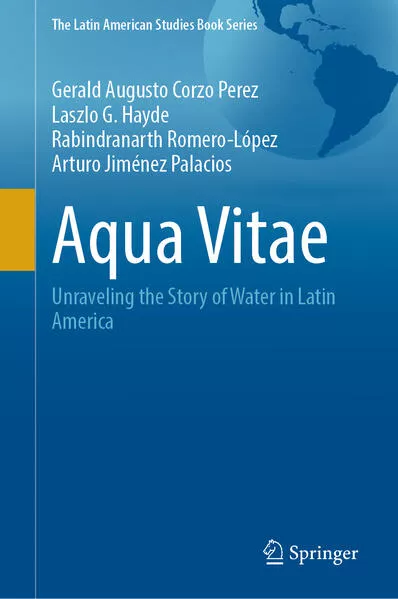
Aqua Vitae
This comprehensive book presents an analytical journey through the relationship between water and Latin American societies, offering an engineering perspective on historical water resource utilization. The book unravels the integral role water has played in the cultural, technological, and socio-economic development of the region, providing a foundational reference for engineers, academics, and researchers.
The book's exploration into water's perception and usage throughout history provides key insights into how human activity has impacted water resources and vice versa. It presents a meticulous examination of water as both a natural and cultural phenomenon, identifying its essential role in sustaining life and ecosystems, as well as its potential for causing devastation through disease and natural disasters. We delve into the complexities of water's role in society, illustrating how it is woven into the fabric of everyday life, religious ceremonies, and global events. The book also underscores the varying significance and implications of water across different regions within Latin America.
The narrative unfolds across three major sections: Technology, Water Management, and Socio-Cultural-Economical Impact. The 'Technology' section examines the evolution of water-related technologies and their significant socio-economic implications. The 'Water Management' part offers a holistic perspective on water resource management practices, both historical and contemporary. The final section delves into the societal implications of water use, including conflicts arising from political and economic decisions related to this crucial resource.
Designed for engineers, environmental scientists, and policy-makers, this book provides a unique blend of historical context, technical knowledge, and socio-cultural insights. It offers an invaluable resource for those seeking to understand the interplay between engineering practices, water resources, and societal developments in Latin America. It serves as a springboard for further research and informed decision-making in water resource management and policy, fostering a greater understanding of the myriad ways in which water influences and is influenced by human activity.
- Autor: Christofoletti, Rodrigo
- Anzahl Bewertungen: 0
- Ø Bewertung:
- Medium: Buch
- Veröffentlicht: 07.01.2025
- Genre: Politik
International Heritage
This book celebrates decades of safeguarding cultural heritage and reckons with reconfigurations and shifts that have shaped the field and understandings of it. The author reflects on a career of safeguarding heritage, offering perspectives from the positions of consumer, researcher, educator, and communicator and at a range of scales, from local-level debates to macro-level perspectives on the role of heritage preservation in international relations.
The book situates heritage preservation in the context of soft power and the international system and examines how it intersects with cultural diplomacy. These interrelationships crystalize in the illicit trafficking of cultural goods, inspiring reflections on private and common goods, interoperability, and decoloniality. Grounded in nuanced understandings of "world heritage" and "heritage of humanity", the author critically examines the foundation, trajectory, and remit of UNESCO and highlights cases of cultural and natural heritage, language, and tourism. These discussions in turn inform treatments of two timely topics: intangible heritage of and for refugees and the treatment of statues and symbols of colonizers.
By integrating diverse themes that are frequently treated independently, International Heritage: New Approaches, Old Concerns is a resource for researchers and practitioners looking to understand the foundations, current debates, and imminent challenges facing communities that aim to safeguard global cultural heritage.
- Autor: Ríos, Jerónimo
- Anzahl Bewertungen: 0
- Ø Bewertung:
- Medium: Buch
- Veröffentlicht: 17.11.2025
- Genre: Sonstiges
Guerrillas in Latin America
This book is a reference work in the study of the Latin American guerrilla phenomena of the second half of the 20th century. Drawing on both archival research and interviews and using a consistent framework, the volume examines nearly 30 guerrilla groups, allowing for a comprehensive characterization of the groups' ideological and organizational features, as well as their respective contexts. After two introductory chapters, the following 16 chapters identify the guerrilla groups most important to the highlighted country, address the cycle of violence and relationships with other guerrilla groups in the region, and discuss the state’s response. The last four chapters analyze two formal attempts at collaboration between guerrillas and two examples of counterinsurgency-oriented response and collaboration.
The contributions analyze diverse types of violence and state responses, but they all highlight a commonality: despite the camaraderie and formal solidarity of the guerrilla projects, state logics of action prevailed in both the guerrillas' and the states' responses. The volume also highlights collaborations, both at the guerrilla and counterinsurgent levels. All chapters address transnational elements affecting both guerrillas and state actors, focusing especially on the America Battalion, the Revolutionary Coordination Junta, National Security Doctrine and the Condor Plan. The chapters draw on primary sources from archives as well as interviews with members of the Sendero Luminoso, FARC-EP, ELN, Alfaro Vive Carajo, and Tupamaros.