Chronologie aller Bände (1 - 4)
Die Reihenfolge beginnt mit dem Buch "Dante and the Mediterranean Comedy". Wer alle Bücher der Reihe nach lesen möchte, sollte mit diesem Band von Andrea Celli beginnen. Der zweite Teil der Reihe "Dante and the Mediterranean Comedy" ist am 12.09.2023 erschienen. Mit insgesamt 4 Bänden wurde die Reihe über einen Zeitraum von ungefähr 4 Jahren fortgesetzt. Der neueste Band trägt den Titel "Translating "Teacher's Pest" and Other Medieval French Farces for Actors, Scholars, and Students".
- Anzahl der Bewertungen für die gesamte Reihe: 0
- Ø Bewertung der Reihe: 0
- Start der Reihe: 11.09.2022
- Neueste Folge: 13.10.2026
Diese Reihenfolge enthält 4 unterschiedliche Autoren.
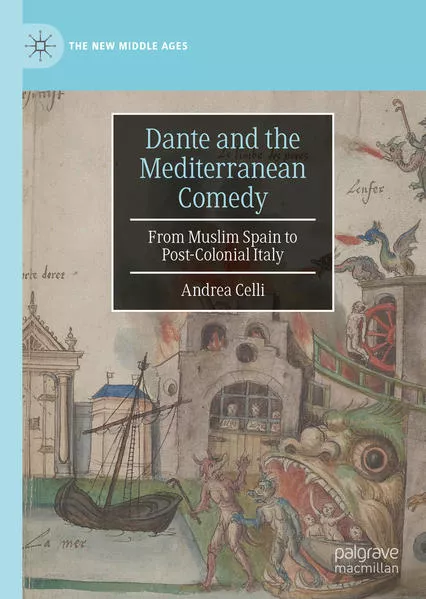
- Autor: Celli, Andrea
- Anzahl Bewertungen: 0
- Ø Bewertung:
- Medium: Buch
- Veröffentlicht: 11.09.2022
- Genre: Comedy
Dante and the Mediterranean Comedy
In recent decades the concept of Mediterranean has been cited with increasing frequency in relation to the study of medieval literatures. And yet, in what sense would Dante’s Comedy be ‘Mediterranean’? Is it because of its Greek-Arabic and Islamic sources? Dante and the Mediterranean Comedy analyzes the ideological function of references to the sea in the study of the Comedy undertaken by Enrico Cerulli, a scholar of Somali-Ethiopian languages, and a colonial governor of ‘Italian East Africa.’ Then it presents novel lines of inquiry on the reception and appropriation of the poem, such as the presence of Islamic sources in early commentaries of the Comedy, and cross-cultural allusions to Dante’s Hell in some graffiti on the walls of the Spanish Inquisition prison in Palermo. The image of the Mediterranean that seeps through the poem and through the history of its circulation is vivid yet hardly idyllic.
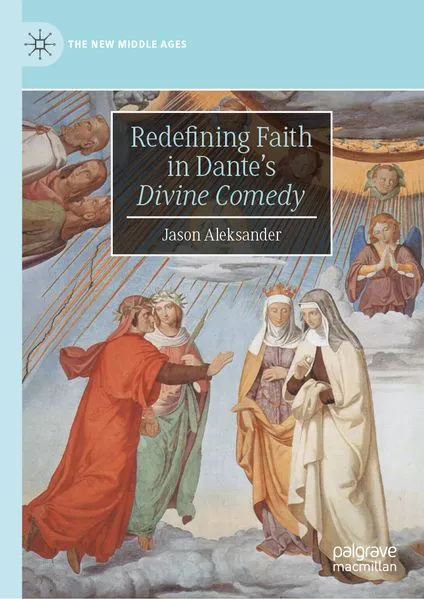
- Autor: Jason Aleksander
- Anzahl Bewertungen: 0
- Ø Bewertung:
- Medium: Buch
- Veröffentlicht: 26.05.2026
- Genre: Comedy
Redefining Faith in Dante’s "Divine Comedy"
Redefining Faith in Dante’s "Divine Comedy" offers a bold reinterpretation of one of the world’s most studied poems. Through close readings of all three canticles, Jason Aleksander shows how Dante’s poem provocatively reconfigures “faith” as a mode of creative and interpretive engagement grounded in the exercise of practical judgment (phronēsis) and intellectual humility. Drawing on Dante’s dramatic depictions of figures such as Farinata degli Uberti, Ulysses, Cato of Utica, Statius, Virgil, and Beatrice, Aleksander shows how the poem both illustrates and actively cultivates the virtues necessary for navigating a fragmented and polarized world.
Weaving together intellectual history, literary analysis, and sustained engagement with pagan, Christian, and Islamic philosophical traditions, the book traces how Dante’s poem dramatizes and provokes reflection on theological concepts such as heresy, salvation, personal immortality, atonement, and freedom of will. In doing so, Redefining Faith in Dante’s Divine Comedy offers a compelling account of how Dante’s vision invites us to read—and to live—with greater attentiveness, responsibility, and openness to the possibility of personal transformation.
This book will appeal to scholars and students of Dante, medieval and Renaissance philosophy and theology, philosophical hermeneutics, and anyone interested in how literature stimulates ethical imagination.
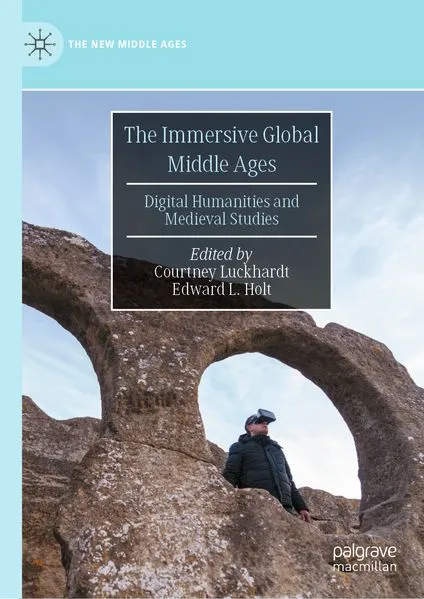
- Autor: Courtney Luckhardt
- Anzahl Bewertungen: 0
- Ø Bewertung:
- Medium: Buch
- Veröffentlicht: 04.09.2026
- Genre: Sonstiges
The Immersive Global Middle Ages
This book demonstrates how virtual reality (VR) can be used to bring our modern, embodied selves to other places and times, real and imagined, in the Global Middle Ages, approximately 500-1500 CE. The culmination of a National Endowment for the Humanities-funded program, this volume argues that collaboration, in both theory and praxis, is key to how we research and study the global digital past.
Crucial to this study of the medieval globe is the “digital turn” in scholarship and application of digital humanities. These approaches implement immersive experiences, which are digitally constructed virtual reality worlds where a user can explore, evaluate, and contemplate the nature of life in places and times across the medieval world. Moreover, this book's contributors discuss the ways in which we can both create narratives and make arguments in a non-textual medium, which are nonetheless grounded in evidence from texts, from material culture, and from geography and environmental data.

- Autor: Jody Enders
- Anzahl Bewertungen: 0
- Ø Bewertung:
- Medium: Buch
- Veröffentlicht: 13.10.2026
- Genre: Comedy
Translating "Teacher's Pest" and Other Medieval French Farces for Actors, Scholars, and Students
This anthology of scholarly translations of medieval French farces continues Jody Enders's recovery of a repertoire that remains surprisingly little known. While more than 200 comedies have survived from late medieval and early Renaissance France, they remain marginalized in part because of the politically incorrect and over-the-top humor they represent. Nevertheless, in this book, they are rendered in eminently readable, stageable, classroom-friendly, and funny fashion through Enders's translational practices, dubbed "feminist dramaturgy" and "virtual dramaturgy." Through these methods of translation Enders mines the silences of a literary text and cues for performance in order to recover nonverbal language to speak to audiences in new ways. The twelve plays presented are dedicated to academia, as well as to lesson-teaching and lesson-learning more broadly, and are intended to be studied, taught, and read for pleasure.