Chronologie aller Bände (1 - 2)
Die Reihenfolge beginnt mit dem Buch "Tools for Activating Data Marketplace". Wer alle Bücher der Reihe nach lesen möchte, sollte mit diesem Band von Teruaki Hayashi beginnen. Der zweite Teil der Reihe "Tools for Activating Data Marketplace" ist am 15.12.2023 erschienen. Die Reihe umfasst derzeit 2 Bände. Der neueste Band trägt den Titel "Design Thinking Research".
- Anzahl der Bewertungen für die gesamte Reihe: 0
- Ø Bewertung der Reihe: 0
- Start der Reihe: 01.12.2022
- Neueste Folge: 21.09.2024
Diese Reihenfolge enthält 2 unterschiedliche Autoren.

- Autor: Hayashi, Teruaki
- Anzahl Bewertungen: 0
- Ø Bewertung:
- Medium: Buch
- Veröffentlicht: 01.12.2022
- Genre: Sonstiges
Tools for Activating Data Marketplace
- Autor: Meinel, Christoph
- Anzahl Bewertungen: 0
- Ø Bewertung:
- Medium: Buch
- Veröffentlicht: 21.09.2024
- Genre: Sonstiges
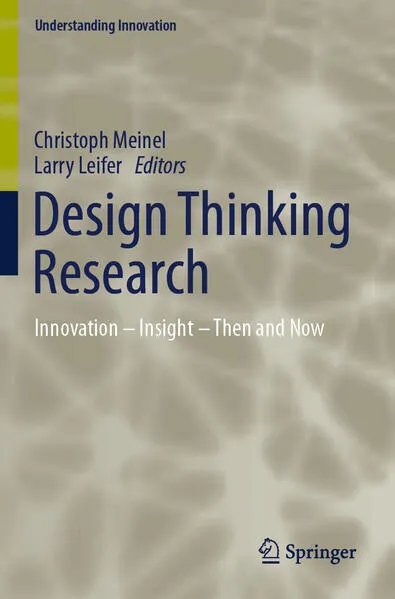
Design Thinking Research
Extensive research conducted at the Hasso Plattner Design Thinking Research Program at Stanford University in Palo Alto, California, USA, and at the Hasso Plattner Institute in Potsdam, Germany, has yielded valuable insights on why and how design thinking works. The participating researchers have identified metrics, developed models, and conducted studies, which are featured in this book and in the previous volumes of this series.
This volume provides readers with tools to bridge the gap between research and practice in design thinking, together with a range of real-world examples. Several different approaches to design thinking are presented, while acquired frameworks are employed to understand team dynamics in design thinking. The contributing authors introduce readers to new approaches and fields of application and show how design thinking can tap the potential of digital technologies in a human-centered way. The book also presents new ideas on neuro-design from StanfordUniversity and the Hasso Plattner Institute in Potsdam, inviting readers to consider newly developed methods and how these insights can be applied to different domains. Design thinking can be learned. It has a methodology that can be observed across multiple settings. Accordingly, readers can adopt new frameworks to modify and update their current practices.
The research outcomes gathered here are intended to inform and provide inspiration for all those seeking to drive innovation – be they experienced design thinkers or newcomers. It is the last in a series of 14 volumes published over the past 14 years, reflecting the successes of the HPI-Stanford Design Thinking Research Program. Many thanks to the Hasso Plattner Foundation for its valued support.