Wissenschaftliche Untersuchungen zum Neuen Testament 2. Reihe
The Destroyer and the Lamb
Chronologie aller Bände (1 - 10)
Die Reihenfolge beginnt mit dem eBook "From Messiah to Preexistent Son". Wer alle eBookz der Reihe nach lesen möchte, sollte mit diesem Band von Aquila H.I. Lee beginnen. Der zweite Teil der Reihe "The Destroyer and the Lamb" ist am 10.12.2019 erschienen. Mit insgesamt 10 Bänden wurde die Reihe über einen Zeitraum von ungefähr 6 Jahren fortgesetzt. Der neueste Band trägt den Titel "Reconsidering the Rhetoric of Temporality in Johannine Literature".
- Anzahl der Bewertungen für die gesamte Reihe: 0
- Ø Bewertung der Reihe: 0
- Start der Reihe: 00.12.2019
- Neueste Folge: 31.12.2025
Diese Reihenfolge enthält 10 unterschiedliche Autoren.
- Autor: Lee, Aquila H.I.
- Anzahl Bewertungen: 0
- Ø Bewertung:
- Medium: E-Book
- Veröffentlicht: 00.12.2019
- Genre: Sonstiges
From Messiah to Preexistent Son
Aquila H.I. Lee explores the development of early Christian understanding of Jesus as the preexistent Son of God. He first reviews recent attempts to explain the development as a result of the influence of Jewish angelology and similar speculations. In the second part he argues that neither the personification of various attributes of God, including wisdom, nor speculations about principal angels and a preexistent messiah in Second Temple Judaism ever provided a ready-made category for viewing Jesus as a divine and preexistent being alongside God.
An examination of the Synoptic evidence for Jesus' self-consciousness of divine sonship and divine mission in the whole context of his life and teaching shows that his self-understanding was open to interpretation in terms of pre-existence. The author also examines the early Christian use of Pss 110:1 and 2:7 against this background. He proposes that the root of preexistent Son Christology is to be found in early Christian exegesis of these two messianic psalms (the catalyst) in the light of Jesus' self-consciousness of divine sonship and divine mission (the foundation). The tremendous impact left by the resurrection event and the resulting conception of Jesus "literally" enthroned to God's right hand led them to see Jesus as the preexistent Lord and Son of God.
In the final part of this book Aquila Lee argues that the pre-Pauline 'sending' formula "God sent his Son" (Gal 4:4-5; Rom 8:3-4; Jn 3:16-17; and 1 Jn 4:9) derives from this understanding of Jesus as the preexistent Son of God rather than from divine wisdom christology.
An examination of the Synoptic evidence for Jesus' self-consciousness of divine sonship and divine mission in the whole context of his life and teaching shows that his self-understanding was open to interpretation in terms of pre-existence. The author also examines the early Christian use of Pss 110:1 and 2:7 against this background. He proposes that the root of preexistent Son Christology is to be found in early Christian exegesis of these two messianic psalms (the catalyst) in the light of Jesus' self-consciousness of divine sonship and divine mission (the foundation). The tremendous impact left by the resurrection event and the resulting conception of Jesus "literally" enthroned to God's right hand led them to see Jesus as the preexistent Lord and Son of God.
In the final part of this book Aquila Lee argues that the pre-Pauline 'sending' formula "God sent his Son" (Gal 4:4-5; Rom 8:3-4; Jn 3:16-17; and 1 Jn 4:9) derives from this understanding of Jesus as the preexistent Son of God rather than from divine wisdom christology.
- Autor: Balla, Peter
- Anzahl Bewertungen: 0
- Ø Bewertung:
- Medium: E-Book
- Veröffentlicht: 00.12.2019
- Genre: Sonstiges
Challenges to New Testament Theology
- Autor: Hoffmann, Matthias
- Anzahl Bewertungen: 0
- Ø Bewertung:
- Medium: Digital
- Veröffentlicht: 10.12.2019
- Genre: Sonstiges
The Destroyer and the Lamb
Matthias Reinhard Hoffmann zeigt mögliche Berührungspunkte der sogenannten angelomorphen Christologie, also einer zum Teil engelhaften Beschreibung Jesu, und der bekannteren Lamm-Christologie in der Johannes-Offenbarung auf. Er nennt Gründe dafür, dass eine angelomorphe Christologie vom Autor der Offenbarung bewusst eingearbeitet wurde und legt Möglichkeiten von Konzeptionen aus Altem Testament und frühjüdischen Schriften dar, die die christologischen Vorstellungen der Johannes-Offenbarung beeinflusst haben.
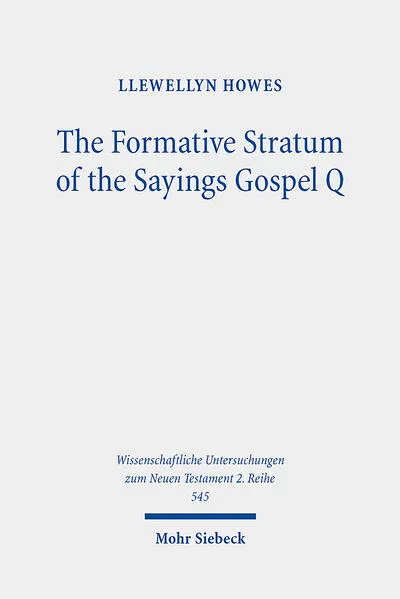
- Autor: Howes, Llewellyn
- Anzahl Bewertungen: 0
- Ø Bewertung:
- Medium: Buch
- Veröffentlicht: 01.02.2021
- Genre: Sonstiges
The Formative Stratum of the Sayings Gospel Q
In this study, Llewellyn Howes analyses the formative stratum (or earliest redactional layer) of the Sayings Gospel Q. He argues that certain texts in Q that have traditionally been excluded from its earliest layer should rather be included. In the process, the message of Q's formative stratum is reconsidered, featuring interesting and novel interpretations of certain Q texts that draw from advances in our knowledge of the logia and parables of Jesus, as well as the ancient Jewish world. Ultimately, the study argues that the formative stratum was a unified document before subsequent redactional layers were added, with interesting and important consequences for our understanding of the historical Jesus.
- Autor: Winzenburg, Justin
- Anzahl Bewertungen: 0
- Ø Bewertung:
- Medium: Buch
- Veröffentlicht: 01.07.2022
- Genre: Roman
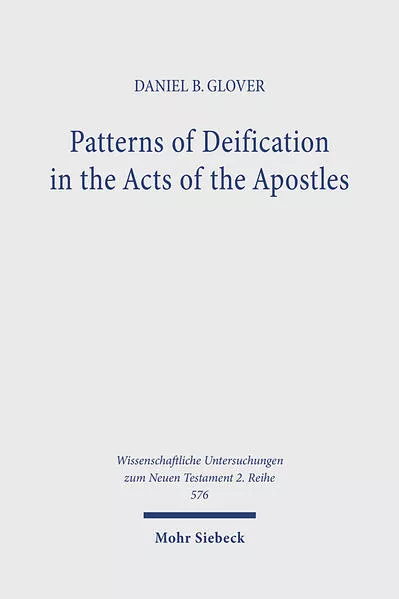
- Autor: Glover, Daniel B.
- Anzahl Bewertungen: 0
- Ø Bewertung:
- Medium: Buch
- Veröffentlicht: 01.10.2022
- Genre: Roman
Patterns of Deification in the Acts of the Apostles
In dieser Studie wertet Daniel B. Glover die Vergöttlichungsszenen in der Apostelgeschichte aus, indem er sie in den breiteren antiken mediterranen Kontext der Vergöttlichung einordnet. Er bietet eine neue Lesart der Apostelgeschichte, die jede der fünf Szenen in ein bestimmtes literarisches Muster einordnet, das für die frühesten Leser erkennbar war.

- Autor: Haxby, Mikael
- Anzahl Bewertungen: 0
- Ø Bewertung:
- Medium: Buch
- Veröffentlicht: 03.08.2023
- Genre: Sonstiges
The First Apocalypse of James
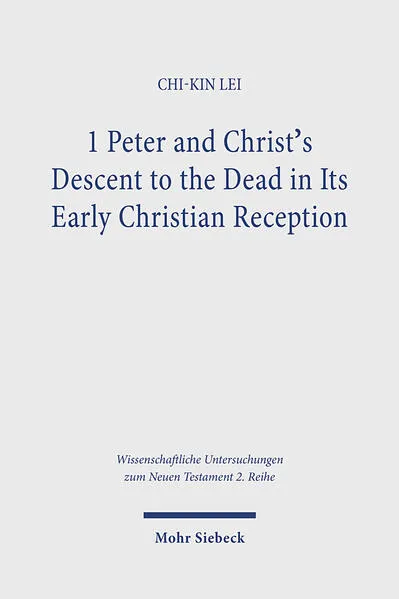
- Autor: Lei, Chi-Kin
- Anzahl Bewertungen: 0
- Ø Bewertung:
- Medium: Buch
- Veröffentlicht: 04.08.2025
- Genre: Sonstiges
1 Peter and Christ's Descent to the Dead in Its Early Christian Reception
In the Christian Bible, there is a mysterious text in the First Epistle of Peter (1 Peter 3:19) which speaks about "Jesus preaching to the spirits in prison". Traditionally, this text has served as the major scriptural support for the doctrine of Christ's descent into Hades (the so-called descensus ) in Christian theology. Present scholarship, however, has rejected this traditional understanding and tends to detach 1 Peter 3:19 from the descensus . Such a critical judgment, unfortunately, remains insufficiently examined. Indeed, no previous study has specifically focused on how and why 1 Peter 3:19 came to be associated with the descensus in history, nor what bearing the descensus could have on the text of 1 Peter 3:19 itself. Thus, Chi-Kin Lei fills this lacuna by studying 1 Peter's early reception in relation to the descensus, ultimately challenging the current scholarly consensus on this issue.
- Autor: Seong An, Chang
- Anzahl Bewertungen: 0
- Ø Bewertung:
- Medium: Buch
- Veröffentlicht: 31.12.2025
- Genre: Sonstiges
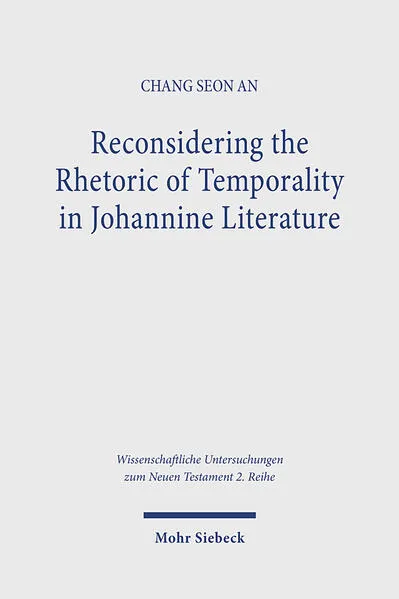
Reconsidering the Rhetoric of Temporality in Johannine Literature
Chang Seon An untersucht die Zeitrahmen im Evangelium und den Briefen des Johannes sowie deren Verwendung in diesen Texten zur Bildung des Christusglaubens. Der Autor analysiert den Gebrauch von zeitlichen Markierungen sowie Behauptungen über Vergangenheit, Gegenwart und Zukunft in antiken Diskursen der Selbstdefinition.
- Autor: Kreitschmann, Eva-Maria
- Anzahl Bewertungen: 0
- Ø Bewertung:
- Medium: Buch
- Veröffentlicht: 31.12.2025
- Genre: Sonstiges
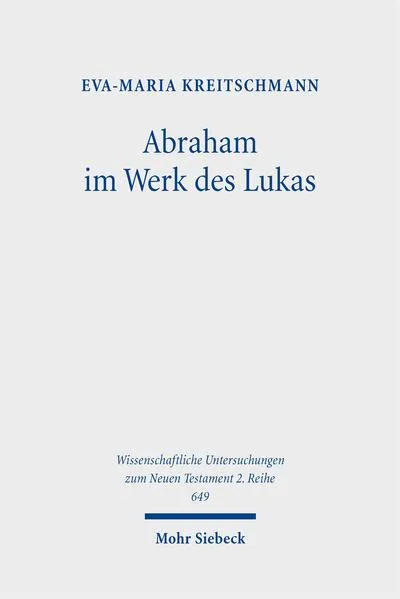
Abraham im Werk des Lukas
Mehr als die anderen kanonischen Evangelien rekurriert das Lukasevangelium auf die Figur des Stammvaters Abraham, etwa in den Erzählungen von der „Tochter" und dem „Sohn Abrahams" oder von „Abrahams Schoß". Dennoch gilt die lukanische Abrahamrezeption im Vergleich mit Paulus als wenig originell. Eva-Maria Kreitschmann zeigt allerdings, dass der dritte Evangelist ein ganz eigenes theologisches Interesse an der Figur Abrahams hat und ihm durchaus eine spezifische Funktion im Erzählverlauf des Evangeliums zukommt. So ist die Abrahamrezeption des Lukas als Aktualisierung einer jüdischen Abrahamtheologie zu lesen. Diese kreist um Motive wie die Erfüllung des Abrahambundes als Rettung aus Bedrängnis, erneuerte Gerechtigkeit und wiederhergestellte Gottesbeziehung in Israel. Lukas entfaltet dieses Thema jedoch nicht punktuell, sondern spinnt geradezu einen Abraham-Erzählfaden, durch den die Jesusgeschichte im Sinne einer jüdischen Abrahamtheologie ausgelegt wird.