Sachin
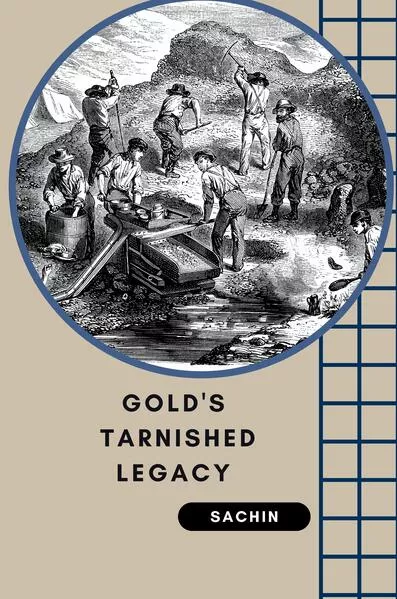
Gold's Tarnished Legacy
ISBN: 978-3-384-22676-1
78 Seiten | € 26.10
Buch [Taschenbuch]
Erscheinungsdatum:
13.05.2024
Sachbuch
Sachin
Gold's Tarnished Legacy
The South African gold mining industry has historically been a major driver of the country’s economy
as well as socio-political landscape (Smit, 2013). For over a century it has provided employment,
investments, infrastructure, and taxes (Onn and Woodley, 2014; Schonfeld et al., 2014), and been
responsible for the development of dozens of cities and towns across the country, most notable of which
is Johannesburg (Naicker et al., 2003; Durand, 2012; Ojelede et al., 2012; Kneen et al., 2015). Gold
was first discovered in the Witwatersrand Basin in 1886, a geographical feature that was once the largest
gold resource in the world (Minerals Council South Africa, n.d.). This discovery transformed South
Africa’s agricultural economy into a mining economy, and opened the country up for international trade
(Durand, 2012; Rand Refinery, 2013). However, the gold mining industry is also responsible for a
legacy of inequality, exploitation, damaged family structures, health impacts and environmental
degradation (Lawrence and Samkin, 2005; Durand, 2012; de Villiers et al., 2014; International Human
Rights Clinic (IHRC), 2016). Furthermore, it is important to note that apartheid is inextricably linked
to the gold mining industry in particular (de Villiers et al., 2014; Benchmarks Foundation, 2017). The
industry has left a legacy of ownerless and abandoned mines and tailing storage facilities that
compromise the health and safety of nearby communities and eco-systems due to air, water and soil
pollution including but not limited to acid mine drainage (Winde and van der Walt, 2004; Duruibe et
al., 2007; Durand, 2012; Bobbins, 2015). Furthermore, the gold industry is in decline and global
commodity markets are turbulent (Mudd, 2007; Hartnady, 2009; Chamber of Mines of South Africa,
2017). From 2004 to 2016, South Africa’s percentage of global gold production fell from 13.5% to
4.4% (Chamber of Mines of South Africa, 2017). Furthermore, the Witwatersrand reserves are nearly
exhausted (Hartnady, 2009), and there are only an estimated 39 years of accessible gold reserves
remaining (Statistics South Africa, 2018). It is thus clear that the South African gold industry is in a
precarious situation, and is running out of time to create a sustainable legacy.
Governments, civil society and, more recently, finance are putting increasing pressure on
mining companies to account for their social and environmental impacts and to justify their continued
existence, forcing mining companies into adopting sustainability agendas (Mudd, 2008; Higgins and
Coffey, 2016). Many mining companies, particularly multi-nationals, are reporting on their
sustainability performance in publicly available annual reports, commonly termed sustainability
reports, using standardised frameworks developed under the auspices of various responsible business
initiatives (Siew, 2015).
as well as socio-political landscape (Smit, 2013). For over a century it has provided employment,
investments, infrastructure, and taxes (Onn and Woodley, 2014; Schonfeld et al., 2014), and been
responsible for the development of dozens of cities and towns across the country, most notable of which
is Johannesburg (Naicker et al., 2003; Durand, 2012; Ojelede et al., 2012; Kneen et al., 2015). Gold
was first discovered in the Witwatersrand Basin in 1886, a geographical feature that was once the largest
gold resource in the world (Minerals Council South Africa, n.d.). This discovery transformed South
Africa’s agricultural economy into a mining economy, and opened the country up for international trade
(Durand, 2012; Rand Refinery, 2013). However, the gold mining industry is also responsible for a
legacy of inequality, exploitation, damaged family structures, health impacts and environmental
degradation (Lawrence and Samkin, 2005; Durand, 2012; de Villiers et al., 2014; International Human
Rights Clinic (IHRC), 2016). Furthermore, it is important to note that apartheid is inextricably linked
to the gold mining industry in particular (de Villiers et al., 2014; Benchmarks Foundation, 2017). The
industry has left a legacy of ownerless and abandoned mines and tailing storage facilities that
compromise the health and safety of nearby communities and eco-systems due to air, water and soil
pollution including but not limited to acid mine drainage (Winde and van der Walt, 2004; Duruibe et
al., 2007; Durand, 2012; Bobbins, 2015). Furthermore, the gold industry is in decline and global
commodity markets are turbulent (Mudd, 2007; Hartnady, 2009; Chamber of Mines of South Africa,
2017). From 2004 to 2016, South Africa’s percentage of global gold production fell from 13.5% to
4.4% (Chamber of Mines of South Africa, 2017). Furthermore, the Witwatersrand reserves are nearly
exhausted (Hartnady, 2009), and there are only an estimated 39 years of accessible gold reserves
remaining (Statistics South Africa, 2018). It is thus clear that the South African gold industry is in a
precarious situation, and is running out of time to create a sustainable legacy.
Governments, civil society and, more recently, finance are putting increasing pressure on
mining companies to account for their social and environmental impacts and to justify their continued
existence, forcing mining companies into adopting sustainability agendas (Mudd, 2008; Higgins and
Coffey, 2016). Many mining companies, particularly multi-nationals, are reporting on their
sustainability performance in publicly available annual reports, commonly termed sustainability
reports, using standardised frameworks developed under the auspices of various responsible business
initiatives (Siew, 2015).
Unterstütze den lokalen Buchhandel
Nutze die PLZ-Suche um einen Buchhändler in Deiner Nähe zu finden.
Bestelle dieses Buch im Internet



| Veröffentlichung: | 13.05.2024 |
| Höhe/Breite/Gewicht | H 23,4 cm / B 15,5 cm / 145 g |
| Seiten | 78 |
| Art des Mediums | Buch [Taschenbuch] |
| Preis DE | EUR 26.10 |
| Preis AT | EUR 26.10 |
| ISBN-13 | 978-3-384-22676-1 |
| ISBN-10 | 3384226763 |

Über den Autor
Dr. Sachin, for your Environmental Studies course, I propose "Forests Fall, Waters Change: Canada's Water Crisis." This book tackles Canada's unfolding water crisis, highlighting the critical link between deforestation and water resources. We'll explore how the decline of Canada's forests disrupts water systems, impacting filtration, flow patterns, and overall water security."Forests Fall, Waters Change" dives into the causes of the crisis, analyzing climate change, pollution, and unsustainable water management practices. We'll see how deforestation exacerbates these issues. But this book isn't all doom and gloom. It explores solutions by emphasizing forest protection and restoration as a key step towards water security. We'll analyze successful water management strategies, acknowledge Indigenous water rights, and examine policy changes needed for a sustainable water future. "Forests Fall, Waters Change" serves as a call to action, urging us to understand the interconnectedness of forests and water and advocate for responsible practices that ensure a secure water future for Canada.
Diesen Artikel teilen
0 Kommentar zu diesem Buch
.... weitere Publikationen von tredition















Leserunde
Die Tränen des Sonnengottes - Der Bronzehimmel
Bewerbungsfrist bis zum: 17.07.2026