Chronologie aller Bände (1 - 3)


Die Reihenfolge beginnt mit dem eBook "Differentiating the Higher Education System of Ethiopia". Wer alle eBookz der Reihe nach lesen möchte, sollte mit diesem Band von Adula Bekele Hunde beginnen. Der zweite Teil der Reihe "School in Distance – Childhood in Crisis" ist am 12.05.2025 erschienen. Mit insgesamt 3 Bänden wurde die Reihe über einen Zeitraum von ungefähr 3 Jahren fortgesetzt. Der neueste Band trägt den Titel "The Human-Animal Relationship as a Subject of Citizenship Education".
- Anzahl der Bewertungen für die gesamte Reihe: 0
- Ø Bewertung der Reihe: 0
- Start der Reihe: 04.01.2023
- Neueste Folge: 26.09.2025
Diese Reihenfolge enthält 3 unterschiedliche Autoren.
- Autor: Hunde, Adula Bekele
- Anzahl Bewertungen: 0
- Ø Bewertung:
- Medium: E-Book
- Veröffentlicht: 04.01.2023
- Genre: Politik
Differentiating the Higher Education System of Ethiopia
- Autor: Budde, Jürgen
- Anzahl Bewertungen: 0
- Ø Bewertung:
- Medium: Digital
- Veröffentlicht: 12.05.2025
- Genre: Politik
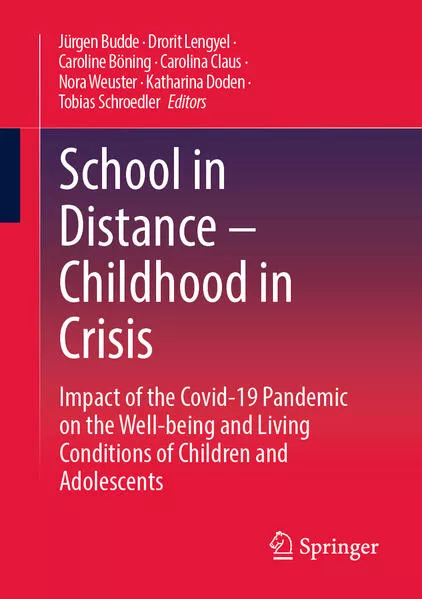
School in Distance – Childhood in Crisis
The volume reevaluates the common notions of a good childhood, which have been influenced in various ways by the Covid-19 pandemic. However, the perspectives of children and adolescents have rarely been the subject of discussion. Thematically, it focuses on questions of well-being, inequality, and the familialization of learning. The aim is to explicitly direct attention to the practical living conditions of children and families and to strengthen their viewpoint.
- Autor: Bloise, Jennifer
- Anzahl Bewertungen: 0
- Ø Bewertung:
- Medium: E-Book
- Veröffentlicht: 26.09.2025
- Genre: Sonstiges
The Human-Animal Relationship as a Subject of Citizenship Education
The aim of this book is to explore the human-animal relationship as a new subject of political education and to make it accessible for critical reflection. A guiding thesis is that society’s relationship with animals is both political and problematic, as it is shaped by power structures and rarely recognized as an issue due to its status as an unexamined norm. To explore this topic, the model of didactic reconstruction is employed. A problem-centered interview study is used to reconstruct students’ everyday conceptions of animals, humans, and their (political) relationship. These conceptions are then compared with academic perspectives—particularly from Human-Animal Studies—in order to uncover contradictions and taken-for-granted assumptions, and to identify exemplary, didactically fruitful approaches to the subject. The author concludes that future engagement with the human-animal relationship in the context of political education should be critically oriented toward power structures. This would enable reflective and multi-perspective political judgment on the human-animal relationship—making the invisible visible.